Data-Driven Ground-Fault Location Method in Distribution Power System With Distributed Generation
作者: Mauro Caporuscio, Antoine Dupuis, Welf Löwe
分类: eess.SY, cs.AI, cs.LG, eess.SP
发布日期: 2024-02-22
备注: Technical Report
💡 一句话要点
提出数据驱动的接地故障定位方法以解决配电系统中的故障检测问题
🎯 匹配领域: 支柱四:生成式动作 (Generative Motion)
关键词: 接地故障定位 配电系统 数据驱动 人工神经网络 小波变换 可再生能源 故障检测
📋 核心要点
- 现有的故障定位方法无法有效应对配电系统中因可再生能源引入的多方向电流流动,导致故障检测的准确性和速度下降。
- 本文提出了一种基于数据驱动的接地故障定位方法,通过分析故障电压特征并利用人工神经网络进行映射,提升故障定位的准确性。
- 实验结果显示,该方法在未知系统状态下的故障距离预测相对误差仅为0.4%,表明其具有良好的鲁棒性和应用潜力。
📝 摘要(中文)
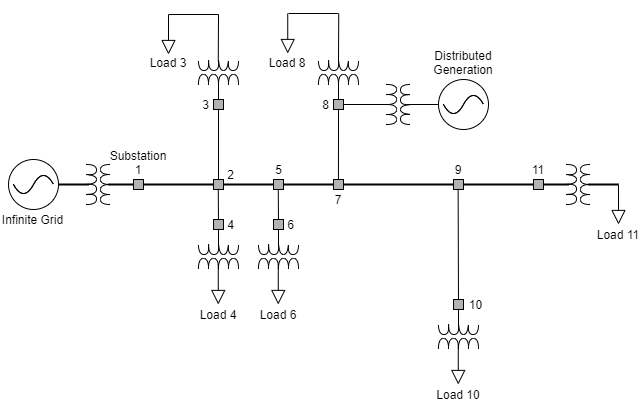
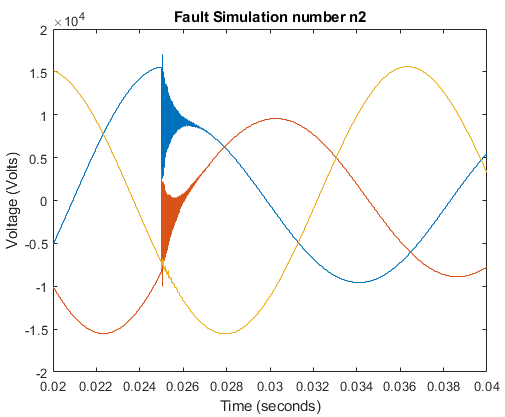
随着可再生能源在配电层面的渗透增加,传统的故障定位技术面临多方向电流流动的挑战。为此,开发新的方法以确保快速准确的故障定位显得尤为重要。本文提出了一种数据驱动的接地故障定位方法,利用Matlab/Simulink对11节点20 kV配电系统进行建模,模拟不同位置和操作状态下的接地故障。通过对故障三相电压进行离散小波变换分析,提取统计量用于训练人工神经网络(ANN),实现故障相、故障支路及故障距离的预测。结果表明,该方法在故障距离预测上具有良好的潜力,总相对误差为0.4%。
🔬 方法详解
问题定义:本文旨在解决配电系统中接地故障定位的准确性和速度问题。现有方法在面对多方向电流流动时表现不佳,无法有效定位故障。
核心思路:论文提出通过数据驱动的方法,利用离散小波变换分析故障电压特征,并通过训练人工神经网络(ANN)实现故障的快速定位。这样的设计能够充分利用系统运行数据,提高故障定位的准确性。
技术框架:整体方法包括三个主要阶段:首先在Matlab/Simulink中建模并模拟故障;其次对故障电压进行离散小波变换,提取特征;最后使用ANN进行训练和故障预测。
关键创新:该研究的创新点在于结合了小波变换与ANN,形成了一种新的故障定位框架,能够在多方向电流流动的情况下保持高效性和准确性。这与传统方法的单一特征提取方式形成了显著对比。
关键设计:在网络结构上,使用了三种不同的ANN分别预测故障相、故障支路和故障距离。关键参数设置包括训练数据的选择和损失函数的设计,以确保模型的有效性和鲁棒性。具体的网络结构和参数设置在论文中有详细描述。
🖼️ 关键图片

📊 实验亮点
实验结果表明,该方法在故障距离预测中的总相对误差仅为0.4%,显示出其优越的性能。与传统方法相比,该方法在处理未知系统状态下的鲁棒性显著提升,表明其在实际应用中的潜力。
🎯 应用场景
该研究的潜在应用领域包括配电系统的故障监测与管理,尤其是在可再生能源日益普及的背景下。通过提高故障定位的准确性和速度,可以显著增强电力系统的可靠性,降低停电风险,提升用户满意度。未来,该方法还可扩展至其他类型的电力系统故障检测与定位。
📄 摘要(原文)
The recent increase in renewable energy penetration at the distribution level introduces a multi-directional power flow that outdated traditional fault location techniques. To this extent, the development of new methods is needed to ensure fast and accurate fault localization and, hence, strengthen power system reliability. This paper proposes a data-driven ground fault location method for the power distribution system. An 11-bus 20 kV power system is modeled in Matlab/Simulink to simulate ground faults. The faults are generated at different locations and under various system operational states. Time-domain faulted three-phase voltages at the system substation are then analyzed with discrete wavelet transform. Statistical quantities of the processed data are eventually used to train an Artificial Neural Network (ANN) to find a mapping between computed voltage features and faults. Specifically, three ANNs allow the prediction of faulted phase, faulted branch, and fault distance from the system substation separately. According to the results, the method shows good potential, with a total relative error of 0,4% for fault distance prediction. The method is applied to datasets with unknown system states to test robustness.