Small-signal stability in inverter-dominated grids: exploring the role of gains, line dynamics, and operating conditions
作者: Ruth Kravis, Gabriel Colon-Reyes, Duncan Callaway
分类: eess.SY
发布日期: 2023-11-20
备注: Submitted to IEEE PESGM 2024. arXiv admin note: text overlap with arXiv:2310.08553
💡 一句话要点
研究逆变器主导电网的小信号稳定性及其影响因素
🎯 匹配领域: 支柱四:生成式动作 (Generative Motion)
关键词: 小信号稳定性 逆变器 电网动态 可再生能源 传输线模型 增益调节 电力系统
📋 核心要点
- 现有研究对逆变器主导电网的小信号稳定性关注不足,传统假设可能不再适用。
- 本研究通过分析逆变器控制增益、传输线动态及运行条件,重新审视电网稳定性问题。
- 研究结果表明,传输线动态在评估小信号稳定性中至关重要,增益调节应使用高保真度模型。
📝 摘要(中文)
随着可再生能源渗透率的提高,逆变器在电网动态交互中扮演着越来越重要的角色。然而,关于逆变器主导电网的稳定性研究仍然不足。本研究探讨了由逆变器和同步机源组成的电力系统的小信号稳定性特征,分析了逆变器控制增益、传输线动态和网络运行条件的影响。通过使用PowerSimulationsDynamics.jl对IEEE WSCC 9 Bus测试系统进行研究,发现传输线动态对小信号稳定性评估至关重要,并建议在增益调节时采用高保真度的线路模型。
🔬 方法详解
问题定义:本论文旨在解决逆变器主导电网的小信号稳定性问题,现有方法在考虑逆变器与同步机源的动态交互时存在不足,传统假设可能导致不准确的稳定性评估。
核心思路:论文通过系统分析逆变器控制增益、传输线动态和网络运行条件,提出了一种新的评估框架,以更准确地理解和预测电网的稳定性。
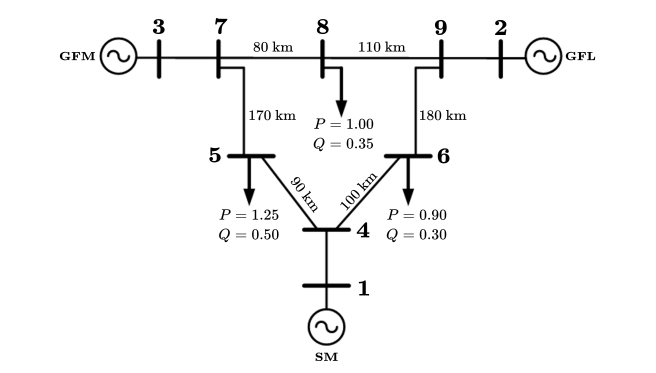
技术框架:研究采用PowerSimulationsDynamics.jl工具,对IEEE WSCC 9 Bus测试系统进行模拟,考虑不同的逆变器参数和传输线模型,比较不同运行条件下的稳定性表现。
关键创新:本研究的主要创新在于强调传输线动态对小信号稳定性的重要性,并提出在增益调节时应使用高保真度的线路模型,这与传统方法的低保真度模型形成鲜明对比。
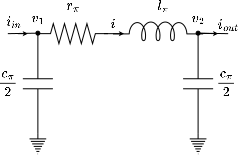
关键设计:在实验中,逆变器参数设置基于文献报道的范围,采用三种不同保真度的传输线模型,以全面评估其对小信号稳定性的影响。
🖼️ 关键图片

📊 实验亮点
实验结果显示,传输线动态对小信号稳定性评估的重要性,尤其在逆变器渗透率较高的网络中。通过高保真度模型进行增益调节,能够显著提高稳定性评估的准确性,提升幅度未知。
🎯 应用场景
该研究的成果可广泛应用于电力系统的设计与优化,尤其是在高可再生能源渗透的电网中。通过改进小信号稳定性评估方法,能够提高电网的可靠性和安全性,促进可再生能源的有效利用。
📄 摘要(原文)
In a power grid with growing penetrations of renewable energy sources, inverters play a larger role in the dynamic interactions among network components. However, much is yet to be studied regarding inverter-dominated grid stability. This has initiated a re-examination of long-established assumptions made when conducting power systems studies. In this work we study the small-signal stability characteristics of a power system comprised of inverter and synchronous machine sources, and consider the effect of inverter control gains, transmission line dynamics, and network operating conditions. We utilize PowerSimulationsDynamics.jl to perform this study on the IEEE WSCC 9 Bus test system. We vary inverter parameters across reported ranges in the literature, we consider three transmission line models of varying fidelity, and compare results across different operating conditions. We find that line dynamics are generally important for correctly assessing small-signal stability in networks with large penetrations of grid-following converters, and that gain tuning in these networks should utilize high fidelity line models.