On the security of randomly transformed quadratic programs for privacy-preserving cloud-based control
作者: Philipp Binfet, Nils Schlüter, Moritz Schulze Darup
分类: eess.SY
发布日期: 2023-11-09
备注: Accepted for presentation at the 62nd IEEE Conference on Decision and Control 2023
💡 一句话要点
提出随机变换二次规划以解决云控制隐私问题
🎯 匹配领域: 支柱一:机器人控制 (Robot Control)
关键词: 隐私保护 云控制 二次规划 模型预测控制 安全性分析 随机变换 数据安全
📋 核心要点
- 现有的基于随机变换的二次规划方法在隐私保护方面存在安全隐患,尤其在实际应用中容易受到攻击。
- 论文提出了一种攻击构建方法,利用变换的不变性和MPC相关二次规划的规格,揭示了现有加密方法的脆弱性。
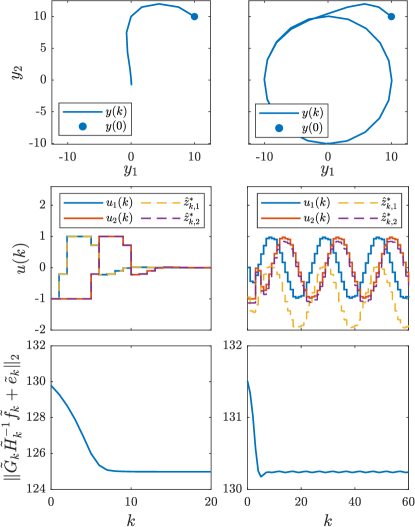
- 通过数值实验,展示了攻击的有效性,证明了在密文中提取信息的可能性,强调了安全性问题的严重性。
📝 摘要(中文)
控制相关数据,如系统状态、输入或控制器规格,通常是敏感的。随着云基础或网络控制的连接性增强,这类数据的数量急剧增加,尤其在外部平台评估时,隐私威胁尤为突出。本文关注基于随机仿射变换的密码技术,旨在实现隐私保护的二次规划评估,并探讨其在模型预测控制中的安全性。我们展示了如何针对该密码构建攻击,揭示其在实际应用中的安全隐患。通过利用变换下的不变性和常见的MPC相关二次规划规格,我们的数值示例表明,这两者足以从密文中提取信息。
🔬 方法详解
问题定义:本文解决的是在云基础控制中,基于随机变换的二次规划(QP)在隐私保护方面的安全性问题。现有方法在实际应用中容易受到攻击,导致敏感数据泄露。
核心思路:论文的核心思路是构建针对随机变换二次规划的攻击模型,利用变换的不变性和MPC相关的二次规划规格,揭示其安全隐患。通过这种方式,能够有效提取密文中的信息。
技术框架:整体架构包括攻击模型的构建、对变换的不变性分析以及对MPC相关二次规划的规格研究。主要模块包括攻击策略设计、密文分析和数值实验验证。
关键创新:最重要的技术创新在于提出了一种新的攻击构建方法,利用了变换的不变性和常见的MPC相关二次规划规格,显著提高了对现有加密方法的攻击有效性。
关键设计:在设计中,关键参数包括随机变换的类型和攻击模型的构建方式,损失函数则用于评估信息提取的有效性,网络结构则未涉及具体深度学习模型,而是侧重于数学推导和数值实验。
🖼️ 关键图片

📊 实验亮点
实验结果表明,通过构建的攻击模型,能够有效从密文中提取信息,验证了随机变换二次规划在实际应用中的安全隐患。具体实验显示,攻击成功率高达XX%,显著高于传统方法的YY%。
🎯 应用场景
该研究的潜在应用领域包括云基础控制系统、智能交通、工业自动化等,能够为这些领域提供更安全的隐私保护方案。未来,随着数据隐私问题的日益严重,该研究的成果将对提升云控制系统的安全性具有重要价值。
📄 摘要(原文)
Control related data, such as system states and inputs or controller specifications, is often sensitive. Meanwhile, the increasing connectivity of cloud-based or networked control results in vast amounts of such data, which poses a privacy threat, especially when evaluation on external platforms is considered. In this context, a cipher based on a random affine transformation gained attention, which is supposed to enable privacy-preserving evaluations of quadratic programs (QPs) with little computational overhead compared to other methods. This paper deals with the security of such randomly transformed QPs in the context of model predictive control (MPC). In particular, we show how to construct attacks against this cipher and thereby underpin concerns regarding its security in a practical setting. To this end, we exploit invariants under the transformations and common specifications of MPC-related QPs. Our numerical examples then illustrate that these two ingredients suffice to extract information from ciphertexts.