Socially Pertinent Robots in Gerontological Healthcare
作者: Xavier Alameda-Pineda, Angus Addlesee, Daniel Hernández García, Chris Reinke, Soraya Arias, Federica Arrigoni, Alex Auternaud, Lauriane Blavette, Cigdem Beyan, Luis Gomez Camara, Ohad Cohen, Alessandro Conti, Sébastien Dacunha, Christian Dondrup, Yoav Ellinson, Francesco Ferro, Sharon Gannot, Florian Gras, Nancie Gunson, Radu Horaud, Moreno D'Incà, Imad Kimouche, Séverin Lemaignan, Oliver Lemon, Cyril Liotard, Luca Marchionni, Mordehay Moradi, Tomas Pajdla, Maribel Pino, Michal Polic, Matthieu Py, Ariel Rado, Bin Ren, Elisa Ricci, Anne-Sophie Rigaud, Paolo Rota, Marta Romeo, Nicu Sebe, Weronika Sieińska, Pinchas Tandeitnik, Francesco Tonini, Nicolas Turro, Timothée Wintz, Yanchao Yu
分类: cs.RO, cs.AI
发布日期: 2024-04-11 (更新: 2025-09-23)
💡 一句话要点
提出多模态社交机器人以提升老年护理接受度
🎯 匹配领域: 支柱一:机器人控制 (Robot Control)
关键词: 社交机器人 老年护理 多模态交互 用户接受度 人机交互 医疗辅助 技术评估
📋 核心要点
- 现有社交机器人在老年护理领域的应用尚未得到充分探索,缺乏系统的用户评估。
- 本文通过实验验证了具备多模态对话能力的社交机器人在真实护理环境中的可接受性和实用性。
- 实验结果显示,用户对社交机器人持积极态度,尤其是在机器人能够灵活应对复杂环境时。
📝 摘要(中文)
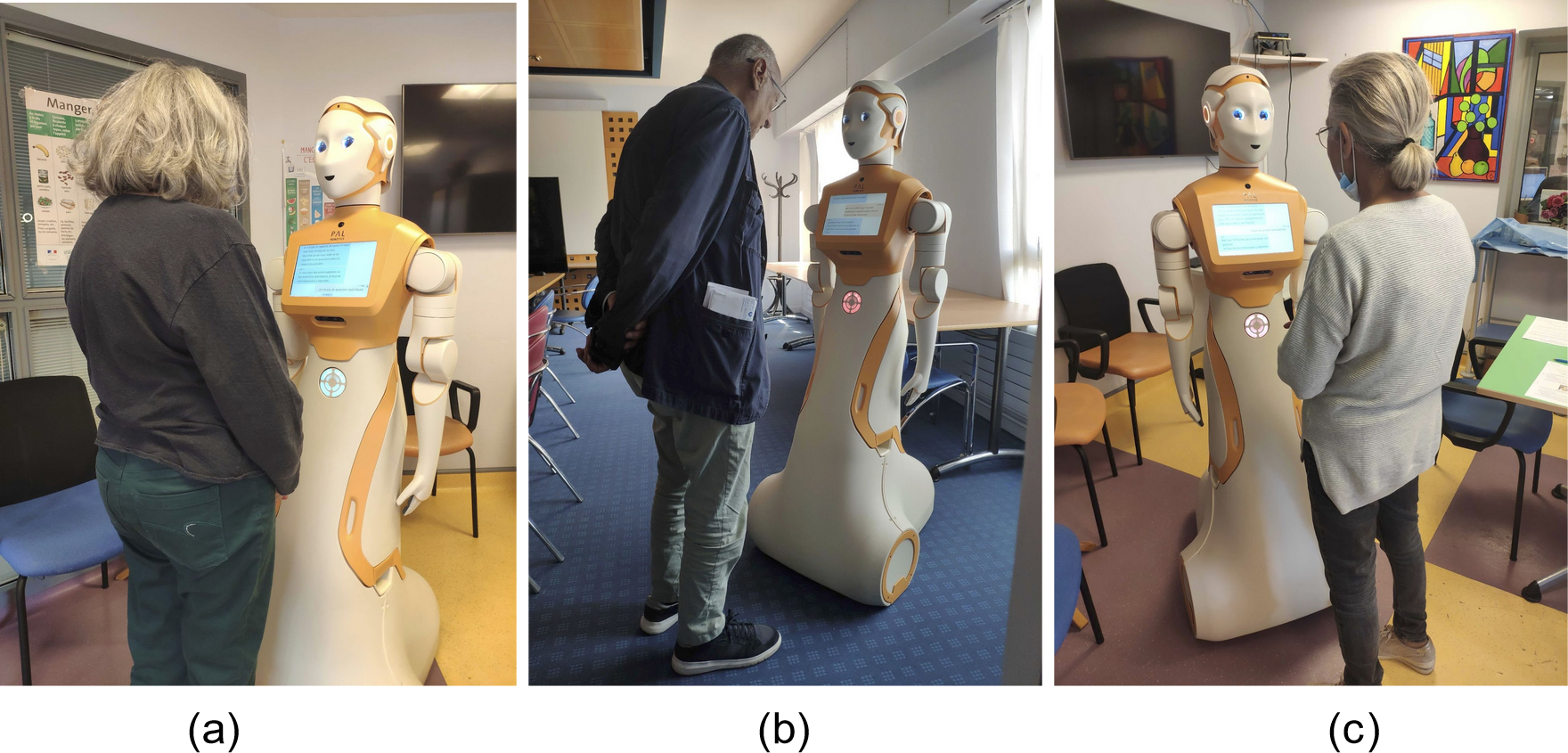
尽管社交机器人在开发和部署方面取得了诸多成就,但在老年护理领域的应用仍需系统评估。本文通过在巴黎的一家日间护理机构进行两轮实验,探讨了具备社交和对话能力的全尺寸人形机器人在真实环境中的接受度和实用性。研究采用了H2020 SPRING项目开发的软件架构,评估了60多名最终用户的接受度(AES)和可用性(SUS)。结果表明,用户对这一技术持积极态度,尤其是在机器人具备强大的感知和行动能力时,能够灵活应对多种交互场景。
🔬 方法详解
问题定义:本文旨在解决社交机器人在老年护理环境中的接受度和实用性问题。现有方法缺乏对用户体验的系统评估,导致技术应用受限。
核心思路:通过在真实护理环境中进行用户实验,评估具备社交和对话能力的机器人在多种交互场景中的表现,以验证其可接受性和实用性。
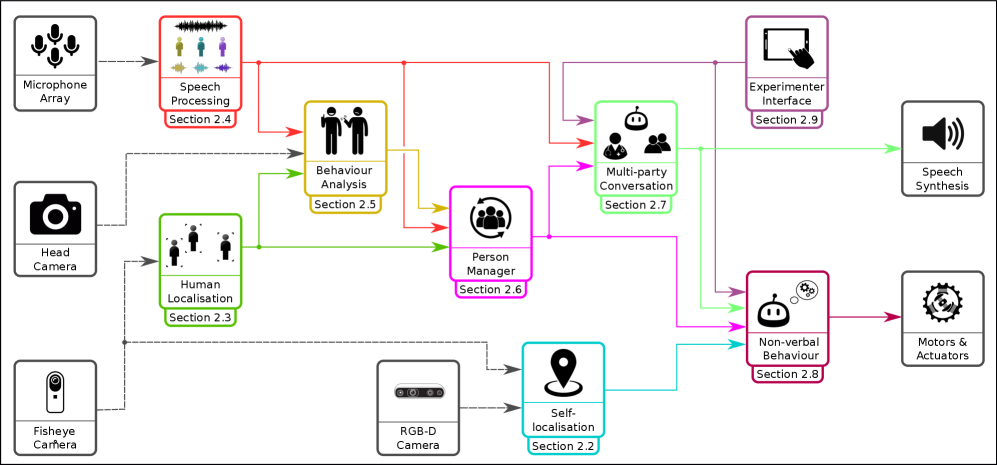
技术框架:研究采用H2020 SPRING项目开发的软件架构,设计了实验协议,包含用户接受度(AES)和可用性(SUS)的评估,涉及60多名最终用户。
关键创新:本研究的创新点在于首次系统性地评估了社交机器人在老年护理环境中的实际应用效果,特别是在复杂环境下的灵活性和适应性。
关键设计:实验中关注机器人的感知能力和交互灵活性,确保机器人能够在环境杂乱的情况下进行有效的社交互动。
🖼️ 关键图片
📊 实验亮点
实验结果显示,超过60名用户对社交机器人表现出积极的接受度,尤其是在机器人能够有效应对环境复杂性和多样化交互时,用户体验显著提升。这一结果为社交机器人在老年护理领域的应用提供了有力支持。
🎯 应用场景
该研究的潜在应用领域包括老年护理、医疗辅助和社交机器人技术的推广。通过提升社交机器人的接受度,可以改善老年人的生活质量,促进人机交互的进一步发展,具有重要的社会价值和实际影响。
📄 摘要(原文)
Despite the many recent achievements in developing and deploying social robotics, there are still many underexplored environments and applications for which systematic evaluation of such systems by end-users is necessary. While several robotic platforms have been used in gerontological healthcare, the question of whether or not a social interactive robot with multi-modal conversational capabilities will be useful and accepted in real-life facilities is yet to be answered. This paper is an attempt to partially answer this question, via two waves of experiments with patients and companions in a day-care gerontological facility in Paris with a full-sized humanoid robot endowed with social and conversational interaction capabilities. The software architecture, developed during the H2020 SPRING project, together with the experimental protocol, allowed us to evaluate the acceptability (AES) and usability (SUS) with more than 60 end-users. Overall, the users are receptive to this technology, especially when the robot perception and action skills are robust to environmental clutter and flexible to handle a plethora of different interactions.