VITaL Pretraining: Visuo-Tactile Pretraining for Tactile and Non-Tactile Manipulation Policies
作者: Abraham George, Selam Gano, Pranav Katragadda, Amir Barati Farimani
分类: cs.RO, cs.LG
发布日期: 2024-03-18 (更新: 2024-09-26)
备注: 7 pages, 6 figures, submitted to ICRA 2025. Prior version named "Visuo-Tactile Pretraining for Cable Plugging"
💡 一句话要点
提出Visuo-Tactile预训练以提升机器人操作性能
🎯 匹配领域: 支柱一:机器人控制 (Robot Control) 支柱二:RL算法与架构 (RL & Architecture)
关键词: 触觉信息 模仿学习 机器人操作 多模态学习 视觉-触觉预训练
📋 核心要点
- 现有方法在机器人操作中未能充分利用触觉信息,导致性能不足。
- 论文提出通过视觉-触觉预训练来增强模仿学习,提升机器人在操作任务中的表现。
- 实验结果显示,非触觉代理在USB插入任务中的准确率从20%提升至85%,与触觉代理表现相当,甚至在某些任务中超越。
📝 摘要(中文)
触觉信息是灵巧操作的重要工具。人类在理解环境中的物体及其交互时,依赖触觉信息。为了创建能够以人类或超人类水平完成操作任务的机器人代理,我们需要将触觉信息有效融入技能执行和学习中。本文探讨了如何将触觉信息纳入模仿学习平台,以提升操作任务的表现。研究表明,结合视觉-触觉预训练不仅提升了触觉代理的模仿学习性能,还显著改善了非触觉代理的表现,甚至在某些情况下超越了触觉代理。
🔬 方法详解
问题定义:本文旨在解决机器人在操作任务中未能有效利用触觉信息的问题。现有方法在模仿学习中对触觉信息的整合不足,导致操作性能不理想。
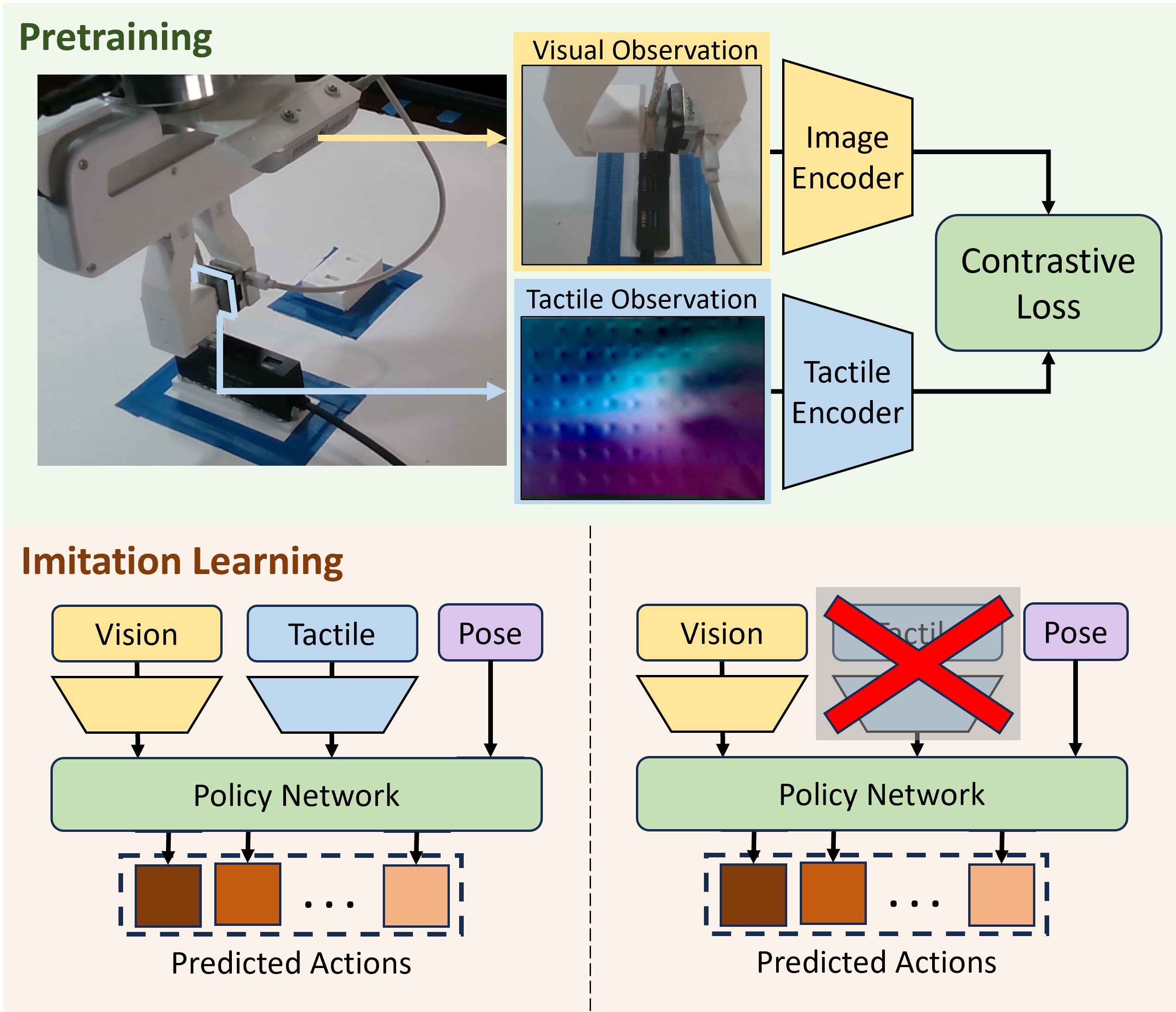
核心思路:论文的核心思路是通过视觉-触觉预训练来提升模仿学习的效果。通过在训练阶段引入触觉信息,机器人能够更好地理解和执行操作任务。
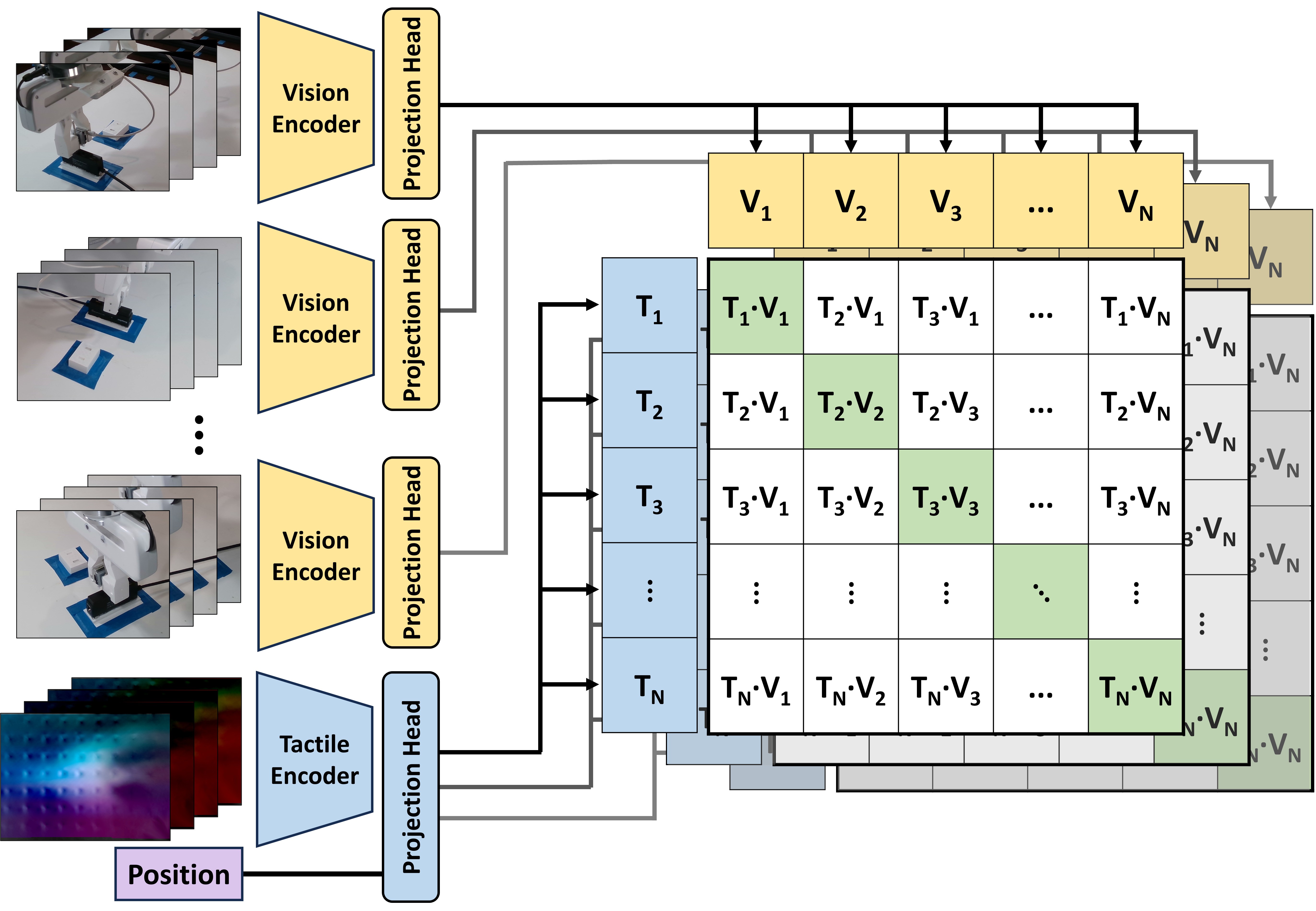
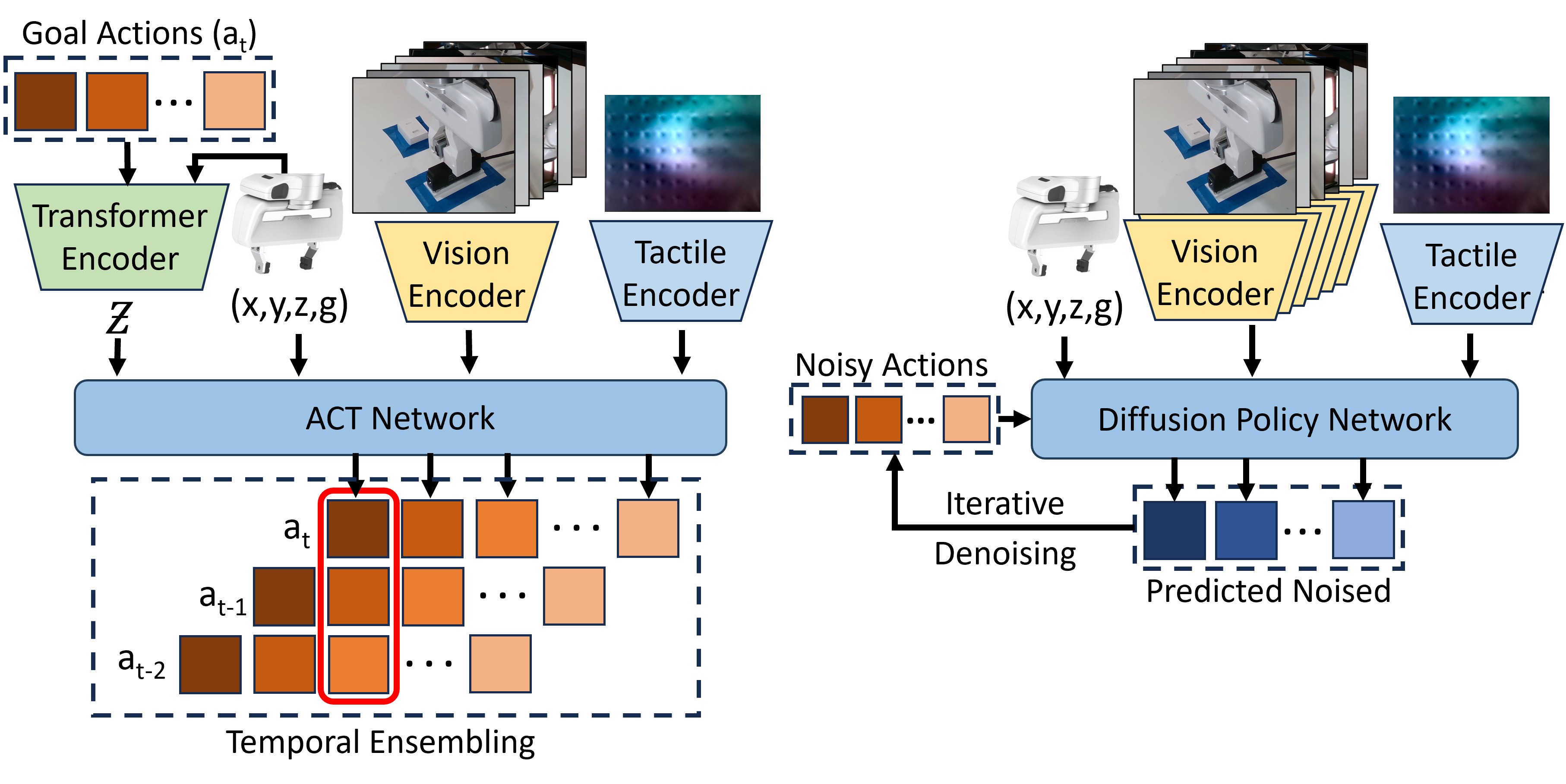
技术框架:整体架构包括两个主要阶段:首先是触觉信息的预训练阶段,其次是基于预训练的模仿学习阶段。预训练阶段通过触觉数据增强模型的感知能力,模仿学习阶段则利用这些能力进行任务执行。
关键创新:最重要的技术创新在于将触觉信息有效整合进模仿学习框架中,显著提升了非触觉代理的性能。这一方法与传统的仅依赖视觉信息的学习方法有本质区别。
关键设计:在设计中,采用了特定的损失函数来平衡视觉和触觉信息的影响,同时优化了网络结构以适应多模态输入,确保模型能够充分利用触觉数据。具体参数设置和网络架构细节在论文中有详细描述。
🖼️ 关键图片
📊 实验亮点
实验结果显示,非触觉代理在USB插入任务中的准确率从20%提升至85%,这一提升幅度显著,甚至在某些情况下超越了触觉代理的表现,验证了视觉-触觉预训练的有效性。
🎯 应用场景
该研究的潜在应用领域包括机器人操作、自动化生产线、医疗机器人等。通过提升机器人对触觉信息的理解和应用能力,可以显著提高其在复杂环境中的操作效率和准确性,未来可能推动智能机器人在更多领域的应用。
📄 摘要(原文)
Tactile information is a critical tool for dexterous manipulation. As humans, we rely heavily on tactile information to understand objects in our environments and how to interact with them. We use touch not only to perform manipulation tasks but also to learn how to perform these tasks. Therefore, to create robotic agents that can learn to complete manipulation tasks at a human or super-human level of performance, we need to properly incorporate tactile information into both skill execution and skill learning. In this paper, we investigate how we can incorporate tactile information into imitation learning platforms to improve performance on manipulation tasks. We show that incorporating visuo-tactile pretraining improves imitation learning performance, not only for tactile agents (policies that use tactile information at inference), but also for non-tactile agents (policies that do not use tactile information at inference). For these non-tactile agents, pretraining with tactile information significantly improved performance (for example, improving the accuracy on USB plugging from 20% to 85%), reaching a level on par with visuo-tactile agents, and even surpassing them in some cases. For demonstration videos and access to our codebase, see the project website: https://sites.google.com/andrew.cmu.edu/visuo-tactile-pretraining