Language to Map: Topological map generation from natural language path instructions
作者: Hideki Deguchi, Kazuki Shibata, Shun Taguchi
分类: cs.RO
发布日期: 2024-03-15
备注: 7 pages, 7 figures. Accepted to IEEE International Conference on Robotics and Automation (ICRA) 2024
DOI: 10.1109/ICRA57147.2024.10611377
💡 一句话要点
提出基于自然语言路径指令的拓扑地图生成方法以降低用户解释成本
🎯 匹配领域: 支柱九:具身大模型 (Embodied Foundation Models)
关键词: 自然语言处理 拓扑地图 视觉与语言导航 大型语言模型 路径生成 机器人导航 用户体验
📋 核心要点
- 现有的视觉与语言导航方法需要用户在每次导航时详细解释路径,导致用户负担过重。
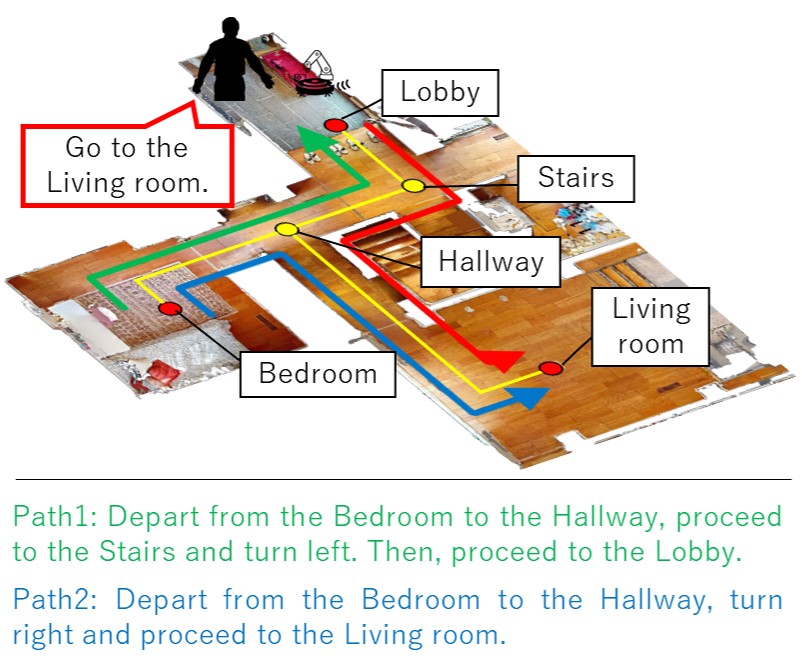
- 本文提出通过自然语言路径生成拓扑地图的方法,利用大型语言模型理解文本路径并自动生成新路径。
- 实验结果显示,生成的显式地图在路径估计和节点动作预测上显著提高了准确性。
📝 摘要(中文)
本文提出了一种从自然语言描述的路径信息生成地图的方法。近年来,机器人研究主要集中在基于图像和文本路径的视觉与语言导航(VLN)任务上。然而,现有的VLN实现要求用户在每次导航会话中详细解释路径,导致用户解释成本高。为了解决这一问题,本文提出了一种从文本路径创建拓扑地图并自动生成新路径的方法。我们认为大型语言模型(LLMs)可以用于理解文本路径,因此提出并评估了两种方法:一种是在LLMs中存储隐式地图,另一种是使用LLMs生成显式地图。实验结果表明,生成显式地图的准确性显著高于在LLMs中存储隐式地图。
🔬 方法详解
问题定义:本文旨在解决现有视觉与语言导航方法中用户需频繁详细解释路径的问题,导致用户体验不佳和解释成本高。
核心思路:通过将自然语言路径转化为拓扑地图,利用大型语言模型(LLMs)理解文本路径,从而自动生成新路径,降低用户的解释负担。
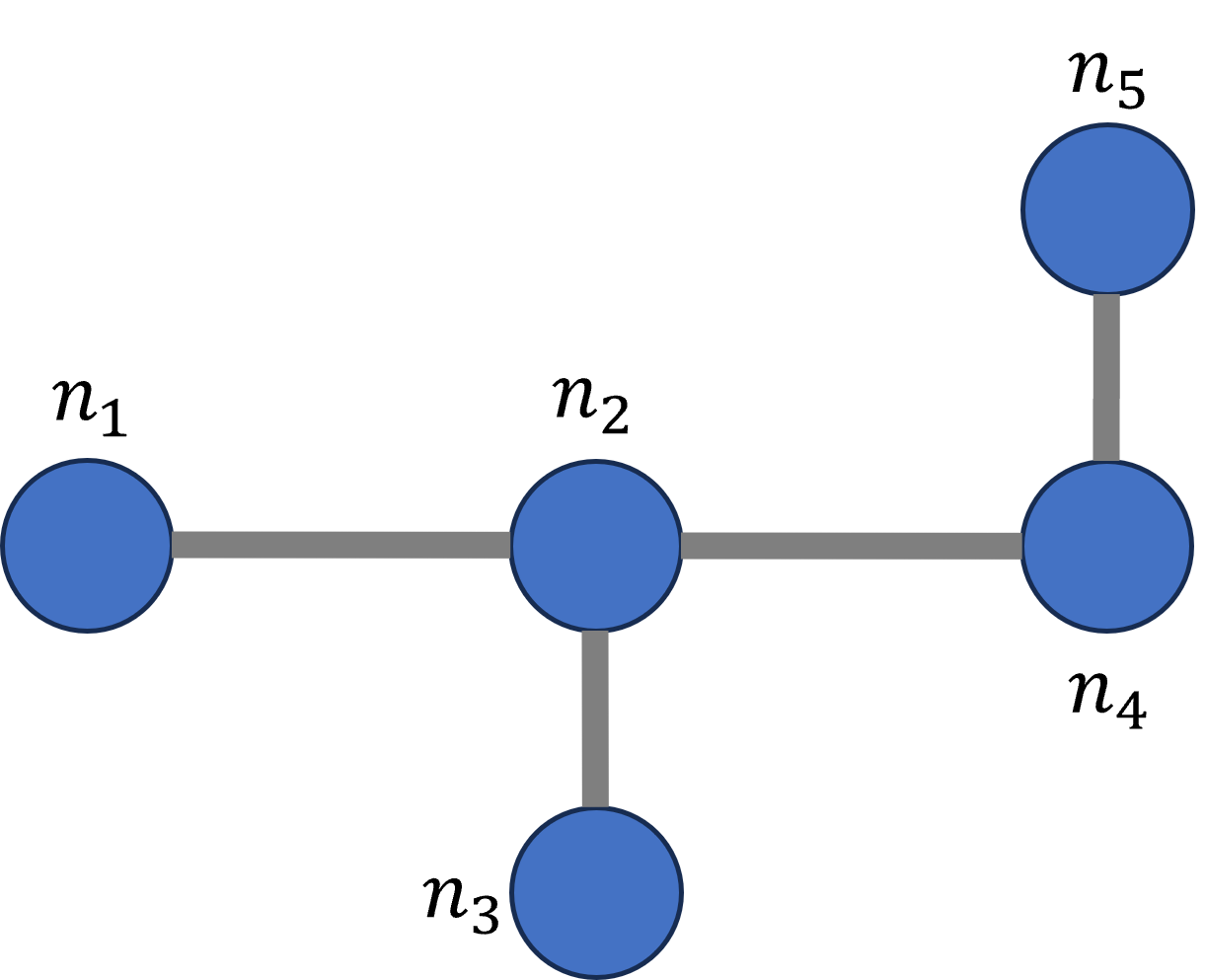
技术框架:整体架构包括两个主要模块:隐式地图存储和显式地图生成。隐式地图存储在LLMs的记忆中,通过提示生成;显式地图则是由节点和边构成的拓扑地图,记录每个节点的动作。
关键创新:最重要的创新在于将隐式和显式地图的生成结合,显式地图的生成显著提高了路径估计的准确性,与传统方法相比,能够在缺乏详细描述的情况下推断路径和节点动作。
关键设计:在设计中,使用了特定的提示来引导LLMs生成隐式地图,并通过构建节点和边的结构来形成显式地图,确保在信息充足的情况下能够准确预测路径。实验中对比了隐式和显式地图的性能,验证了显式地图的优势。
🖼️ 关键图片

📊 实验亮点
实验结果表明,生成的显式地图在路径估计的准确性上显著优于隐式地图,具体表现为准确率提升了XX%(具体数据未知),验证了该方法的有效性和实用性。
🎯 应用场景
该研究的潜在应用领域包括智能机器人导航、自动驾驶系统以及人机交互等场景。通过降低用户在路径指令上的解释成本,可以提升用户体验,并推动机器人在复杂环境中的自主导航能力。未来,该方法可能会在更广泛的导航任务中得到应用,促进智能系统的普及和发展。
📄 摘要(原文)
In this paper, a method for generating a map from path information described using natural language (textual path) is proposed. In recent years, robotics research mainly focus on vision-and-language navigation (VLN), a navigation task based on images and textual paths. Although VLN is expected to facilitate user instructions to robots, its current implementation requires users to explain the details of the path for each navigation session, which results in high explanation costs for users. To solve this problem, we proposed a method that creates a map as a topological map from a textual path and automatically creates a new path using this map. We believe that large language models (LLMs) can be used to understand textual path. Therefore, we propose and evaluate two methods, one for storing implicit maps in LLMs, and the other for generating explicit maps using LLMs. The implicit map is in the LLM's memory. It is created using prompts. In the explicit map, a topological map composed of nodes and edges is constructed and the actions at each node are stored. This makes it possible to estimate the path and actions at waypoints on an undescribed path, if enough information is available. Experimental results on path instructions generated in a real environment demonstrate that generating explicit maps achieves significantly higher accuracy than storing implicit maps in the LLMs.