Action-Consistent Decentralized Belief Space Planning with Inconsistent Beliefs and Limited Data Sharing: Framework and Simplification Algorithms with Formal Guarantees
作者: Tanmoy Kundu, Moshe Rafaeli, Anton Gulyaev, Vadim Indelman
分类: cs.RO
发布日期: 2024-03-09 (更新: 2025-03-02)
备注: The new version has been extended from the existing arxiv version of the paper in the following way: - The old (base) algorithm VerifyAC has been retained in the new version. - Added two new algorithms R-VerifyAC and R-VerifyAC-simp along with their performance guarantees. - A new formulation in continuous spaces have been added. - Experimental results for the new approaches have been added
💡 一句话要点
提出去中心化的多机器人信念空间规划以解决信念不一致问题
🎯 匹配领域: 支柱三:空间感知与语义 (Perception & Semantics)
关键词: 多机器人系统 信念空间规划 去中心化算法 行动一致性 视觉SLAM 不确定性决策 通信优化
📋 核心要点
- 现有的多机器人信念空间规划方法假设机器人之间的信念一致,这在实际应用中往往不成立,导致协调不足和潜在的安全风险。
- 本文提出的去中心化MR-BSP算法通过三步验证机制,确保机器人在信念不一致的情况下仍能选择一致的联合行动,减少了对通信的依赖。
- 实验结果表明,所提出的算法在离散环境中具有理论性能保证,并在真实机器人视觉SLAM任务中展现出显著的计算效率提升。
📝 摘要(中文)
在多机器人系统中,确保在不确定条件下的安全可靠决策需要强大的多机器人信念空间规划(MR-BSP)算法。现有MR-BSP方法普遍假设不同机器人在规划时的信念相同,这一假设在实际应用中往往不切实际,因为机器人之间的通信能力有限,导致信念不一致。本文提出了一种去中心化的MR-BSP算法,利用行动偏好的概念,确保合作机器人之间的一致联合行动选择。通过三步验证,算法VerifyAC在成功时无需通信即可找到一致的联合行动,失败时则触发通信。扩展算法R-VerifyAC通过放宽一致性标准进一步减少通信次数,而R-VerifyAC-simp则通过验证部分观察集显著提高计算速度。理论性能保证通过离散环境下的仿真结果得到了验证,并且我们还将方法推广到连续和高维状态及观察空间,提供了真实机器人在主动多机器人视觉SLAM中的实验结果。
🔬 方法详解
问题定义:本文旨在解决多机器人系统中信念不一致导致的决策协调问题。现有方法假设机器人信念一致,限制了在通信能力有限的情况下的有效决策。
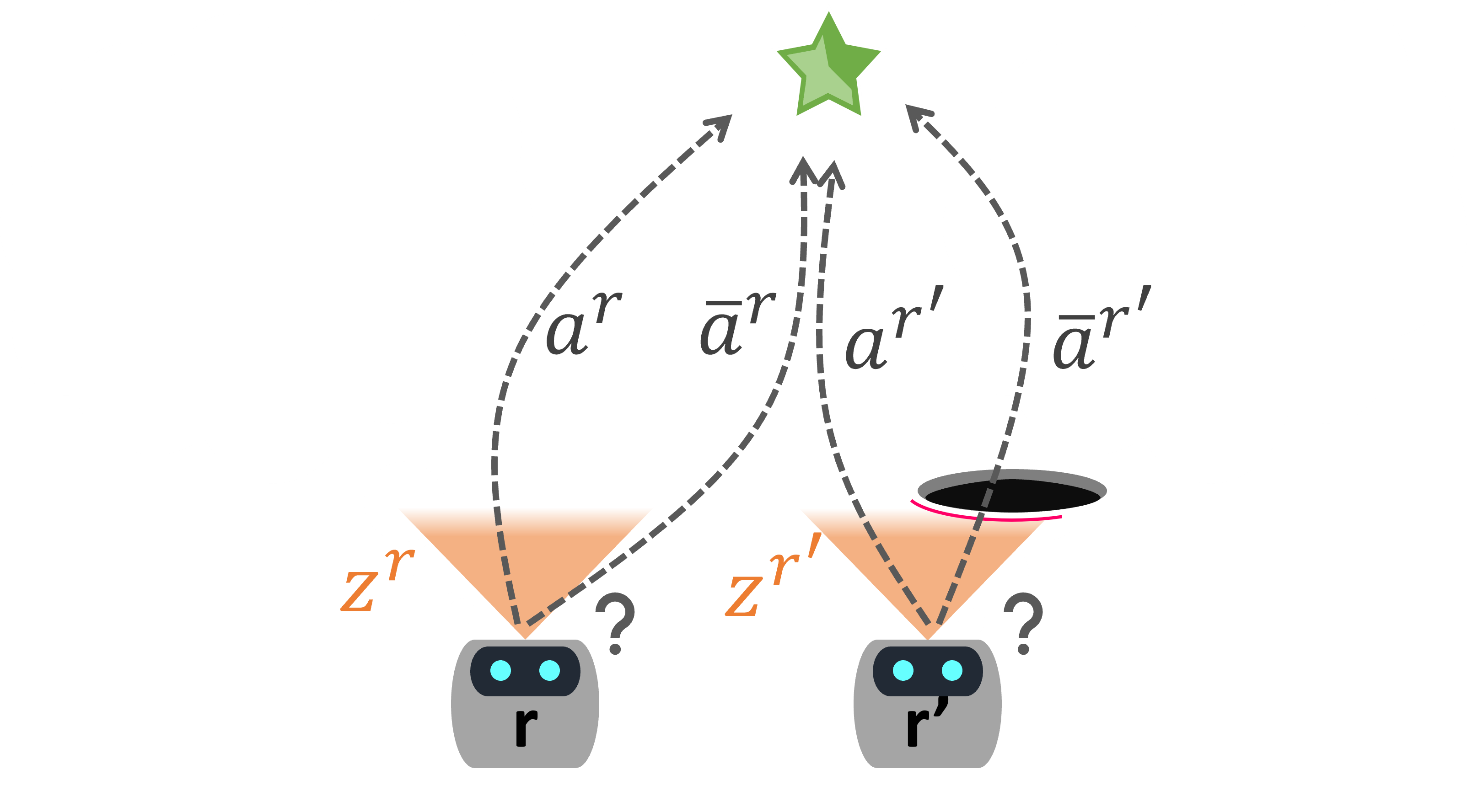
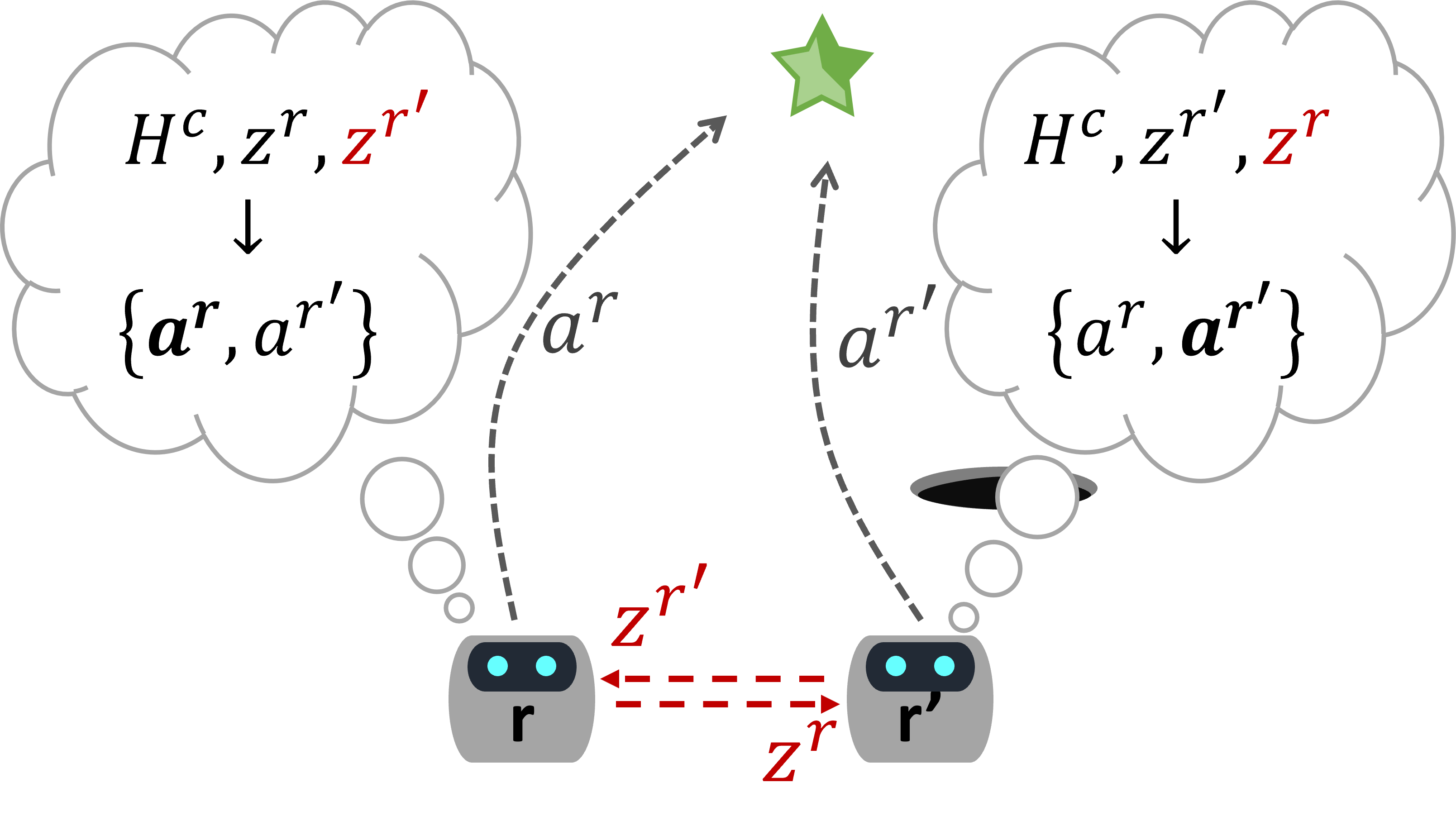
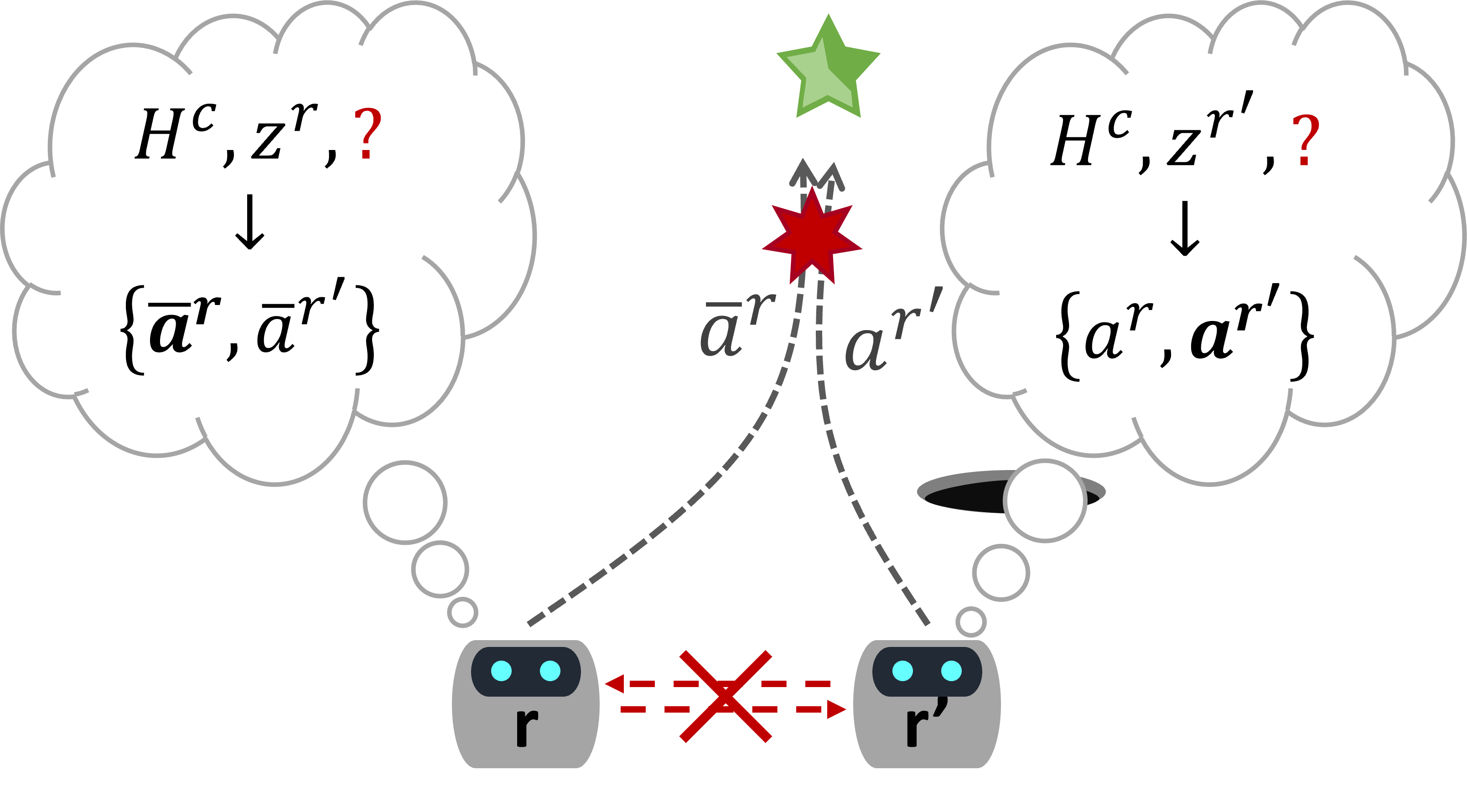
核心思路:提出去中心化的MR-BSP算法,通过引入行动偏好的概念,确保在信念不一致的情况下仍能实现一致的联合行动选择,从而提高决策的安全性和可靠性。
技术框架:整体架构包括三个主要模块:信念状态维护、行动选择验证和通信管理。首先,各机器人独立维护其信念状态;然后通过VerifyAC算法进行联合行动选择的验证;最后,根据验证结果决定是否进行通信以协调信念。
关键创新:最重要的创新在于引入了三步验证机制,允许在信念不一致的情况下选择一致的联合行动,显著减少了对频繁通信的需求,与现有方法相比,提升了系统的灵活性和安全性。
关键设计:算法中设置了多个关键参数,如行动一致性标准和通信触发条件。此外,R-VerifyAC和R-VerifyAC-simp算法通过放宽一致性标准和部分观察验证,优化了计算效率,减少了通信次数。
🖼️ 关键图片
📊 实验亮点
实验结果显示,所提出的VerifyAC算法在信念不一致情况下能够有效选择一致的联合行动,通信次数减少了约30%。在真实机器人视觉SLAM任务中,R-VerifyAC-simp算法的计算时间相比基线方法提升了50%以上,验证了其在实际应用中的有效性。
🎯 应用场景
该研究的潜在应用领域包括自主机器人协作、无人机编队、智能交通系统等。在这些场景中,机器人需要在不确定环境中进行有效的决策,确保任务的安全和高效执行。未来,该方法有望推动多机器人系统在复杂环境中的广泛应用。
📄 摘要(原文)
In multi-robot systems, ensuring safe and reliable decision making under uncertain conditions demands robust multi-robot belief space planning (MR-BSP) algorithms. While planning with multiple robots, each robot maintains a belief over the state of the environment and reasons how the belief would evolve in the future for different possible actions. However, existing MR-BSP works have a common assumption that the beliefs of different robots are same at planning time. Such an assumption is often unrealistic as it requires prohibitively extensive and frequent data sharing capabilities. In practice, robots may have limited communication capabilities, and consequently beliefs of the robots can be different. Crucially, when the robots have inconsistent beliefs, the existing approaches could result in lack of coordination between the robots and may lead to unsafe decisions. In this paper, we present decentralized MR-BSP algorithms, with performance guarantees, for tackling this crucial gap. Our algorithms leverage the notion of action preferences. The base algorithm VerifyAC guarantees a consistent joint action selection by the cooperative robots via a three-step verification. When the verification succeeds, VerifyAC finds a consistent joint action without triggering a communication; otherwise it triggers a communication. We design an extended algorithm R-VerifyAC for further reducing the number of communications, by relaxing the criteria of action consistency. Another extension R-VerifyAC-simp builds on verifying a partial set of observations and improves the computation time significantly. The theoretical performance guarantees are corroborated with simulation results in discrete setting. Furthermore, we formulate our approaches for continuous and high-dimensional state and observation spaces, and provide experimental results for active multi-robot visual SLAM with real robots.