Enhancing Embodied Object Detection through Language-Image Pre-training and Implicit Object Memory
作者: Nicolas Harvey Chapman, Feras Dayoub, Will Browne, Chris Lehnert
分类: cs.RO
发布日期: 2024-02-06
💡 一句话要点
提出隐式对象记忆以增强机器人中的物体检测能力
🎯 匹配领域: 支柱三:空间感知与语义 (Perception & Semantics)
关键词: 具身物体检测 隐式对象记忆 语言-图像训练 深度学习 多模态数据 机器人技术 性能提升
📋 核心要点
- 现有的物体检测方法在机器人应用中未能充分利用语言-图像训练,导致性能不足。
- 本文提出通过隐式对象记忆和投影几何学来增强图像特征,从而提升具身物体检测能力。
- 实验结果显示,所提方法在多样室内场景中提升了3.09 mAP,相较于未使用语言-图像数据的基线提升了16.90 mAP。
📝 摘要(中文)
深度学习和大规模语言-图像训练已产生能够在多样环境和语义类别中良好泛化的图像物体检测器。然而,基于互联网数据训练的单图像物体检测器并未针对机器人固有的具身条件进行优化。机器人需要从复杂的多模态数据流中检测物体,这种任务称为具身物体检测。现有方法未能利用语言-图像训练来提升性能。为此,本文研究了如何扩展使用语言-图像数据预训练的图像物体检测器,以执行具身物体检测。我们提出了一种新颖的隐式对象记忆,利用投影几何学在长时间范围内聚合检测到的物体特征。通过在多样的室内场景中测试具身数据流,我们的方法相较于基线提升了3.09 mAP,并且在真实世界部署中对传感器噪声和领域转移具有较强的鲁棒性。
🔬 方法详解
问题定义:本文旨在解决现有物体检测方法在机器人具身条件下的不足,尤其是未能有效利用语言-图像训练的数据。现有方法在复杂的多模态数据流中表现不佳,无法满足机器人对物体检测的需求。
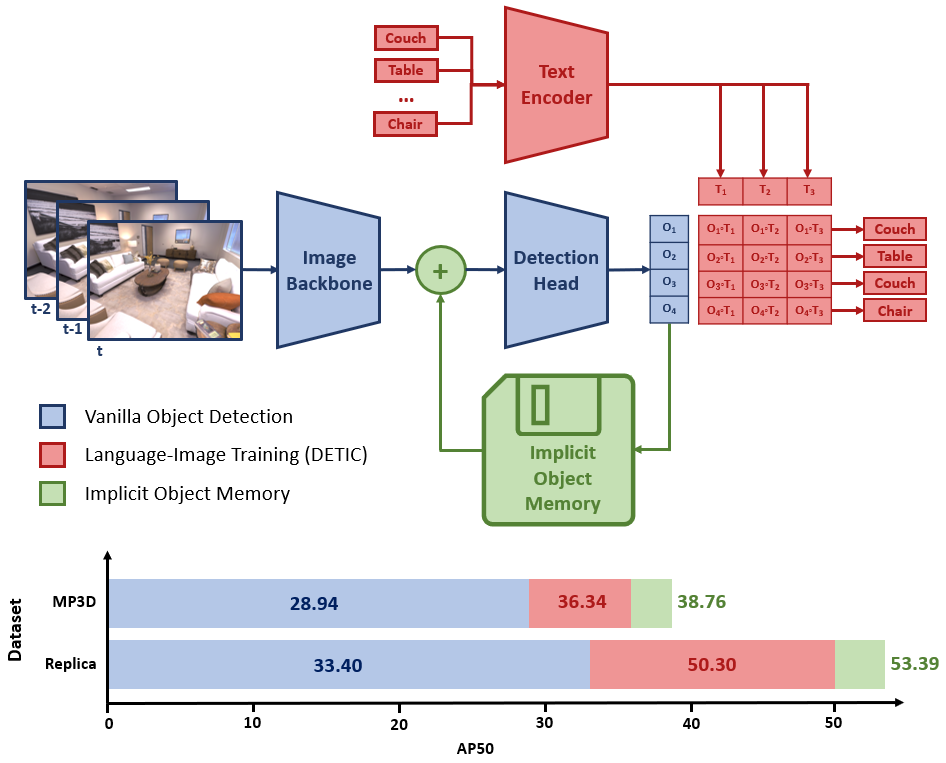
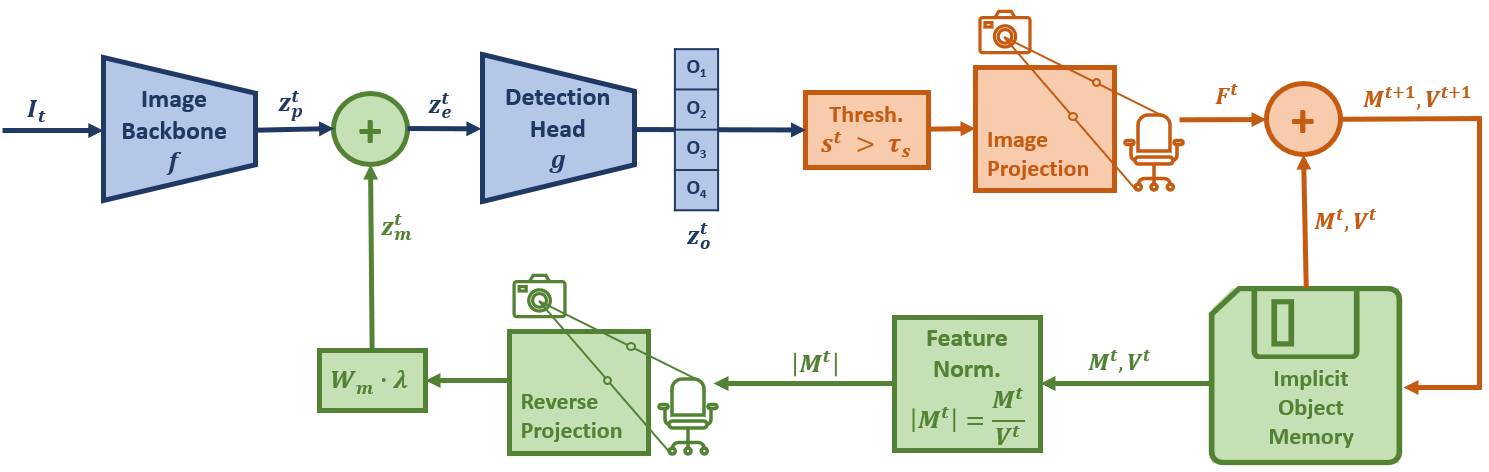
核心思路:本文提出通过隐式对象记忆来聚合长时间范围内的物体特征,结合投影几何学来增强基础图像检测器的性能。通过这种方式,能够更好地利用时间和空间信息,从而提升具身物体检测的准确性。
技术框架:整体架构包括三个主要模块:首先是语言-图像预训练的基础检测器,其次是隐式对象记忆模块,最后是基于聚合特征的增强检测模块。数据流从传感器获取,经过基础检测器后,特征被存储并在隐式记忆中进行聚合,最终用于提升检测性能。
关键创新:本文的关键创新在于引入隐式对象记忆,通过聚合长时间范围内的特征来增强物体检测能力。这一方法与现有的外部记忆方法相比,能够更有效地利用时间序列信息,显著提升检测精度。
关键设计:在设计中,采用了特定的损失函数来优化记忆模块的特征聚合效果,并且在网络结构上进行了调整,以适应多模态数据流的输入,确保系统的鲁棒性和准确性。通过这些设计,系统能够在真实环境中有效应对传感器噪声和领域转移。
🖼️ 关键图片
📊 实验亮点
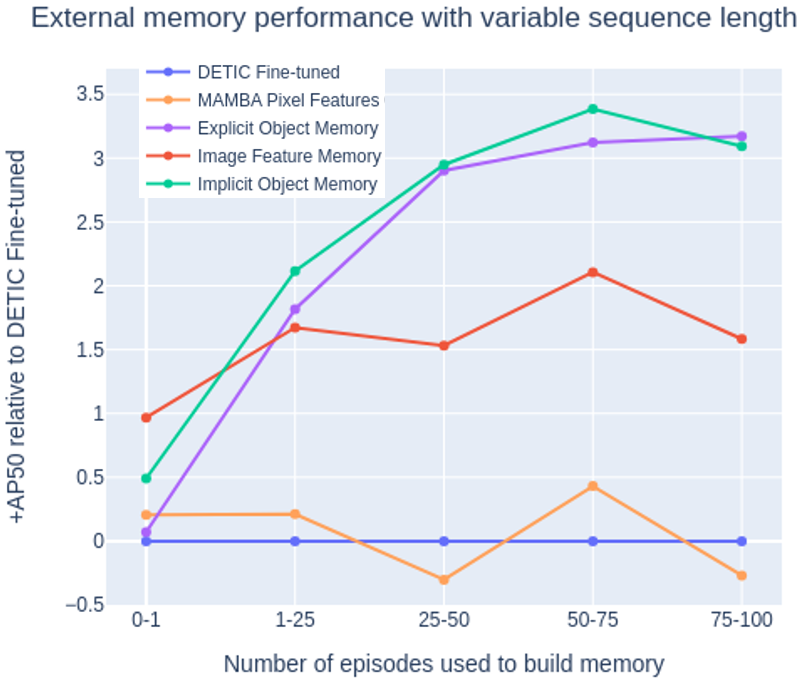
实验结果表明,所提方法在多样室内场景中提升了3.09 mAP,相较于未使用语言-图像数据的基线提升了16.90 mAP。此外,该方法在面对传感器噪声和领域转移时表现出良好的鲁棒性,显示出其在实际应用中的潜力。
🎯 应用场景
该研究的潜在应用场景包括智能机器人、自动驾驶汽车和增强现实等领域。在这些应用中,机器人需要在复杂的环境中进行物体识别和交互,本文的方法能够显著提升其在动态和多变环境中的表现,具有重要的实际价值和未来影响。
📄 摘要(原文)
Deep-learning and large scale language-image training have produced image object detectors that generalise well to diverse environments and semantic classes. However, single-image object detectors trained on internet data are not optimally tailored for the embodied conditions inherent in robotics. Instead, robots must detect objects from complex multi-modal data streams involving depth, localisation and temporal correlation, a task termed embodied object detection. Paradigms such as Video Object Detection (VOD) and Semantic Mapping have been proposed to leverage such embodied data streams, but existing work fails to enhance performance using language-image training. In response, we investigate how an image object detector pre-trained using language-image data can be extended to perform embodied object detection. We propose a novel implicit object memory that uses projective geometry to aggregate the features of detected objects across long temporal horizons. The spatial and temporal information accumulated in memory is then used to enhance the image features of the base detector. When tested on embodied data streams sampled from diverse indoor scenes, our approach improves the base object detector by 3.09 mAP, outperforming alternative external memories designed for VOD and Semantic Mapping. Our method also shows a significant improvement of 16.90 mAP relative to baselines that perform embodied object detection without first training on language-image data, and is robust to sensor noise and domain shift experienced in real-world deployment.