Brain-Body-Task Co-Adaptation can Improve Autonomous Learning and Speed of Bipedal Walking
作者: Darío Urbina-Meléndez, Hesam Azadjou, Francisco J. Valero-Cuevas
分类: cs.RO, cs.LG
发布日期: 2024-02-04
💡 一句话要点
提出基于生物启发的共适应策略以提升双足机器人自主学习能力
🎯 匹配领域: 支柱一:机器人控制 (Robot Control)
关键词: 双足机器人 自主学习 生物启发 运动探索 可回驱动 神经网络 控制策略
📋 核心要点
- 现有方法在双足机器人自主学习和行走能力提升方面存在显著挑战,尤其是在复杂环境中的适应性不足。
- 论文提出了一种基于生物启发的共适应策略,结合可回驱动的机械特性与简单的神经网络,促进机器人自主学习行走。
- 实验结果显示,经过2分钟的自然运动探索,机器人能够有效学习行走,而天真运动探索则未能产生有效的运动模式。
📝 摘要(中文)
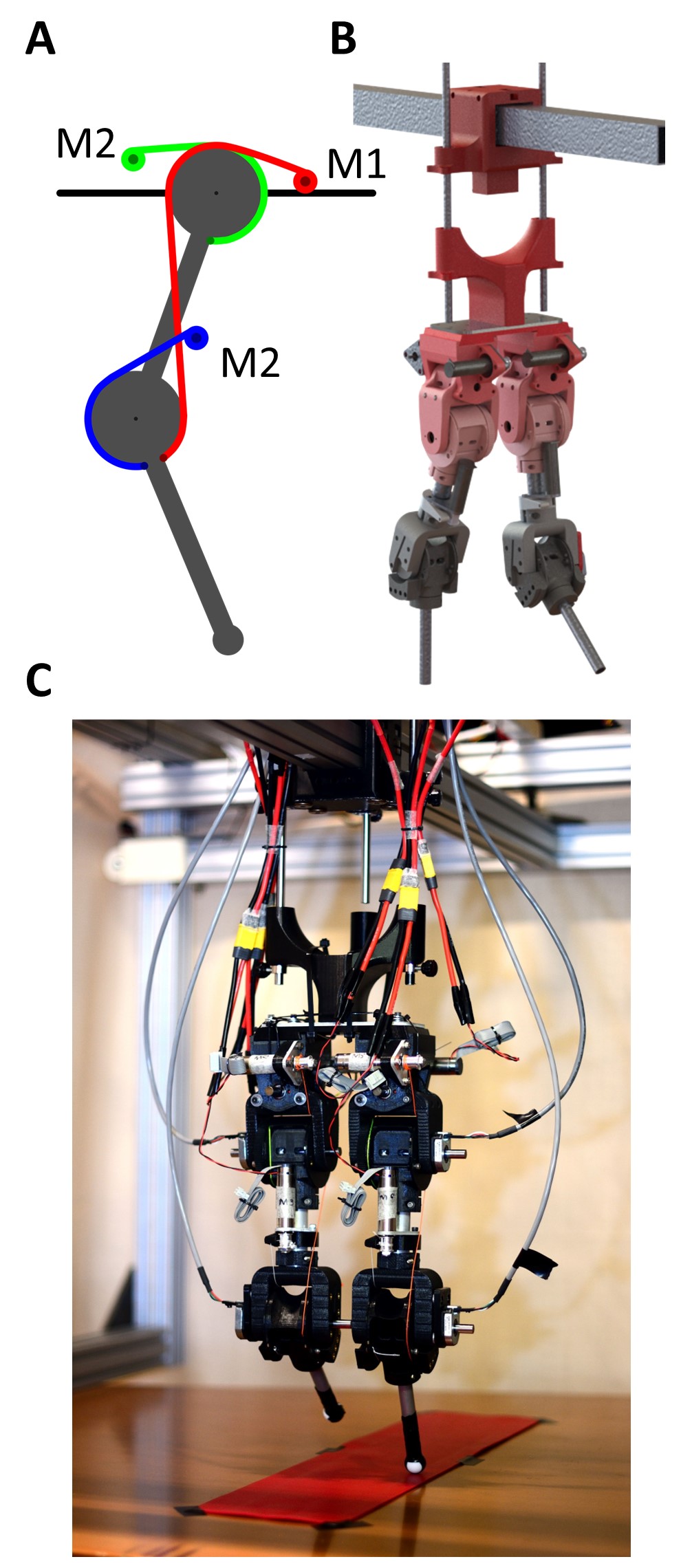
受动物大脑与身体共适应的启发,本文提出了一种驱动肌腱的双足机器人,利用其可回驱动的机械特性在没有显式控制的情况下管理身体与环境的交互。该机器人通过简单的三层神经网络,在仅2分钟的“自然”运动探索后学习行走。研究表明,基于自然运动探索的学习能够有效产生周期性运动,并在轻微接触地面时实现行走,而基于“天真”运动探索的学习则未能产生一致的周期性运动。此研究展示了如何通过持续的物理适应和探索策略驱动行走学习,且无需显式控制轨迹误差。
🔬 方法详解
问题定义:本文旨在解决双足机器人在复杂环境中自主学习行走的能力不足,现有方法往往依赖显式控制,难以适应动态变化的环境。
核心思路:通过结合生物启发的共适应策略,利用可回驱动的机械特性和简单的神经网络,机器人能够在没有显式控制的情况下自主学习行走。
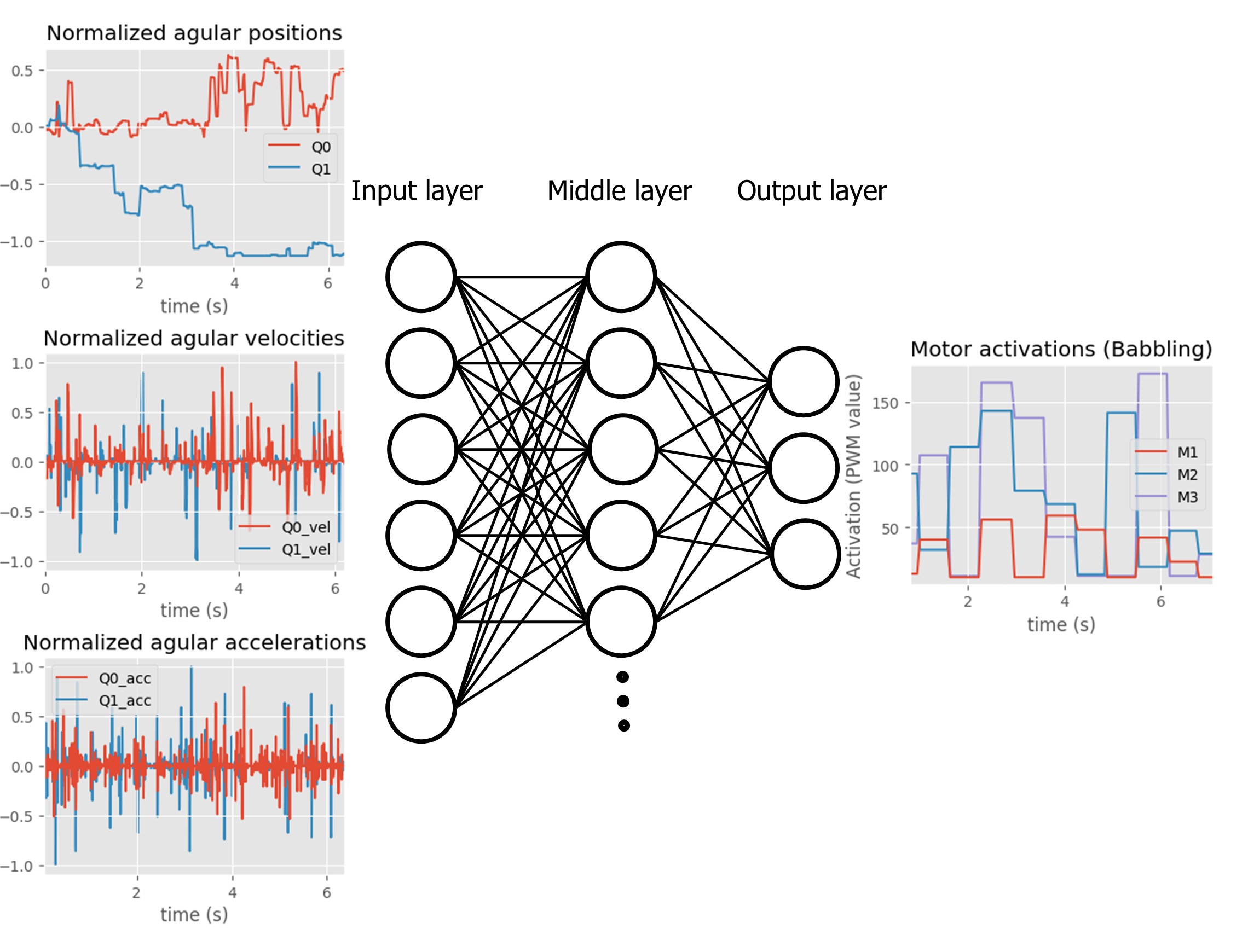
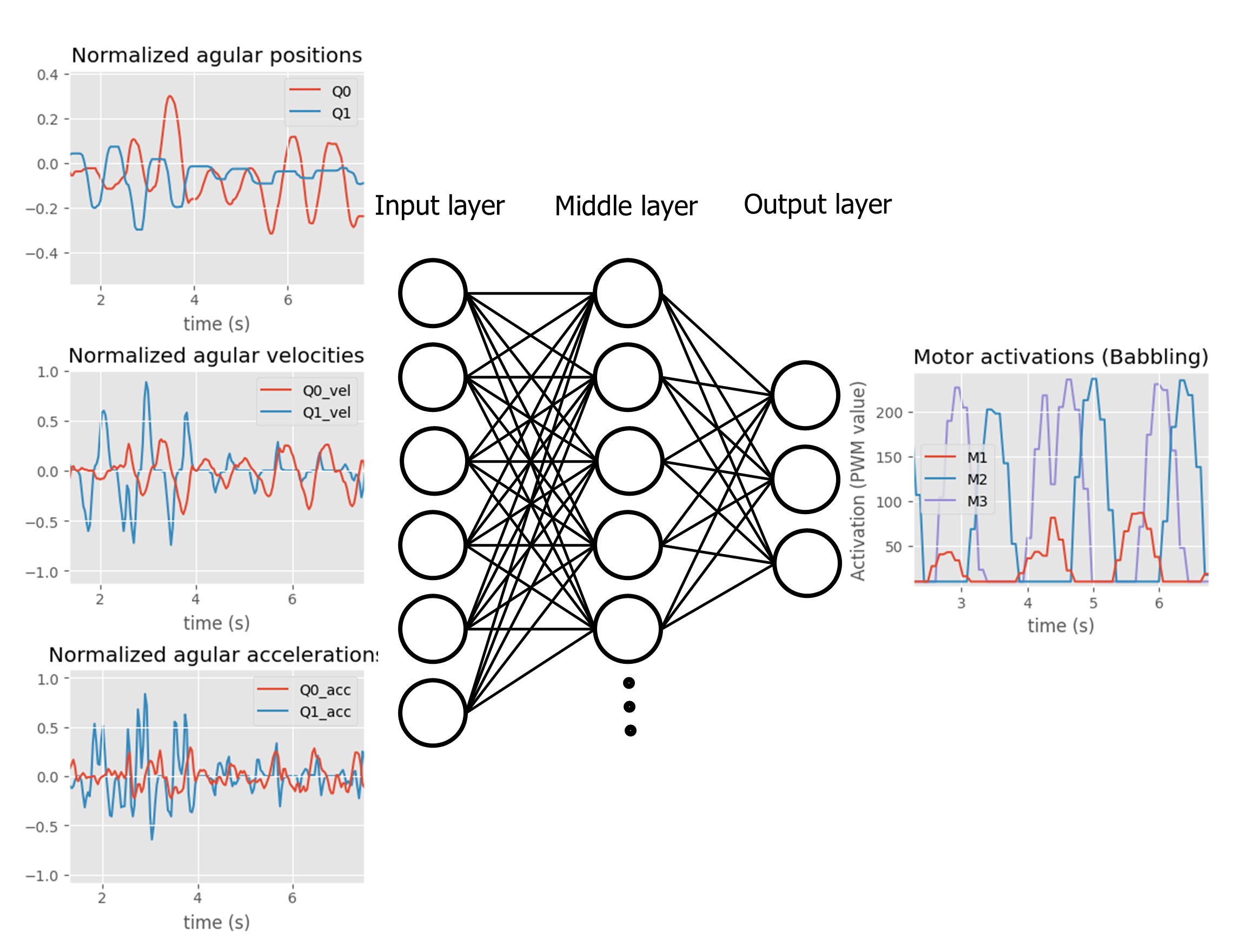
技术框架:整体架构包括一个驱动肌腱的双足机器人,使用三层神经网络进行运动学习,分为自然运动探索和天真运动探索两种策略。
关键创新:最重要的创新在于通过自然运动探索实现的有效学习,机器人能够在轻微接触地面时产生周期性运动,而无需显式控制轨迹误差。
关键设计:关键设计包括三层神经网络的结构,损失函数的选择,以及如何利用可回驱动特性进行身体与环境的交互。
🖼️ 关键图片
📊 实验亮点
实验结果表明,经过2分钟的自然运动探索,机器人能够有效产生周期性运动,并在轻微接触地面时实现行走,而基于天真运动探索的学习则未能产生有效的运动模式。这一发现表明,生物启发的共适应策略在自主学习中的重要性。
🎯 应用场景
该研究的潜在应用领域包括服务机器人、康复机器人和人机协作系统等。通过提升双足机器人在复杂环境中的自主学习能力,能够显著提高其在实际应用中的灵活性和适应性,推动智能机器人技术的发展。
📄 摘要(原文)
Inspired by animals that co-adapt their brain and body to interact with the environment, we present a tendon-driven and over-actuated (i.e., n joint, n+1 actuators) bipedal robot that (i) exploits its backdrivable mechanical properties to manage body-environment interactions without explicit control, and (ii) uses a simple 3-layer neural network to learn to walk after only 2 minutes of 'natural' motor babbling (i.e., an exploration strategy that is compatible with leg and task dynamics; akin to childsplay). This brain-body collaboration first learns to produce feet cyclical movements 'in air' and, without further tuning, can produce locomotion when the biped is lowered to be in slight contact with the ground. In contrast, training with 2 minutes of 'naive' motor babbling (i.e., an exploration strategy that ignores leg task dynamics), does not produce consistent cyclical movements 'in air', and produces erratic movements and no locomotion when in slight contact with the ground. When further lowering the biped and making the desired leg trajectories reach 1cm below ground (causing the desired-vs-obtained trajectories error to be unavoidable), cyclical movements based on either natural or naive babbling presented almost equally persistent trends, and locomotion emerged with naive babbling. Therefore, we show how continual learning of walking in unforeseen circumstances can be driven by continual physical adaptation rooted in the backdrivable properties of the plant and enhanced by exploration strategies that exploit plant dynamics. Our studies also demonstrate that the bio-inspired codesign and co-adaptations of limbs and control strategies can produce locomotion without explicit control of trajectory errors.