MagicTac: A Novel High-Resolution 3D Multi-layer Grid-Based Tactile Sensor
作者: Wen Fan, Haoran Li, Dandan Zhang
分类: cs.RO
发布日期: 2024-02-02
备注: 7 pages, 8 figures, 2024 IEEE International Conference on Robotics and Automation (ICRA 2024)
💡 一句话要点
提出MagicTac以解决高分辨率触觉传感器的制造与性能问题
🎯 匹配领域: 支柱三:空间感知与语义 (Perception & Semantics)
关键词: 触觉传感器 机器人控制 增材制造 高分辨率 多层网格 动态接触信息 经济性 制造效率
📋 核心要点
- 现有的触觉传感器在空间分辨率和制造成本上存在不足,难以满足高精度机器人控制的需求。
- MagicTac采用3D多层网格设计和多材料增材制造技术,旨在提高触觉传感器的空间分辨率和经济性。
- 实验表明,MagicTac在触觉重建任务中表现优异,能够捕捉细微纹理,并对动态接触信息表现出良好的敏感性。
📝 摘要(中文)
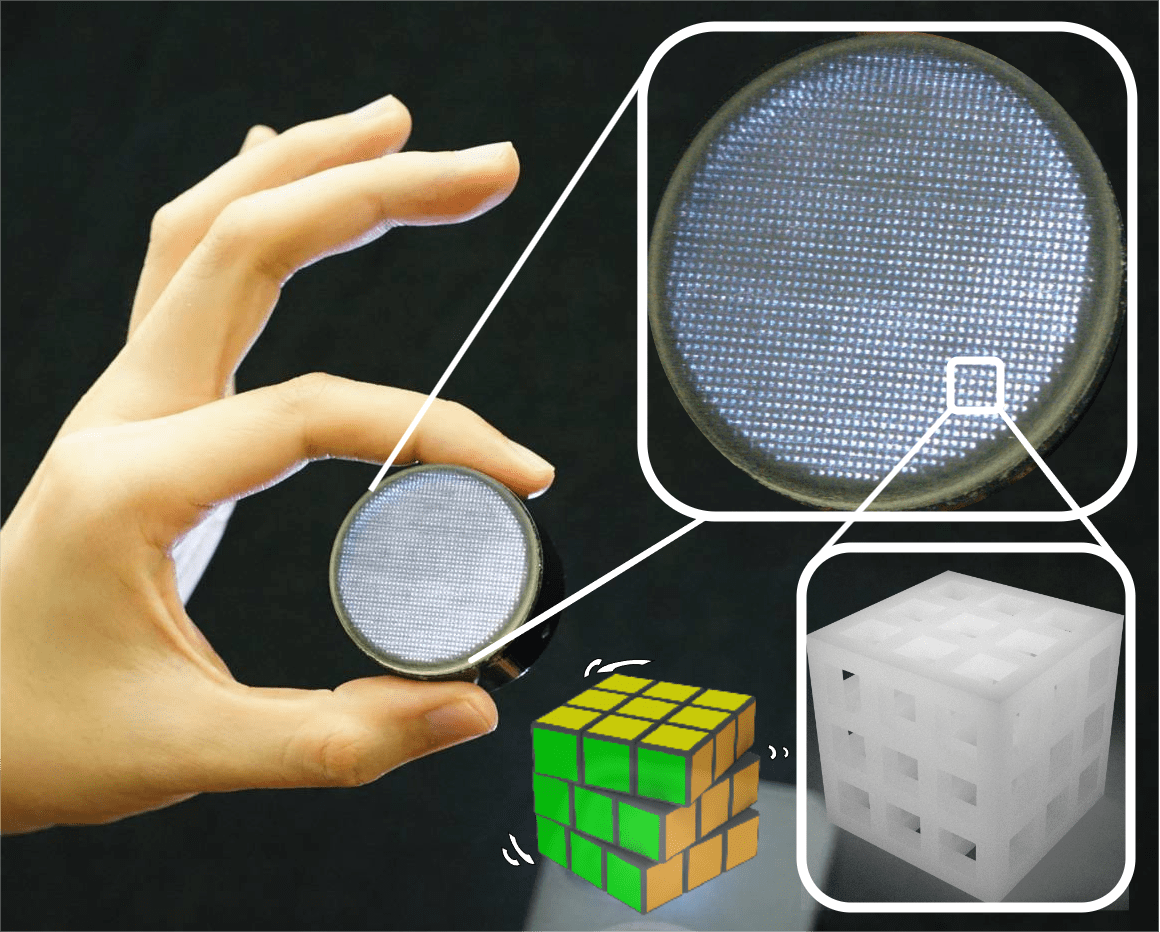
准确的机器人控制依赖于对环境触觉接触的理解。本文介绍了一种新型高分辨率网格触觉传感器MagicTac,该传感器采用3D多层网格设计,灵感来源于魔方结构,能够提高空间分辨率以感知外部接触。MagicTac使用多材料增材制造技术,简化了制造过程并确保生产的一致性。与传统视觉触觉传感器相比,MagicTac具有高空间分辨率、显著的经济性和易于制造的优点。实验结果表明,MagicTac能够捕捉细腻的纹理,并对动态接触信息敏感,最低制造成本为4.76英镑,制造时间为24.6分钟。
🔬 方法详解
问题定义:现有触觉传感器在空间分辨率和制造成本上存在局限,无法有效支持高精度的机器人交互控制。
核心思路:MagicTac通过3D多层网格结构设计,结合多材料增材制造技术,旨在提升触觉传感器的性能和经济性,简化制造过程。
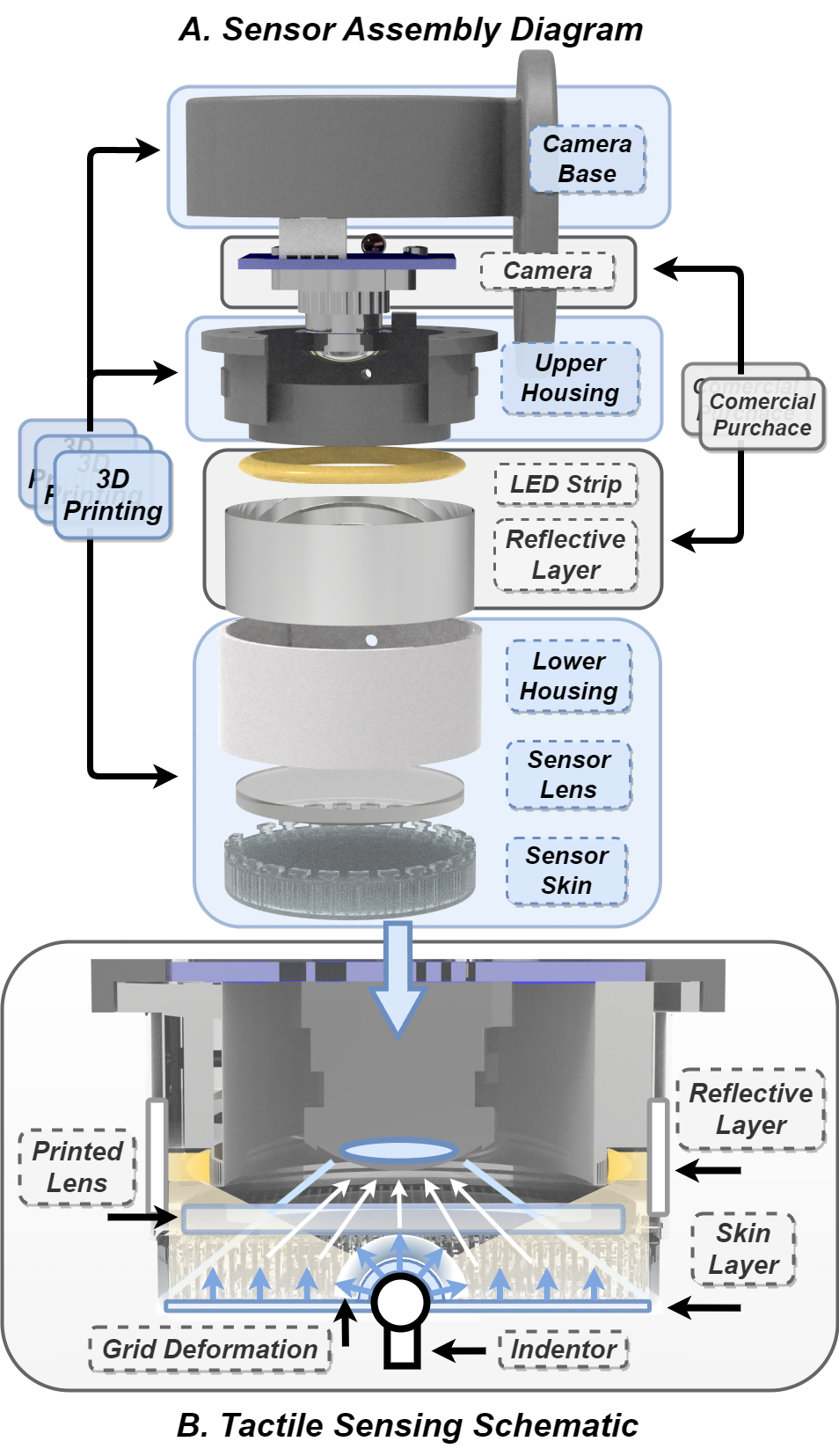
技术框架:MagicTac的整体架构包括传感器的多层网格结构、材料选择和增材制造流程,确保高分辨率的触觉感知和易于生产的特性。
关键创新:MagicTac的主要创新在于其独特的3D多层网格设计和多材料制造方法,使其在空间分辨率和生产成本上优于传统触觉传感器。
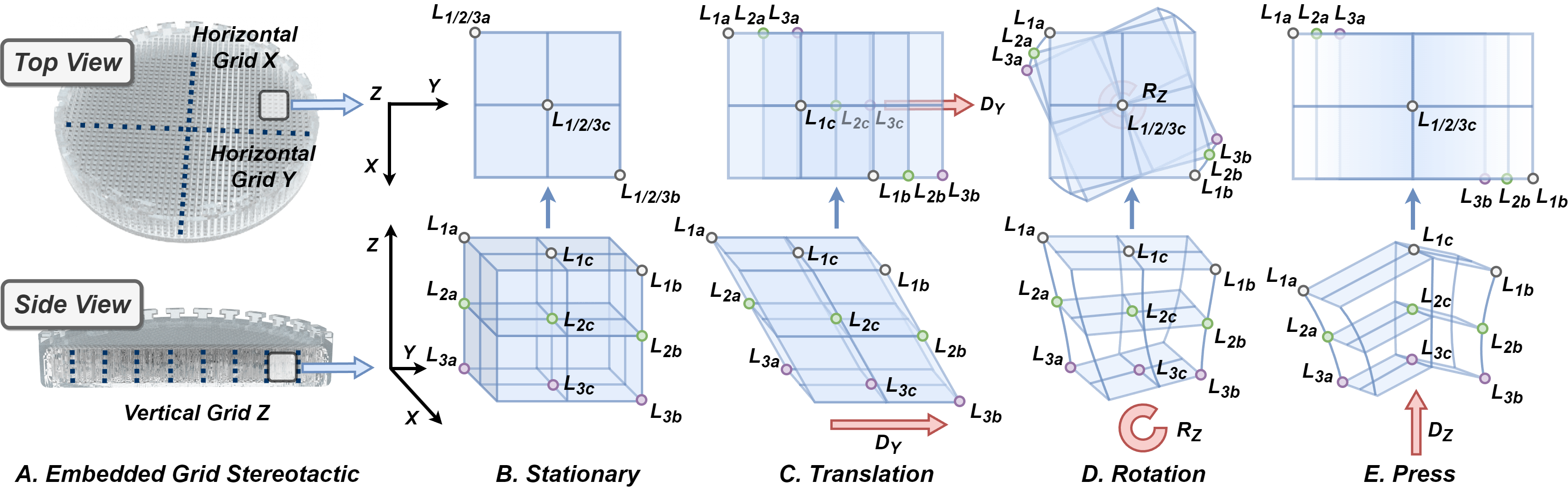
关键设计:在设计中,MagicTac的网格结构参数经过优化,以实现最佳的触觉感知效果,损失函数和网络结构也经过精心调整,以提高传感器的响应速度和准确性。
🖼️ 关键图片
📊 实验亮点
实验结果显示,MagicTac在触觉重建任务中能够有效捕捉细腻的纹理信息,并对动态接触信息表现出高度敏感性。与传统传感器相比,MagicTac的制造成本最低可达4.76英镑,制造时间为24.6分钟,显示出显著的经济性和效率提升。
🎯 应用场景
MagicTac的设计使其在机器人触觉感知、智能制造和人机交互等领域具有广泛的应用潜力。其高分辨率和低成本的特性使得在实际应用中更具可行性,能够推动触觉传感器技术的发展和普及。
📄 摘要(原文)
Accurate robotic control over interactions with the environment is fundamentally grounded in understanding tactile contacts. In this paper, we introduce MagicTac, a novel high-resolution grid-based tactile sensor. This sensor employs a 3D multi-layer grid-based design, inspired by the Magic Cube structure. This structure can help increase the spatial resolution of MagicTac to perceive external interaction contacts. Moreover, the sensor is produced using the multi-material additive manufacturing technique, which simplifies the manufacturing process while ensuring repeatability of production. Compared to traditional vision-based tactile sensors, it offers the advantages of i) high spatial resolution, ii) significant affordability, and iii) fabrication-friendly construction that requires minimal assembly skills. We evaluated the proposed MagicTac in the tactile reconstruction task using the deformation field and optical flow. Results indicated that MagicTac could capture fine textures and is sensitive to dynamic contact information. Through the grid-based multi-material additive manufacturing technique, the affordability and productivity of MagicTac can be enhanced with a minimum manufacturing cost of 4.76 GBP and a minimum manufacturing time of 24.6 minutes.