Theory of Mind abilities of Large Language Models in Human-Robot Interaction : An Illusion?
作者: Mudit Verma, Siddhant Bhambri, Subbarao Kambhampati
分类: cs.RO, cs.AI, cs.HC
发布日期: 2024-01-10 (更新: 2024-01-17)
备注: Accepted in alt.HRI 2024
💡 一句话要点
探讨大型语言模型在机器人交互中的心智理论能力
🎯 匹配领域: 支柱九:具身大模型 (Embodied Foundation Models)
关键词: 大型语言模型 心智理论 人机交互 行为识别 扰动测试 可解释性 机器人行为
📋 核心要点
- 现有方法在机器人与人类交互中对大型语言模型的心智理论能力存在过度乐观的假设,缺乏深入验证。
- 论文提出通过人类观察者的视角,利用大型语言模型评估机器人行为的可理解性,探索其心智理论能力。
- 实验结果显示,用户在特定情境下能够正确评估机器人行为,但后续测试揭示了大型语言模型在面对扰动时的脆弱性。
📝 摘要(中文)
大型语言模型在自然语言处理和生成任务中展现出卓越的生成能力。然而,关于其心智理论(ToM)能力的讨论日益增多,尤其是在机器人与人类交互的场景中。本文研究了机器人如何利用大型语言模型评估其行为的可理解性,重点关注可解释、可读、可预测和模糊四种行为类型。通过人类受试者研究,验证了用户在特定情境下对机器人行为的理解能力。尽管初步结果显示大型语言模型在ToM能力测试中表现良好,但后续的扰动测试揭示了其在面对微小干扰时的局限性。
🔬 方法详解
问题定义:本文旨在探讨大型语言模型在机器人与人类交互中是否具备真实的心智理论能力,现有方法对其能力的评估存在过于乐观的倾向。
核心思路:通过设计人类观察者的行为识别任务,利用大型语言模型评估机器人行为的可理解性,验证其在复杂情境下的表现。
技术框架:研究分为两个主要阶段:首先进行人类受试者研究,收集用户对机器人行为的反馈;其次进行扰动测试,分析模型在不同情境下的表现。
关键创新:提出了一系列扰动测试(如不一致信念、无信息上下文和信念测试),揭示了大型语言模型在面对微小干扰时的局限性,挑战了其心智理论能力的假设。
关键设计:在实验中,设计了多种行为类型的机器人行为,并通过精心策划的情境来测试用户的理解能力,同时设置了多个扰动条件以评估模型的稳定性。
🖼️ 关键图片


📊 实验亮点
实验结果显示,用户在特定情境下能够正确评估机器人行为,初步测试得分非常高,然而在后续的扰动测试中,模型的表现显著下降,表明其在真实应用中的局限性。
🎯 应用场景
该研究对人机交互领域具有重要的应用价值,尤其是在开发能够更好理解人类行为和意图的智能机器人方面。未来,提升大型语言模型在复杂情境下的鲁棒性将有助于其在实际应用中的广泛部署,如服务机器人、教育机器人等。
📄 摘要(原文)
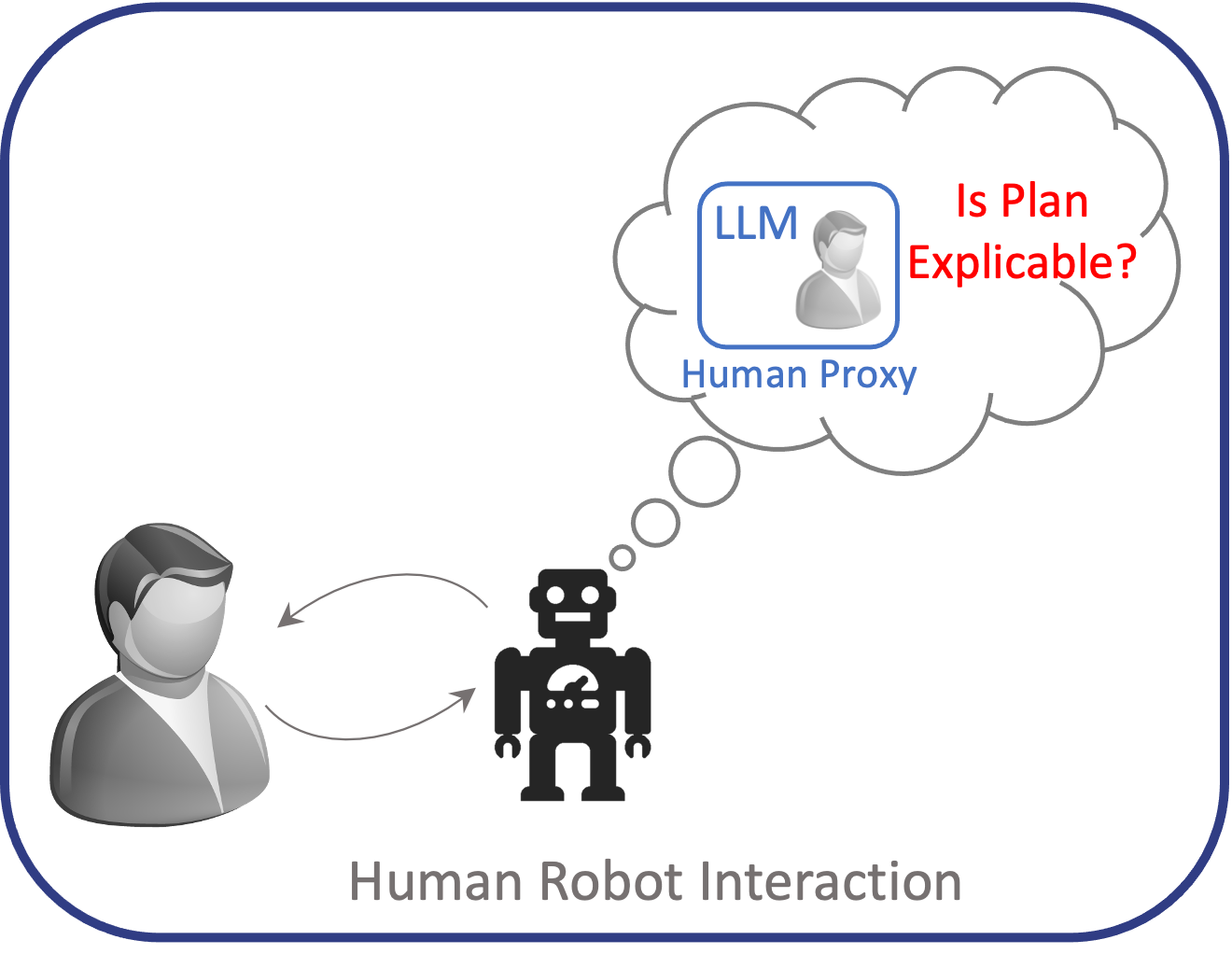
Large Language Models have shown exceptional generative abilities in various natural language and generation tasks. However, possible anthropomorphization and leniency towards failure cases have propelled discussions on emergent abilities of Large Language Models especially on Theory of Mind (ToM) abilities in Large Language Models. While several false-belief tests exists to verify the ability to infer and maintain mental models of another entity, we study a special application of ToM abilities that has higher stakes and possibly irreversible consequences : Human Robot Interaction. In this work, we explore the task of Perceived Behavior Recognition, where a robot employs a Large Language Model (LLM) to assess the robot's generated behavior in a manner similar to human observer. We focus on four behavior types, namely - explicable, legible, predictable, and obfuscatory behavior which have been extensively used to synthesize interpretable robot behaviors. The LLMs goal is, therefore to be a human proxy to the agent, and to answer how a certain agent behavior would be perceived by the human in the loop, for example "Given a robot's behavior X, would the human observer find it explicable?". We conduct a human subject study to verify that the users are able to correctly answer such a question in the curated situations (robot setting and plan) across five domains. A first analysis of the belief test yields extremely positive results inflating ones expectations of LLMs possessing ToM abilities. We then propose and perform a suite of perturbation tests which breaks this illusion, i.e. Inconsistent Belief, Uninformative Context and Conviction Test. We conclude that, the high score of LLMs on vanilla prompts showcases its potential use in HRI settings, however to possess ToM demands invariance to trivial or irrelevant perturbations in the context which LLMs lack.