End-to-end Reinforcement Learning for Time-Optimal Quadcopter Flight
作者: Robin Ferede, Christophe De Wagter, Dario Izzo, Guido C. H. E. de Croon
分类: cs.RO
发布日期: 2023-11-28
备注: 6 pages, 6 figures, 1 table
DOI: 10.1109/ICRA57147.2024.10611665
💡 一句话要点
提出端到端强化学习以解决四旋翼飞行的时间最优控制问题
🎯 匹配领域: 支柱一:机器人控制 (Robot Control) 支柱二:RL算法与架构 (RL & Architecture)
关键词: 四旋翼 强化学习 时间最优控制 端到端学习 机器人控制 残差模型 自适应方法
📋 核心要点
- 核心问题:现有的强化学习方法在四旋翼飞行控制中存在模拟与现实之间的差距,限制了控制器的最优性。
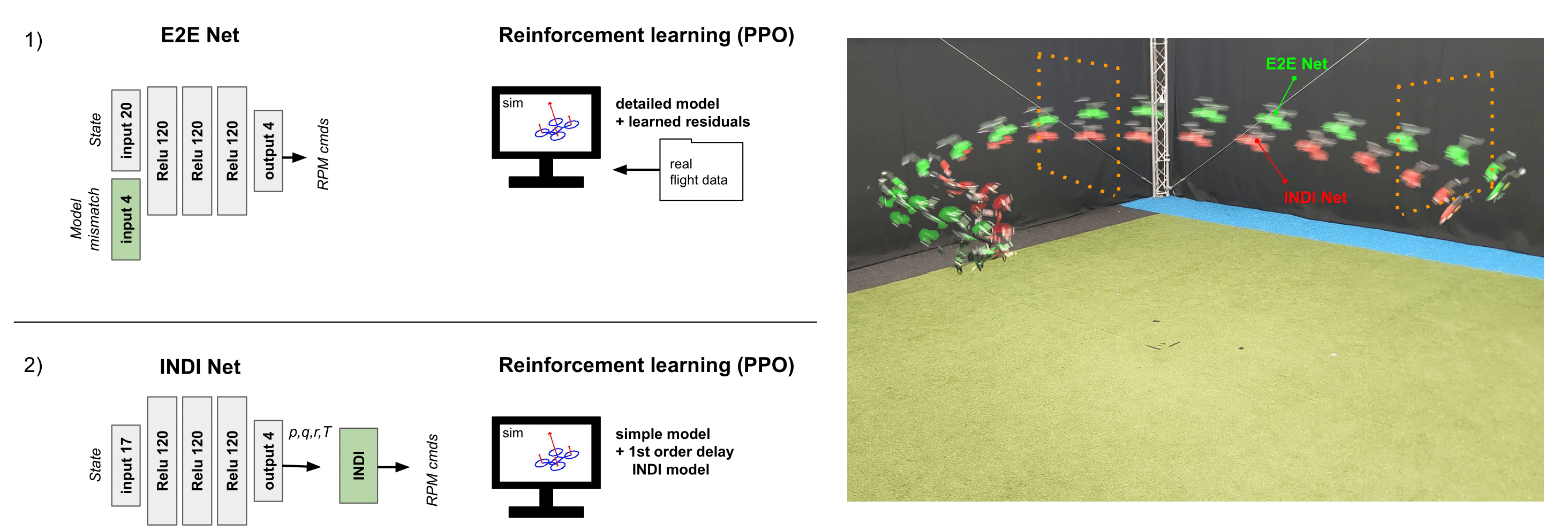
- 方法要点:本文提出了一种端到端强化学习方法,直接控制电机指令,并通过学习的残差模型来补偿建模误差。
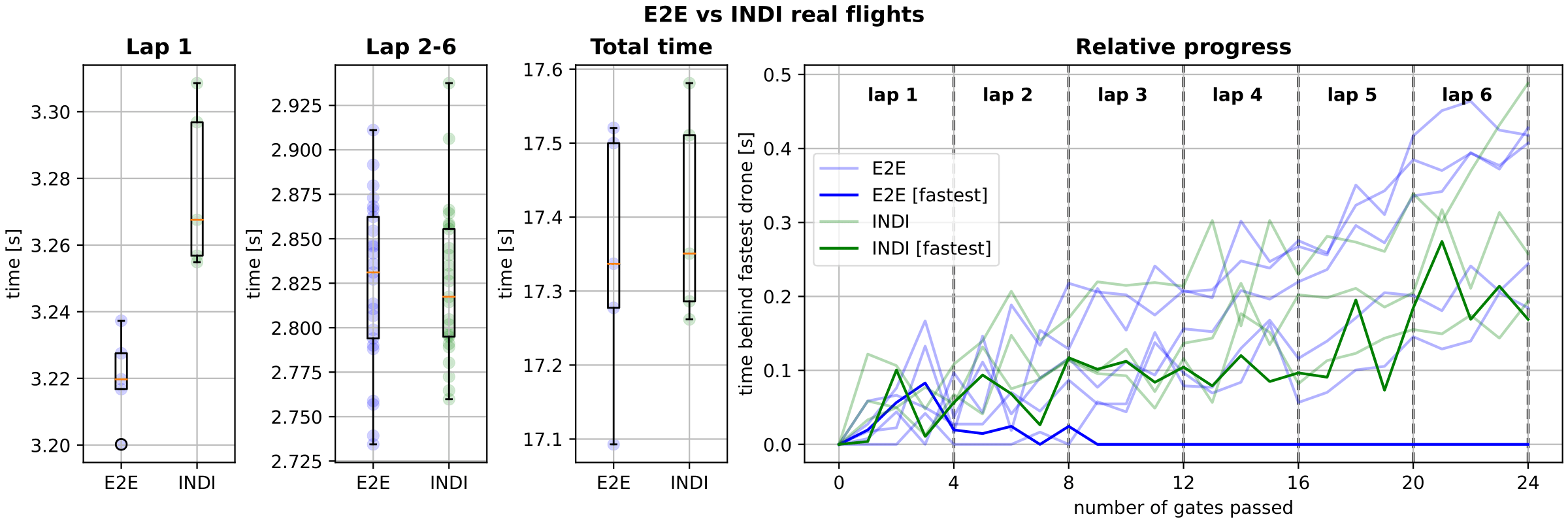
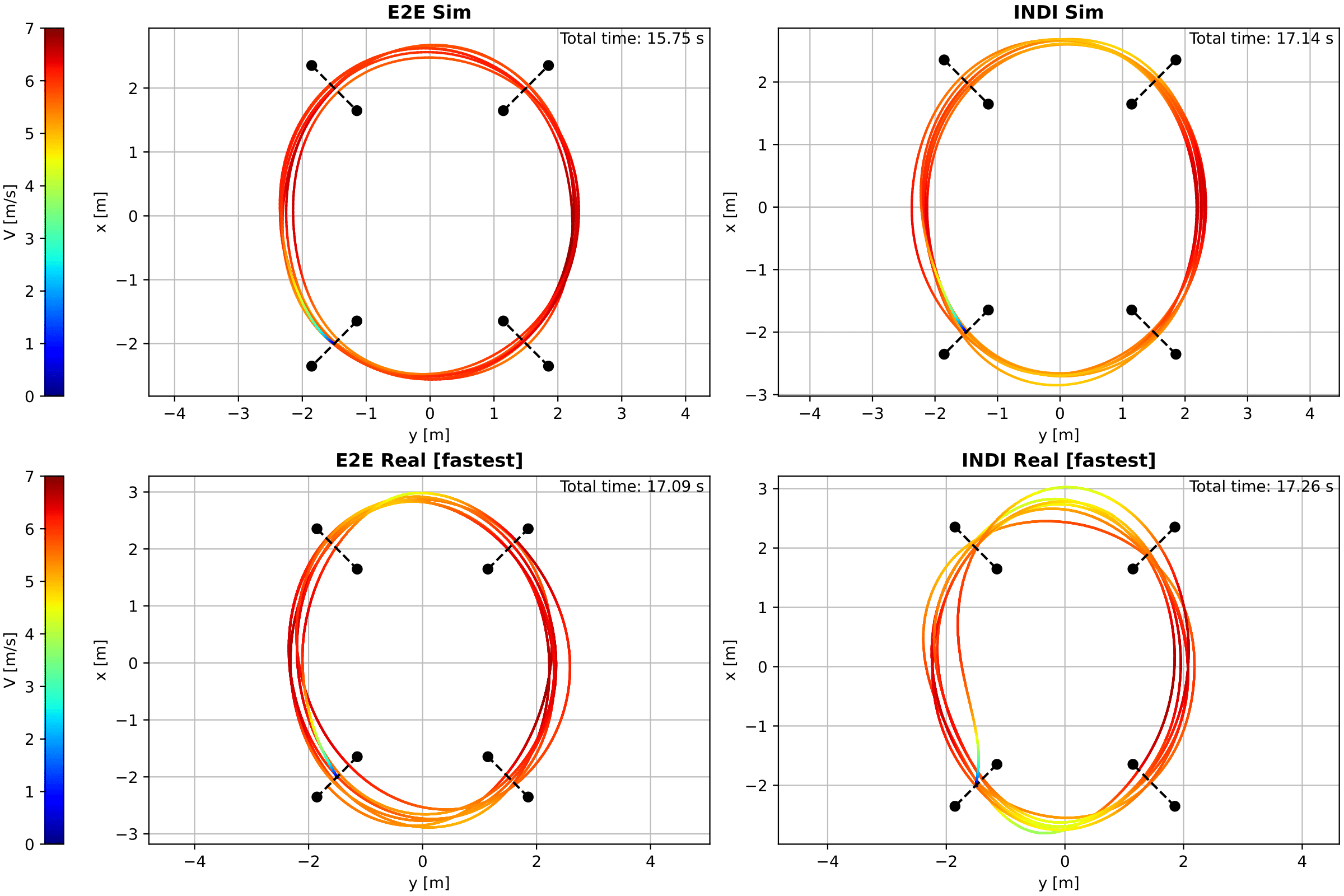
- 实验或效果:E2E方法在模拟中比传统方法快1.39秒,在现实测试中快0.17秒,显示出显著的性能提升。
📝 摘要(中文)
四旋翼的激进时间最优控制在机器人领域面临重大挑战。现有方法利用强化学习训练最优神经策略,但存在模拟与现实之间的差距。本文提出了一种新颖的端到端强化学习方法,直接发出电机指令,并通过学习的残差模型和自适应方法来弥补推力和力矩的建模误差。与传统方法相比,E2E在模拟中表现出1.39秒的优势,在现实测试中也有0.17秒的提升,展示了端到端强化学习的潜力。尽管从模拟到现实的性能下降仍需改进,但该研究为未来的飞行控制策略提供了新的方向。
🔬 方法详解
问题定义:本文旨在解决四旋翼飞行中的时间最优控制问题,现有方法依赖于内环控制器,导致在面对扰动时需要额外的安全边际,从而限制了控制器的最优性。
核心思路:论文提出了一种端到端的强化学习方法,直接输出电机指令,避免了传统方法中对内环控制器的依赖,同时通过学习的残差模型来弥补推力和力矩的建模误差,从而提高控制的精度和响应速度。
技术框架:整体架构包括一个强化学习模块,该模块通过与环境的交互学习最优策略,并结合一个残差模型来调整输出的电机指令。该方法在模拟和现实环境中进行对比实验,以验证其有效性。
关键创新:最重要的创新点在于采用端到端的强化学习策略,直接控制电机指令,而不是通过传统的内环控制器,这一设计使得控制策略更加灵活和高效。
关键设计:在网络结构上,采用了深度神经网络来学习策略,损失函数设计为结合了控制精度和稳定性的多目标损失,确保在不同环境下的鲁棒性。
🖼️ 关键图片
📊 实验亮点
实验结果显示,端到端强化学习方法在模拟环境中比传统方法快1.39秒,在现实测试中快0.17秒,表明该方法在时间最优控制方面具有显著优势,展示了其在实际应用中的潜力。
🎯 应用场景
该研究的潜在应用领域包括无人机飞行控制、自动驾驶和其他需要快速响应的机器人系统。通过提高四旋翼的控制精度和响应速度,该方法能够在复杂环境中实现更高效的自主飞行,具有重要的实际价值和未来影响。
📄 摘要(原文)
Aggressive time-optimal control of quadcopters poses a significant challenge in the field of robotics. The state-of-the-art approach leverages reinforcement learning (RL) to train optimal neural policies. However, a critical hurdle is the sim-to-real gap, often addressed by employing a robust inner loop controller -an abstraction that, in theory, constrains the optimality of the trained controller, necessitating margins to counter potential disturbances. In contrast, our novel approach introduces high-speed quadcopter control using end-to-end RL (E2E) that gives direct motor commands. To bridge the reality gap, we incorporate a learned residual model and an adaptive method that can compensate for modeling errors in thrust and moments. We compare our E2E approach against a state-of-the-art network that commands thrust and body rates to an INDI inner loop controller, both in simulated and real-world flight. E2E showcases a significant 1.39-second advantage in simulation and a 0.17-second edge in real-world testing, highlighting end-to-end reinforcement learning's potential. The performance drop observed from simulation to reality shows potential for further improvement, including refining strategies to address the reality gap or exploring offline reinforcement learning with real flight data.