Calibration of an Elastic Humanoid Upper Body and Efficient Compensation for Motion Planning
作者: Johannes Tenhumberg, Berthold Bäuml
分类: cs.RO
发布日期: 2023-11-14
期刊: 2021 IEEE-RAS International Conference on Humanoid Robots (Humanoids)
DOI: 10.1109/HUMANOIDS47582.2021.9555793
💡 一句话要点
提出一种弹性人形机器人上半身标定方法以优化运动规划
🎯 匹配领域: 支柱一:机器人控制 (Robot Control)
关键词: 人形机器人 运动学模型 弹性建模 运动规划 参数校准 路径优化 动态环境
📋 核心要点
- 现有方法在处理人形机器人运动时,缺乏对弹性变形的有效建模,导致精度不足。
- 本文提出了一种新颖的运动学模型,考虑了关节和横向弹性,通过扭矩平衡实现隐式定义。
- 实验结果表明,模型校准后,绝对位置误差显著降低,且在运动规划中集成隐式模型提高了效率。
📝 摘要(中文)
高绝对精度是人形机器人自主且稳健地执行操作任务的基本前提。本文首次提出了一种包含关节和横向弹性的机器人上半身运动学模型。这些弹性导致机器人自重引起显著变形,模型通过扭矩平衡隐式定义。我们成功地为DLR的人形机器人Agile Justin校准了该模型,涵盖所有Denavit-Hartenberg参数和弹性。通过外部跟踪系统对双臂末端执行器位置的测量,校准被表述为一个结合先验的最小二乘问题。绝对位置误差在整个工作空间内显著降低,从21mm降至平均3.1mm。将这一复杂的隐式运动学模型应用于运动规划具有挑战性。我们展示了在基于优化的路径规划中,将隐式模型的迭代解集成到优化循环中,能够提供优雅且高效的解决方案。
🔬 方法详解
问题定义:本文旨在解决人形机器人在执行操作任务时,由于缺乏对自身弹性变形的有效建模而导致的运动精度不足的问题。现有方法未能充分考虑机器人自重引起的变形,影响了操作的可靠性和准确性。
核心思路:论文提出了一种新的运动学模型,首次将关节和横向弹性纳入考虑,通过扭矩平衡隐式定义模型。这种设计能够更真实地反映机器人在实际操作中的动态行为,从而提高运动精度。
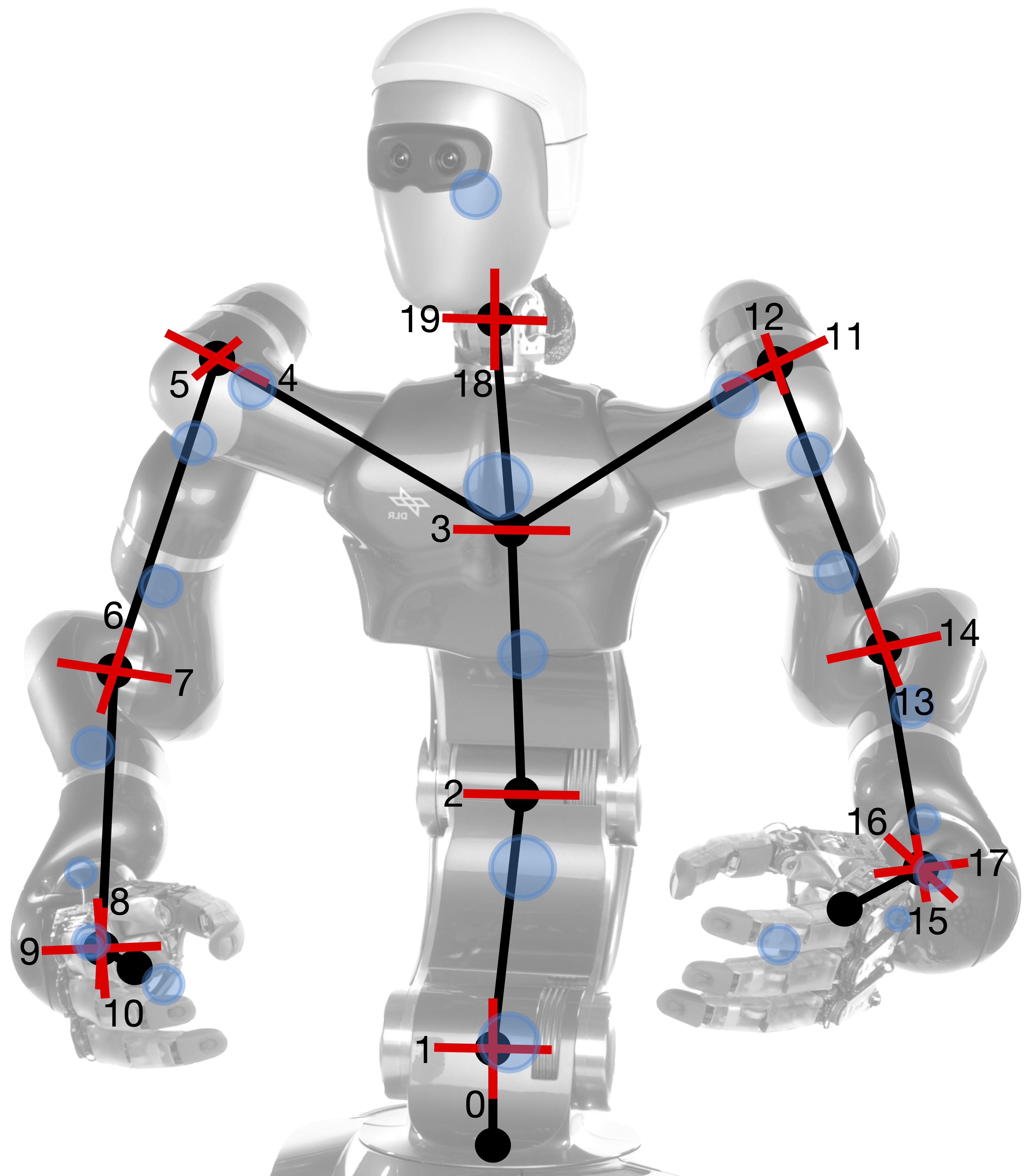
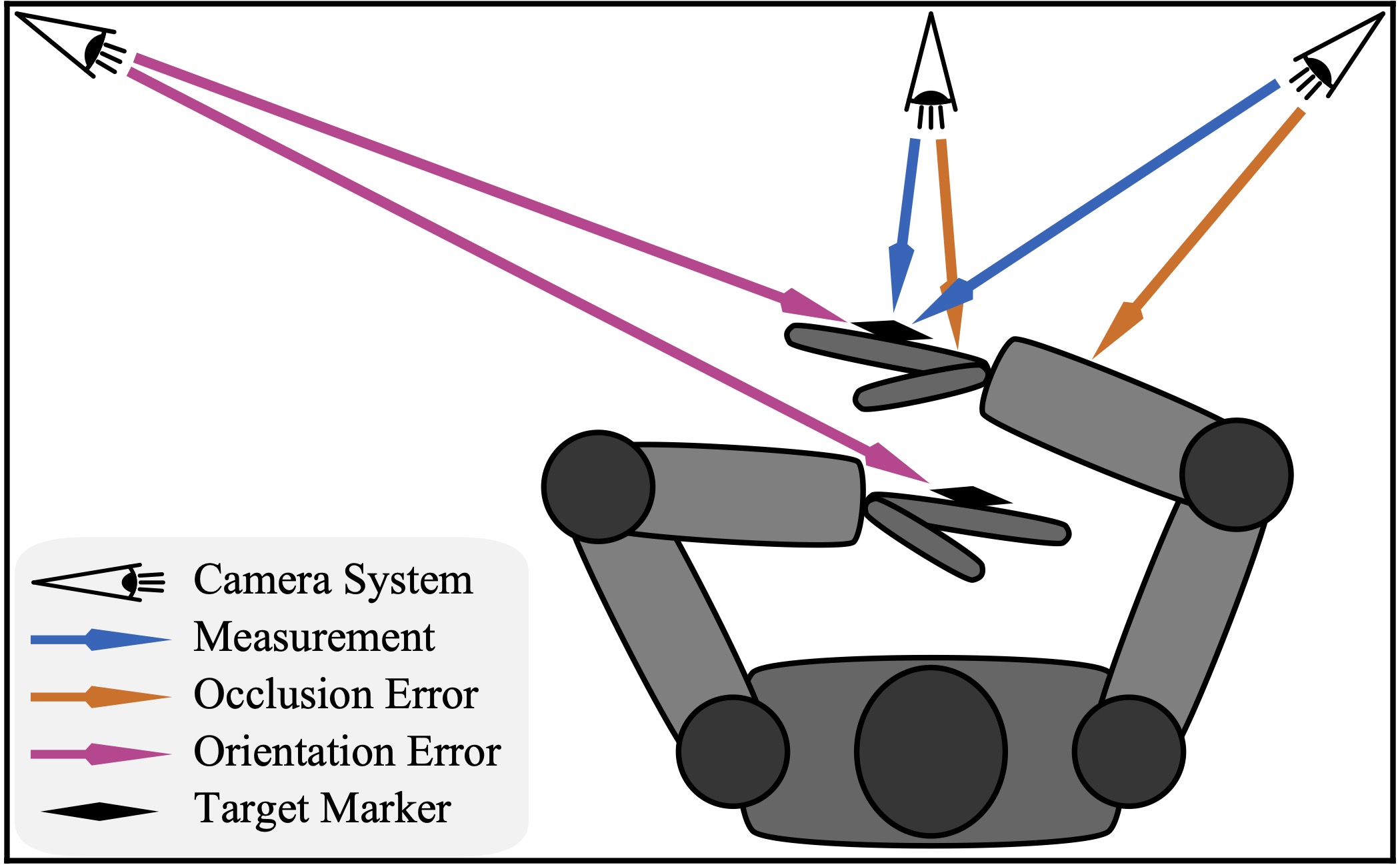
技术框架:整体架构包括模型的建立、参数校准和运动规划三个主要模块。首先,通过外部跟踪系统获取末端执行器位置数据,然后利用最小二乘法进行模型参数的校准,最后将校准后的模型应用于优化路径规划中。
关键创新:最重要的技术创新在于将弹性因素纳入运动学模型中,并通过扭矩平衡实现隐式定义。这与传统的刚性模型有本质区别,能够更好地适应机器人在动态环境中的操作需求。
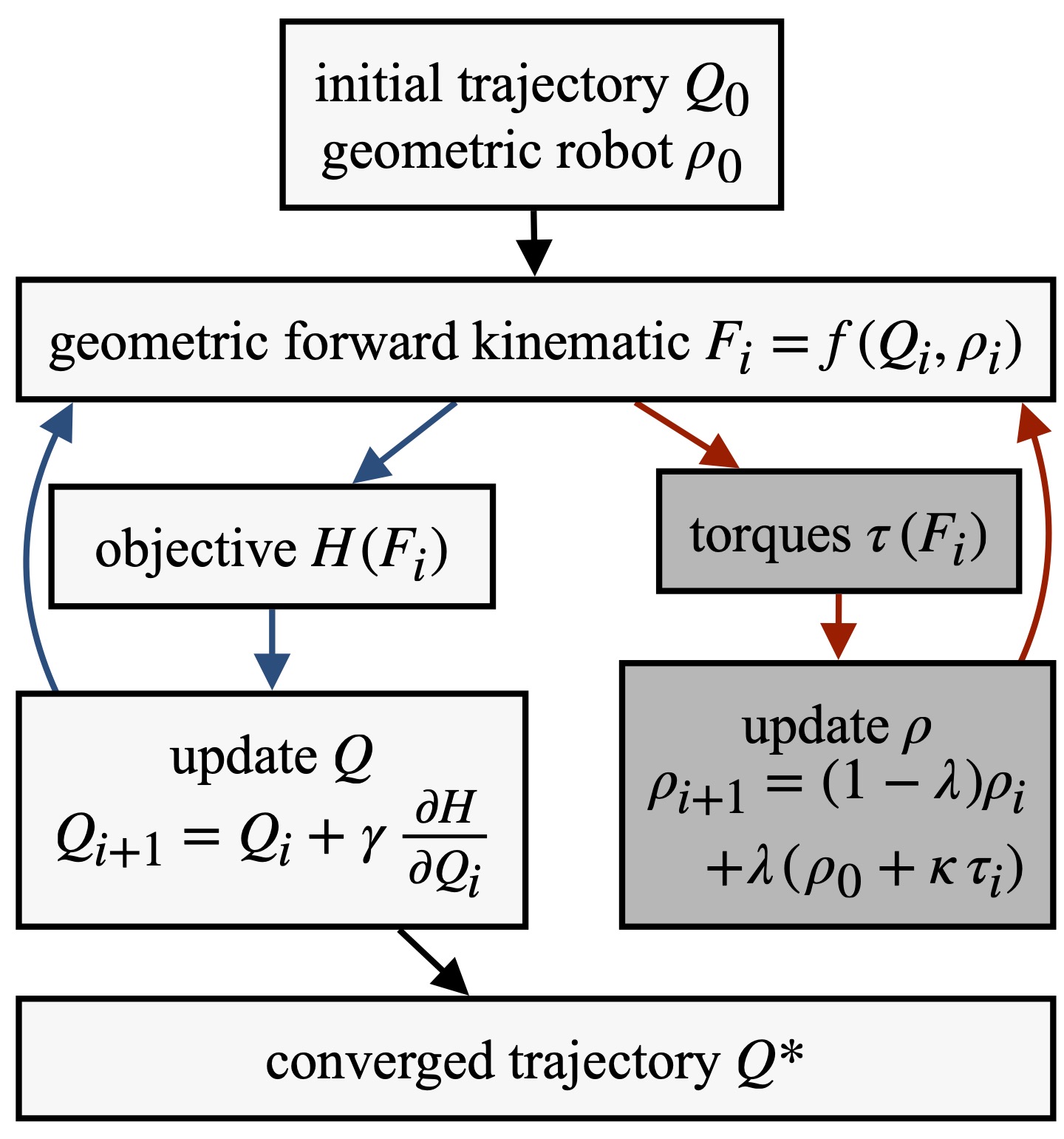
关键设计:在校准过程中,采用结合先验的最小二乘问题来优化所有Denavit-Hartenberg参数和弹性参数,确保模型的准确性。同时,优化路径规划时,将隐式模型的迭代解集成到优化循环中,保持了高效的计算性能。
🖼️ 关键图片
📊 实验亮点
实验结果显示,经过校准后,机器人在整个工作空间内的绝对位置误差从21mm显著降低至平均3.1mm,提升幅度超过85%。此外,在运动规划中集成隐式模型的运行时间仅增加30%,即使在模拟高度弹性的机器人中也保持了良好的性能。
🎯 应用场景
该研究的潜在应用领域包括人形机器人在复杂环境中的自主操作,如服务机器人、工业自动化和医疗辅助等。通过提高机器人的运动精度和灵活性,能够显著提升其在实际应用中的表现和可靠性,推动人形机器人技术的发展。
📄 摘要(原文)
High absolute accuracy is an essential prerequisite for a humanoid robot to autonomously and robustly perform manipulation tasks while avoiding obstacles. We present for the first time a kinematic model for a humanoid upper body incorporating joint and transversal elasticities. These elasticities lead to significant deformations due to the robot's own weight, and the resulting model is implicitly defined via a torque equilibrium. We successfully calibrate this model for DLR's humanoid Agile Justin, including all Denavit-Hartenberg parameters and elasticities. The calibration is formulated as a combined least-squares problem with priors and based on measurements of the end effector positions of both arms via an external tracking system. The absolute position error is massively reduced from 21mm to 3.1mm on average in the whole workspace. Using this complex and implicit kinematic model in motion planning is challenging. We show that for optimization-based path planning, integrating the iterative solution of the implicit model into the optimization loop leads to an elegant and highly efficient solution. For mildly elastic robots like Agile Justin, there is no performance impact, and even for a simulated highly flexible robot with 20 times higher elasticities, the runtime increases by only 30%.