QTALE: Quantization-Robust Token-Adaptive Layer Execution for LLMs
作者: Kanghyun Noh, Jinheon Choi, Yulhwa Kim
分类: cs.LG
发布日期: 2026-07-05
💡 一句话要点
提出QTALE以解决大语言模型的高效部署问题
🎯 匹配领域: 支柱九:具身大模型 (Embodied Foundation Models)
关键词: 大语言模型 量化 令牌自适应执行 高效部署 计算资源 内存优化 模型准确性
📋 核心要点
- 现有方法在集成令牌自适应执行与量化时,容易导致准确性下降,限制了模型的有效性。
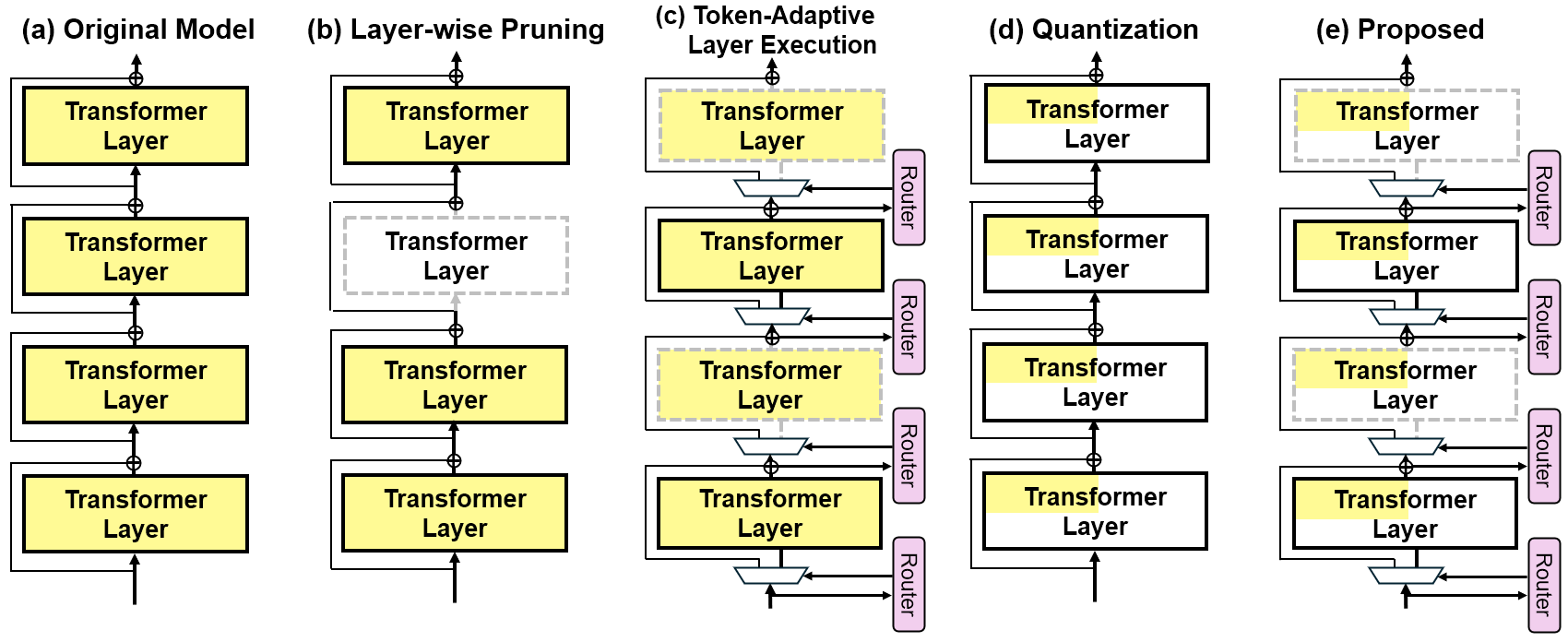
- QTALE通过引入多样化的训练策略和后训练机制,确保在推理时能够灵活调整执行比例,从而重新引入冗余。
- 实验结果显示,QTALE在保持高准确性的同时,成功实现了计算量和内存占用的有效降低。
📝 摘要(中文)
大语言模型(LLMs)在计算和内存资源上需求巨大,给高效部署带来了挑战。为了解决这一问题,出现了两种互补的方法:基于令牌的自适应层执行和量化。然而,简单地将这两种技术结合会导致准确性下降。本文提出了QTALE(量化鲁棒的令牌自适应层执行框架),该框架能够无缝集成令牌自适应执行与量化,同时保持准确性。实验结果表明,QTALE在CommonsenseQA基准测试中,准确性与仅使用量化的模型之间的差距低于0.5%。
🔬 方法详解
问题定义:本文旨在解决大语言模型在高效部署中面临的计算和内存资源需求过大的问题。现有的令牌自适应执行与量化方法在结合时,容易导致模型准确性下降,无法有效利用冗余信息。
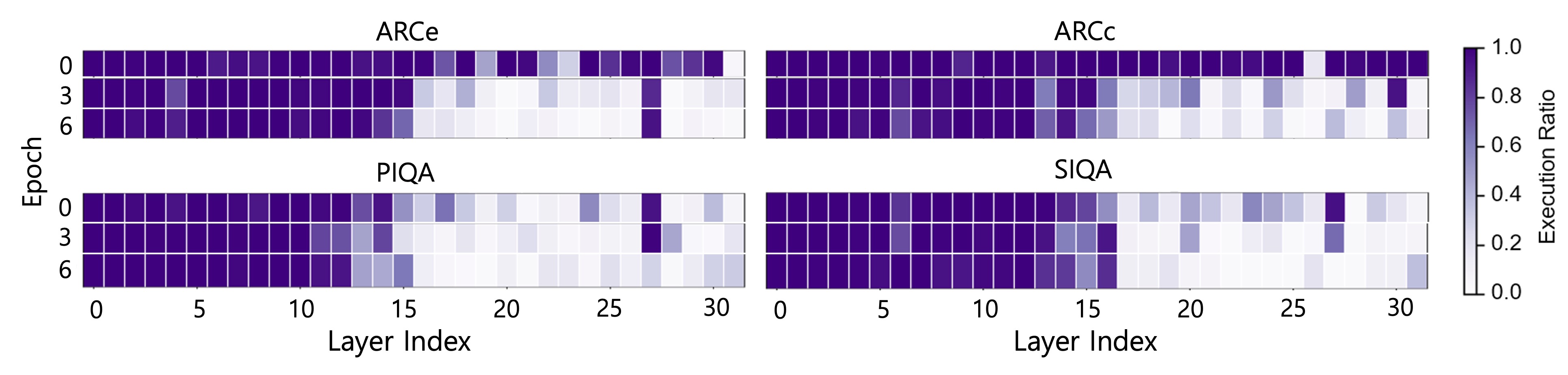
核心思路:QTALE的核心思路是通过多样化的训练路径和后训练机制,确保在推理过程中能够灵活调整执行比例,从而保持模型的准确性和效率。
技术框架:QTALE的整体架构包括两个主要模块:一是多样化训练策略,确保在微调阶段探索多样的执行路径;二是后训练机制,允许在推理时根据需要调整执行比例。
关键创新:QTALE的创新点在于其能够有效结合令牌自适应执行与量化,同时保持模型的准确性,解决了现有方法在冗余利用上的不足。
关键设计:在训练过程中,QTALE采用了多样化的路径探索策略,并在推理阶段引入了灵活的执行比例调整机制,以确保在不同场景下的性能优化。具体的参数设置和损失函数设计在实验中经过了细致的调优。
🖼️ 关键图片

📊 实验亮点
实验结果表明,QTALE在CommonsenseQA基准测试中,准确性与仅使用量化的模型之间的差距低于0.5%。这一结果显示了QTALE在保持高准确性的同时,成功实现了计算量和内存占用的有效降低,具有显著的性能提升。
🎯 应用场景
QTALE的研究成果具有广泛的应用潜力,尤其在需要高效部署大语言模型的场景中,如智能助手、自动问答系统和内容生成等领域。通过降低计算和内存需求,QTALE能够使得这些技术在资源受限的环境中得以应用,推动人工智能技术的普及与发展。
📄 摘要(原文)
Large language models (LLMs) demand substantial computational and memory resources, posing challenges for efficient deployment. Two complementary approaches have emerged to address these issues: token-adaptive layer execution, which reduces floating-point operations (FLOPs) by selectively bypassing layers, and quantization, which lowers memory footprint by reducing weight precision. However, naively integrating these techniques leads to additional accuracy degradation due to reduced redundancy in token-adaptive models. We propose QTALE (Quantization-Robust Token-Adaptive Layer Execution for LLMs), a novel framework that enables seamless integration of token-adaptive execution with quantization while preserving accuracy. Conventional token-adaptive methods reduce redundancy in two ways: (1) by limiting the diversity of training paths explored during fine-tuning, and (2) by lowering the number of parameters actively involved in inference. To overcome these limitations, QTALE introduces two key components: (1) a training strategy that ensures diverse execution paths are actively explored during fine-tuning, and (2) a post-training mechanism that allows flexible adjustment of the execution ratio at inference to reintroduce redundancy when needed. Experimental results show that QTALE enables seamless integration of token-adaptive layer execution with quantization, while keeping the accuracy gap to quantization-only models below 0.5% on CommonsenseQA benchmarks. By combining tokenadaptive execution for FLOPs reduction and quantization for memory savings, QTALE provides an effective solution for efficient LLM deployment.