Mitigating Vulnerable Road Users Occlusion Risk Via Collective Perception: An Empirical Analysis
作者: Vincent Albert Wolff, Edmir Xhoxhi
分类: cs.NI, cs.LG, cs.RO
发布日期: 2024-04-11
备注: Accepted for 35th IEEE Intelligent Vehicles Symposium 2024
💡 一句话要点
提出一种新算法以降低脆弱道路用户的遮挡风险
🎯 匹配领域: 支柱四:生成式动作 (Generative Motion)
关键词: 脆弱道路用户 遮挡风险 集体感知服务 最大跟踪损失 交通安全 智能交通系统 自动驾驶
📋 核心要点
- 脆弱道路用户(VRUs)在交通事故中面临严重的遮挡风险,现有方法未能有效解决这一问题。
- 本文提出了一种新算法,通过分析车辆与VRUs的动态,量化遮挡风险并引入最大跟踪损失(MTL)指标。
- 实验结果表明,CPS的25%市场渗透率可显著降低遮挡风险,并有效减少MTL,提升VRUs的安全性。
📝 摘要(中文)
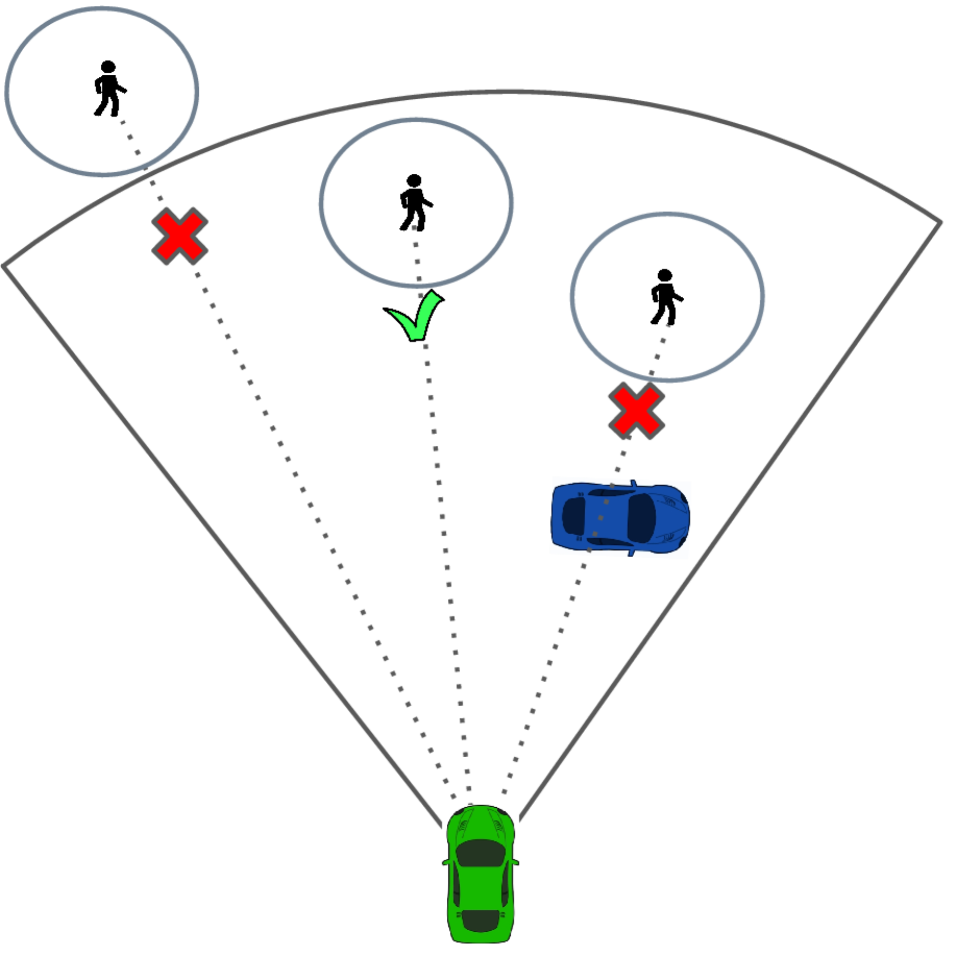
近期世界卫生组织的报告指出,脆弱道路用户(VRUs)在近年来的道路死亡事故中占比超过一半,而遮挡风险——即VRUs被停放车辆等障碍物遮挡,成为关键因素。为此,本文提出了一种新算法,通过分析车辆与VRUs的动态来量化遮挡风险。该算法在德国交叉口的真实数据集上进行了测试与评估。此外,我们引入了最大跟踪损失(MTL)的概念,衡量VRUs在特定场景中被任何车辆未跟踪的最长连续时间。研究还探讨了集体感知服务(CPS)在VRUs安全中的作用,表明CPS的市场渗透率达到25%时,可以显著降低遮挡风险并减少MTL。这些发现展示了不同场景对VRUs的风险程度,以及集体感知的部署如何显著提高其安全性。
🔬 方法详解
问题定义:本文旨在解决脆弱道路用户(VRUs)在交通环境中因遮挡而导致的安全风险。现有方法在识别和量化遮挡风险方面存在不足,未能充分考虑车辆与VRUs的动态交互。
核心思路:论文提出了一种新算法,通过实时分析车辆与VRUs的动态行为,量化遮挡风险,并引入最大跟踪损失(MTL)作为评估指标,以更全面地反映VRUs的安全状况。
技术框架:整体架构包括数据采集、动态分析、风险量化和CPS集成四个主要模块。数据采集阶段通过传感器收集车辆与VRUs的运动信息,动态分析模块则实时处理这些数据以评估遮挡风险。
关键创新:最重要的技术创新在于提出了最大跟踪损失(MTL)指标,能够有效衡量VRUs在特定场景下的安全风险,并与现有方法相比,提供了更为准确的风险评估。
关键设计:算法设计中,关键参数包括车辆与VRUs的速度、位置和相对距离,损失函数则基于遮挡时间和跟踪状态进行优化,以确保算法在不同场景下的鲁棒性。通过这些设计,算法能够在复杂交通环境中有效运行。
🖼️ 关键图片


📊 实验亮点
实验结果显示,集体感知服务(CPS)在市场渗透率达到25%时,能够显著降低脆弱道路用户的遮挡风险,最大跟踪损失(MTL)减少幅度达到显著水平。这一发现强调了CPS在提升交通安全中的重要作用。
🎯 应用场景
该研究的潜在应用领域包括智能交通系统、自动驾驶车辆和城市交通管理。通过提高对脆弱道路用户的安全保护,能够有效减少交通事故的发生,提升城市交通的整体安全性与效率,具有重要的实际价值和社会影响。
📄 摘要(原文)
Recent reports from the World Health Organization highlight that Vulnerable Road Users (VRUs) have been involved in over half of the road fatalities in recent years, with occlusion risk - a scenario where VRUs are hidden from drivers' view by obstacles like parked vehicles - being a critical contributing factor. To address this, we present a novel algorithm that quantifies occlusion risk based on the dynamics of both vehicles and VRUs. This algorithm has undergone testing and evaluation using a real-world dataset from German intersections. Additionally, we introduce the concept of Maximum Tracking Loss (MTL), which measures the longest consecutive duration a VRU remains untracked by any vehicle in a given scenario. Our study extends to examining the role of the Collective Perception Service (CPS) in VRU safety. CPS enhances safety by enabling vehicles to share sensor information, thereby potentially reducing occlusion risks. Our analysis reveals that a 25% market penetration of CPS-equipped vehicles can substantially diminish occlusion risks and significantly curtail MTL. These findings demonstrate how various scenarios pose different levels of risk to VRUs and how the deployment of Collective Perception can markedly improve their safety. Furthermore, they underline the efficacy of our proposed metrics to capture occlusion risk as a safety factor.