CausalBench: A Comprehensive Benchmark for Causal Learning Capability of LLMs
作者: Yu Zhou, Xingyu Wu, Beicheng Huang, Jibin Wu, Liang Feng, Kay Chen Tan
分类: cs.LG
发布日期: 2024-04-09 (更新: 2024-09-27)
💡 一句话要点
提出CausalBench以评估大语言模型的因果学习能力
🎯 匹配领域: 支柱九:具身大模型 (Embodied Foundation Models)
关键词: 因果学习 大语言模型 基准评估 因果推理 机器学习 自然语言处理 复杂网络
📋 核心要点
- 现有方法缺乏全面的基准,限制了对大语言模型因果学习能力的评估。
- 本文提出CausalBench,通过三项任务评估LLMs与传统因果学习算法的比较能力。
- 实验结果显示,LLMs在简单因果关系上有潜力,但在复杂网络中表现不佳,尤其在碰撞结构上。
📝 摘要(中文)
因果关系的理解能力对大语言模型(LLMs)在输出解释和反事实推理中的能力有显著影响,因为因果关系揭示了潜在的数据分布。然而,目前缺乏全面的基准来评估LLMs的因果学习能力。为填补这一空白,本文基于因果研究社区的数据开发了CausalBench,支持对LLMs与传统因果学习算法的比较评估。我们提供了三项难度不同的任务,包括相关性、因果骨架和因果识别。对19个领先的LLMs的评估显示,尽管封闭源LLMs在简单因果关系上表现出潜力,但在更大规模的网络(>50个节点)上显著落后于传统算法。LLMs在碰撞结构上表现不佳,但在链结构上表现优异,尤其是在类似于思维链技术的长链因果关系上。这支持了当前的提示方法,同时建议了增强LLMs因果推理能力的方向。
🔬 方法详解
问题定义:本文旨在解决当前缺乏评估大语言模型因果学习能力的基准问题。现有方法无法全面评估LLMs在因果推理中的表现,尤其是在复杂因果结构下的能力。
核心思路:论文通过开发CausalBench,提供了一个综合性的基准,包含不同难度的因果任务,以便对LLMs与传统因果学习算法进行比较。这样的设计旨在揭示LLMs在因果推理中的优势与不足。
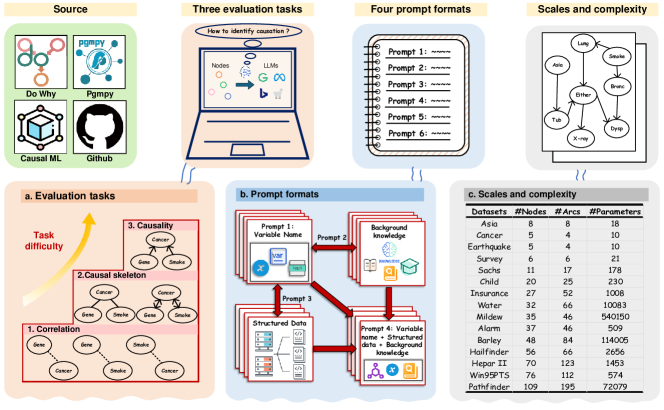
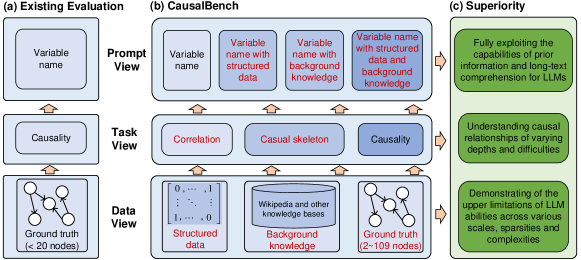
技术框架:CausalBench的整体架构包括三个主要任务:相关性、因果骨架和因果识别。每个任务的设计旨在评估LLMs在不同因果结构下的表现,并结合背景知识和训练数据进行评估。
关键创新:CausalBench的最大创新在于其综合性和针对性,能够系统性地评估LLMs的因果学习能力,并与传统算法进行直接比较。这一方法填补了现有研究的空白。
关键设计:在任务设计中,考虑了不同因果结构的复杂性,特别是对碰撞结构和链结构的处理。同时,评估过程中引入了背景知识,以帮助LLMs更好地理解因果关系。
🖼️ 关键图片
📊 实验亮点
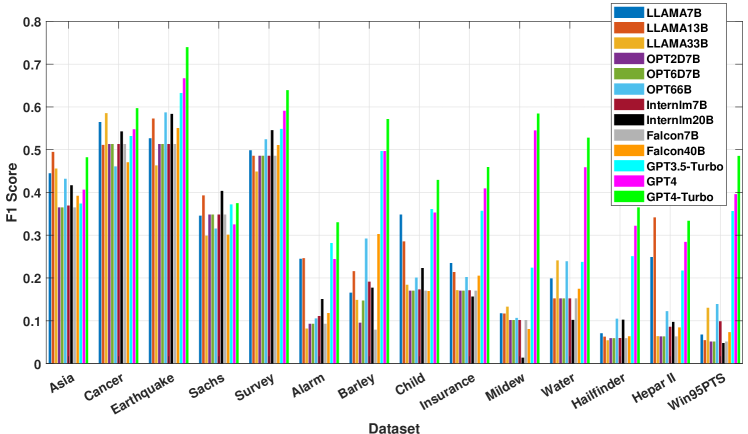
实验结果表明,19个LLMs在简单因果关系任务上表现良好,但在超过50个节点的复杂网络中显著落后于传统因果学习算法。特别是在碰撞结构上,LLMs的表现不佳,而在长链因果关系上则表现出色,支持了思维链技术的有效性。
🎯 应用场景
该研究的潜在应用领域包括自然语言处理、决策支持系统和智能问答等。通过提升LLMs的因果推理能力,可以增强其在复杂任务中的表现,推动智能系统在实际应用中的有效性和可靠性。
📄 摘要(原文)
The ability to understand causality significantly impacts the competence of large language models (LLMs) in output explanation and counterfactual reasoning, as causality reveals the underlying data distribution. However, the lack of a comprehensive benchmark currently limits the evaluation of LLMs' causal learning capabilities. To fill this gap, this paper develops CausalBench based on data from the causal research community, enabling comparative evaluations of LLMs against traditional causal learning algorithms. To provide a comprehensive investigation, we offer three tasks of varying difficulties, including correlation, causal skeleton, and causality identification. Evaluations of 19 leading LLMs reveal that, while closed-source LLMs show potential for simple causal relationships, they significantly lag behind traditional algorithms on larger-scale networks ($>50$ nodes). Specifically, LLMs struggle with collider structures but excel at chain structures, especially at long-chain causality analogous to Chains-of-Thought techniques. This supports the current prompt approaches while suggesting directions to enhance LLMs' causal reasoning capability. Furthermore, CausalBench incorporates background knowledge and training data into prompts to thoroughly unlock LLMs' text-comprehension ability during evaluation, whose findings indicate that, LLM understand causality through semantic associations with distinct entities, rather than directly from contextual information or numerical distributions.