Deep Reinforcement Learning for Personalized Diagnostic Decision Pathways Using Electronic Health Records: A Comparative Study on Anemia and Systemic Lupus Erythematosus
作者: Lillian Muyama, Antoine Neuraz, Adrien Coulet
分类: cs.LG, cs.AI
发布日期: 2024-04-09
备注: arXiv admin note: substantial text overlap with arXiv:2305.06295
💡 一句话要点
提出深度强化学习以优化电子健康记录中的个性化诊断路径
🎯 匹配领域: 支柱二:RL算法与架构 (RL & Architecture)
关键词: 深度强化学习 电子健康记录 个性化医疗 临床诊断 决策路径 系统性红斑狼疮 贫血
📋 核心要点
- 现有的临床诊断指南在处理罕见病症时存在局限性,且更新过程耗时且成本高。
- 本研究将诊断视为序列决策问题,利用深度强化学习算法学习从电子健康记录中获得正确诊断的最优行动序列。
- 实验结果表明,在不完美数据下,DRL算法的性能与传统分类器相当,并且能够生成可解释的决策路径。
📝 摘要(中文)
背景:临床诊断通常依赖专家制定的指南,但这些指南在处理罕见病症时存在局限性,且更新成本高昂。方法:本研究将诊断任务视为一个序列决策问题,利用深度强化学习(DRL)算法从电子健康记录(EHRs)中学习最优的行动序列,以实现准确诊断。我们在合成的、但现实的EHRs上应用DRL,开发了两个临床用例:贫血诊断和系统性红斑狼疮(SLE)诊断。结果:在不完美数据的情况下,我们的最佳DRL算法在性能上与传统分类器相当,并且能够逐步生成可解释的诊断路径。结论:DRL为个性化诊断路径的学习提供了机会,展示了其在生成自解释路径和竞争性正确性方面的优势。
🔬 方法详解
问题定义:本研究旨在解决临床诊断中现有指南在处理罕见病症时的不足,尤其是如何在不完美的电子健康记录中实现准确诊断。
核心思路:通过将诊断过程视为一个序列决策问题,利用深度强化学习(DRL)算法学习最优的决策路径,从而克服传统方法的局限性。
技术框架:整体架构包括数据预处理、DRL模型训练和决策路径生成三个主要模块。首先,使用合成的电子健康记录数据进行模型训练,然后生成逐步的决策路径。
关键创新:本研究的创新点在于将深度强化学习应用于个性化诊断路径的学习,能够在不完美数据条件下生成可解释的决策过程,与传统分类器相比具有更高的灵活性和适应性。
关键设计:在模型设计中,采用了特定的损失函数来优化决策路径的生成,同时考虑了数据噪声和缺失值的影响,确保模型的鲁棒性。
🖼️ 关键图片


📊 实验亮点
实验结果显示,在贫血和系统性红斑狼疮的诊断用例中,最佳的深度强化学习算法在处理不完美数据时表现出与传统分类器相当的性能,且能够生成逐步的、可解释的诊断路径,展示了其在临床应用中的潜力。
🎯 应用场景
该研究的潜在应用领域包括医疗诊断系统、个性化医疗和智能健康管理。通过优化诊断路径,能够提高临床决策的效率和准确性,尤其是在处理复杂和罕见病症时,具有重要的实际价值和未来影响。
📄 摘要(原文)
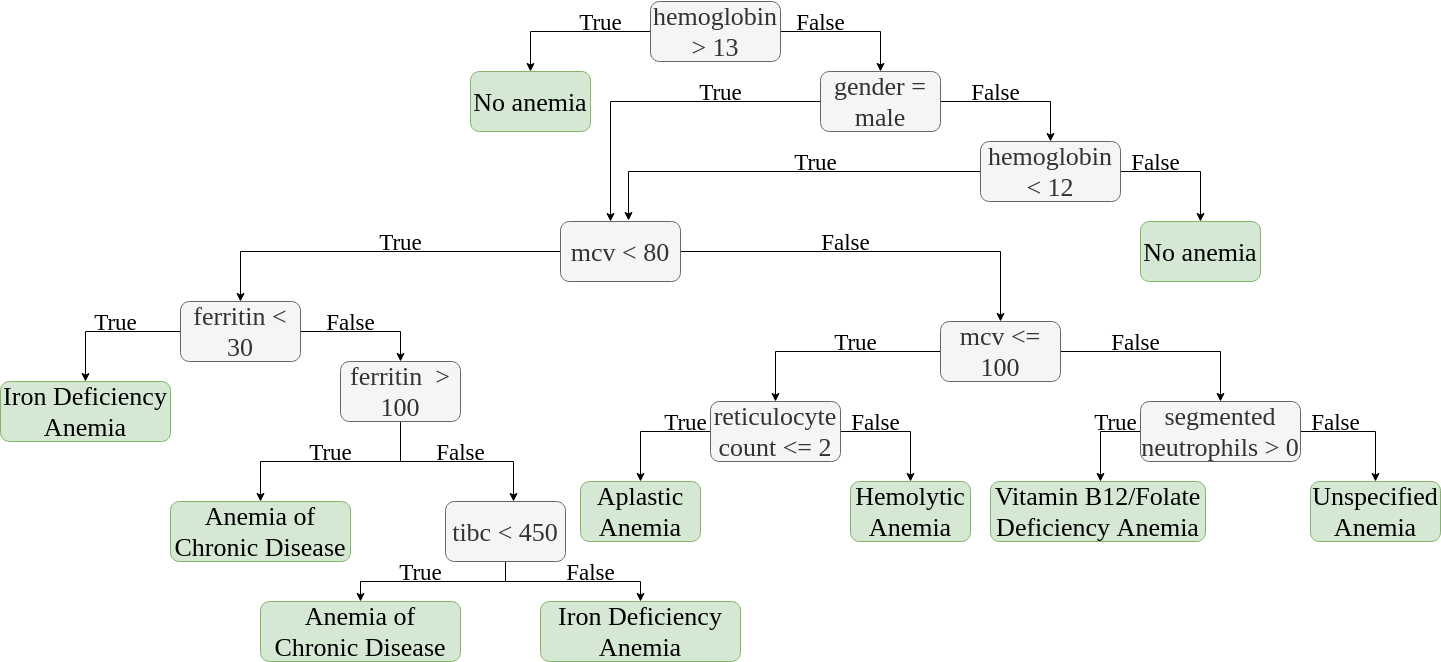
Background: Clinical diagnosis is typically reached by following a series of steps recommended by guidelines authored by colleges of experts. Accordingly, guidelines play a crucial role in rationalizing clinical decisions but suffer from limitations as they are built to cover the majority of the population and fail at covering patients with uncommon conditions. Moreover, their updates are long and expensive, making them unsuitable for emerging diseases and practices. Methods: Inspired by guidelines, we formulate the task of diagnosis as a sequential decision-making problem and study the use of Deep Reinforcement Learning (DRL) algorithms to learn the optimal sequence of actions to perform in order to obtain a correct diagnosis from Electronic Health Records (EHRs). We apply DRL on synthetic, but realistic EHRs and develop two clinical use cases: Anemia diagnosis, where the decision pathways follow the schema of a decision tree; and Systemic Lupus Erythematosus (SLE) diagnosis, which follows a weighted criteria score. We particularly evaluate the robustness of our approaches to noisy and missing data since these frequently occur in EHRs. Results: In both use cases, and in the presence of imperfect data, our best DRL algorithms exhibit competitive performance when compared to the traditional classifiers, with the added advantage that they enable the progressive generation of a pathway to the suggested diagnosis which can both guide and explain the decision-making process. Conclusion: DRL offers the opportunity to learn personalized decision pathways to diagnosis. We illustrate with our two use cases their advantages: they generate step-by-step pathways that are self-explanatory; and their correctness is competitive when compared to state-of-the-art approaches.