To Err is Machine: Vulnerability Detection Challenges LLM Reasoning
作者: Benjamin Steenhoek, Md Mahbubur Rahman, Monoshi Kumar Roy, Mirza Sanjida Alam, Hengbo Tong, Swarna Das, Earl T. Barr, Wei Le
分类: cs.SE, cs.CR, cs.LG
发布日期: 2024-03-25 (更新: 2025-01-07)
💡 一句话要点
提出针对大语言模型的漏洞检测挑战与解决方案
🎯 匹配领域: 支柱九:具身大模型 (Embodied Foundation Models)
关键词: 漏洞检测 大语言模型 代码推理 模型训练 软件工程
📋 核心要点
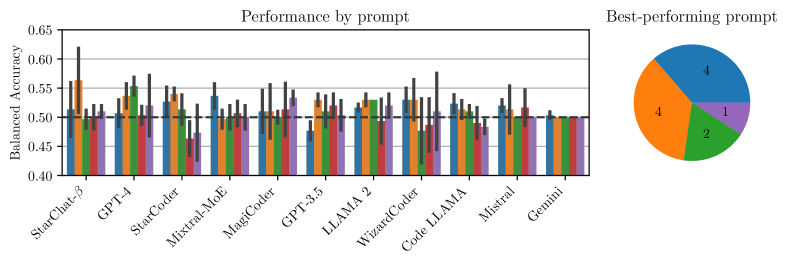
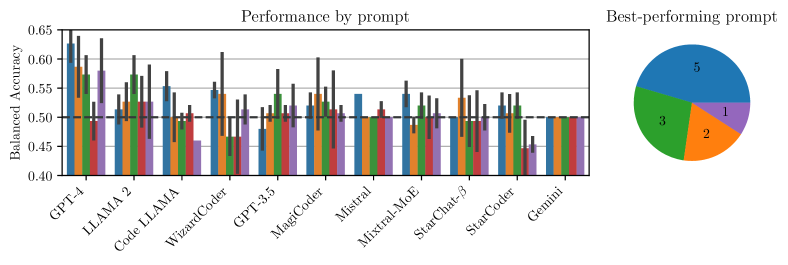
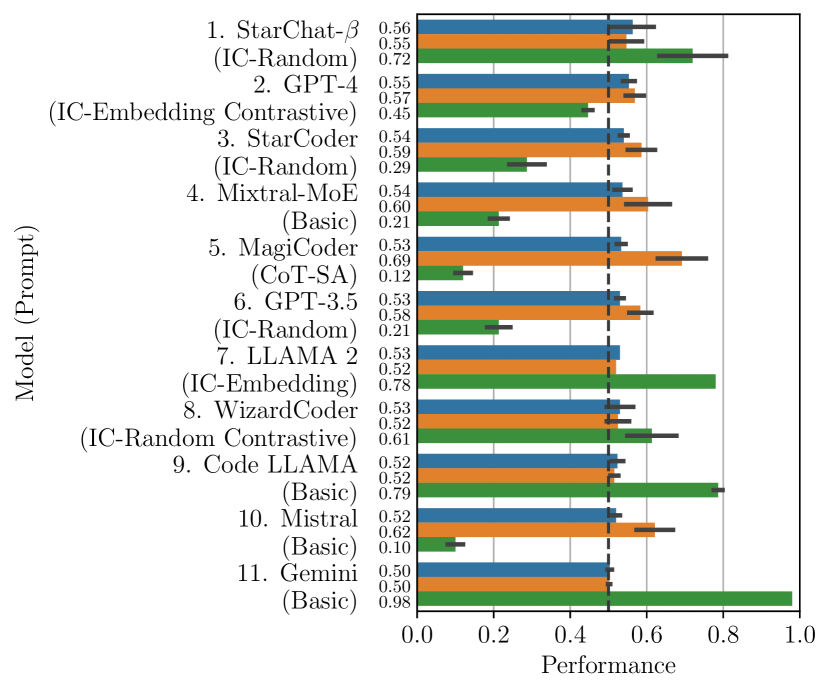
- 现有的大语言模型在漏洞检测任务中表现不佳,最高仅有54.5%的平衡准确率,显示出其在代码语义推理方面的不足。
- 论文探讨了不同的模型和训练设置,包括更好的提示、较大的模型和更多的预训练数据,但未能显著提升漏洞检测性能。
- 研究结果表明,成功的漏洞检测对软件工程的多个领域有重要影响,如调试、测试输入生成和程序修复。
📝 摘要(中文)
本文提出了一项具有挑战性的代码推理任务:漏洞检测。尽管大语言模型(LLMs)在自然语言和数学推理方面表现出色,但在我们的漏洞检测评估中,最先进的模型仅报告了54.5%的平衡准确率。我们的错误分析表明,这些模型在推理与识别漏洞相关的代码语义时存在困难,尤其是由于小的文本变化引起的细微语义差异。我们探讨了不同模型和训练设置对漏洞检测性能的影响,但未能显著改善。这引发了一个问题:仅仅扩大训练数据和模型规模是否足以“解决”复杂的代码推理任务,还是需要根本性的建模和训练技术转变。我们的结果表明,可能需要新的模型、新的训练方法或更具执行特定性的预训练数据来征服漏洞检测。
🔬 方法详解
问题定义:本文旨在解决大语言模型在漏洞检测任务中的不足,现有方法在推理代码语义时存在显著挑战,尤其是对细微语义差异的理解。
核心思路:论文提出通过分析现有模型的错误,探讨不同的训练设置和提示,以期提高漏洞检测的准确性。
技术框架:研究包括多个阶段:首先进行错误分析,然后测试不同的模型和训练设置,最后评估其对漏洞检测性能的影响。
关键创新:最重要的创新在于对现有模型的错误进行深入分析,提出了可能需要新的模型和训练方法的假设,以应对复杂的代码推理任务。
关键设计:研究中考虑了多种参数设置和训练策略,但未能找到有效的提升方案,提示设计和模型规模的扩展未能显著改善性能。
🖼️ 关键图片
📊 实验亮点
实验结果显示,当前最先进的模型在漏洞检测任务中的平衡准确率仅为54.5%。尽管尝试了多种模型和训练设置,未能实现显著的性能提升,这表明现有方法在处理复杂代码推理任务时存在根本性限制。
🎯 应用场景
该研究的潜在应用领域包括软件工程中的漏洞检测、调试和程序修复等。通过提高漏洞检测的准确性,可以显著提升软件的安全性和可靠性,未来可能对自动化测试和代码审查工具的发展产生深远影响。
📄 摘要(原文)
In this paper, we present a challenging code reasoning task: vulnerability detection. Large Language Models (LLMs) have shown promising results in natural-language and math reasoning, but state-of-the-art (SOTA) models reported only 54.5% Balanced Accuracy in our vulnerability detection evaluation, even those models pre-trained on large amounts of source code. Our error analysis on LLM responses shows that the models struggle to reason about the code semantics relevant to identifying vulnerabilities, especially subtle semantic differences caused by small textual changes. We explored prominent models and training settings to understand their effects on vulnerability detection performance -- including better prompts, larger models, more pre-training data, and fine-tuning -- but none led to significant improvements. This raises the question of whether simply scaling training data and model size will allow us to "solve" complex code reasoning tasks like vulnerability detection, or if a fundamental shift in modeling and training techniques is required. We also explored adding domain knowledge to prompts; although it helped certain models understand some code semantics, vulnerability detection requires multi-step reasoning, and these models still failed in steps, such as reasoning about variable relations. Our results suggest that new models, new training methods, or more execution-specific pretraining data may be needed to conquer vulnerability detection. We speculate that auto-regressive pre-training on source code may not effectively extract code semantics, especially on the current pretraining mixtures, in which execution data is scarce. Success on vulnerability detection as a code reasoning task can benefit many areas of software engineering such as debugging, test input generation, and program repair. Our code and data are available at https://doi.org/10.6084/m9.figshare.27368025.