Material Microstructure Design Using VAE-Regression with Multimodal Prior
作者: Avadhut Sardeshmukh, Sreedhar Reddy, BP Gautham, Pushpak Bhattacharyya
分类: cs.LG, cond-mat.mtrl-sci, stat.ML
发布日期: 2024-02-27
备注: 12 pages main paper, 9 pages appendix. 10 tables and 11 figures. Accepted for publication in PAKDD 2024
💡 一句话要点
提出基于VAE回归的材料微观结构设计方法以解决结构-性质关联问题
🎯 匹配领域: 支柱九:具身大模型 (Embodied Foundation Models)
关键词: 变分自编码器 材料科学 微观结构 结构-性质关联 多模态高斯混合 正向预测 反向推断 机器学习
📋 核心要点
- 现有方法在建立材料微观结构与其性质之间的关联时,往往面临正向和反向预测的挑战,尤其是反向问题的多解性。
- 本文提出的模型通过结合VAE与回归,利用双层先验条件化回归变量,优化回归损失与重构损失,从而实现微观结构特征的有效学习。
- 实验结果表明,所提模型在正向预测中与现有最优模型相当,并且在反向推断中能够准确推导出所需的微观结构,避免了昂贵的优化过程。
📝 摘要(中文)
本文提出了一种基于变分自编码器(VAE)的模型,用于建立正向和反向的结构-性质关联,这是计算材料科学中至关重要的问题。该模型系统性地将VAE与回归结合,通过条件于回归变量的双层先验将两者连接。回归损失与VAE的重构损失共同优化,学习与性质预测和重构相关的微观结构特征。该模型可用于正向和反向预测,即预测给定微观结构的性质以及预测获得给定性质所需的微观结构。由于反向问题是病态的(多对一),我们利用多模态高斯混合先验推导目标函数,使模型能够推断出多个微观结构以满足目标性质。实验表明,在正向预测中,我们的模型与最先进的仅正向模型同样准确,并且能够直接进行反向推断。
🔬 方法详解
问题定义:本文旨在解决材料微观结构与其性质之间的正向和反向预测问题。现有方法在反向预测时常常面临多解性和优化效率低下的挑战。
核心思路:通过将变分自编码器(VAE)与回归模型结合,利用双层先验条件化回归变量,优化回归损失与重构损失,从而实现对微观结构特征的有效学习。
技术框架:模型整体架构包括两个主要模块:变分自编码器用于特征重构,回归模型用于性质预测。通过双层先验将两者连接,形成一个统一的优化框架。
关键创新:本研究的关键创新在于引入多模态高斯混合先验来处理反向问题的多解性,使得模型能够推断出多个微观结构以满足特定性质要求,这一设计显著提升了反向推断的准确性和效率。
关键设计:模型的损失函数由回归损失和VAE重构损失组成,优化过程中采用联合优化策略。此外,网络结构设计上,VAE部分包括编码器和解码器,回归部分则通过线性回归或其他回归方法实现。
🖼️ 关键图片


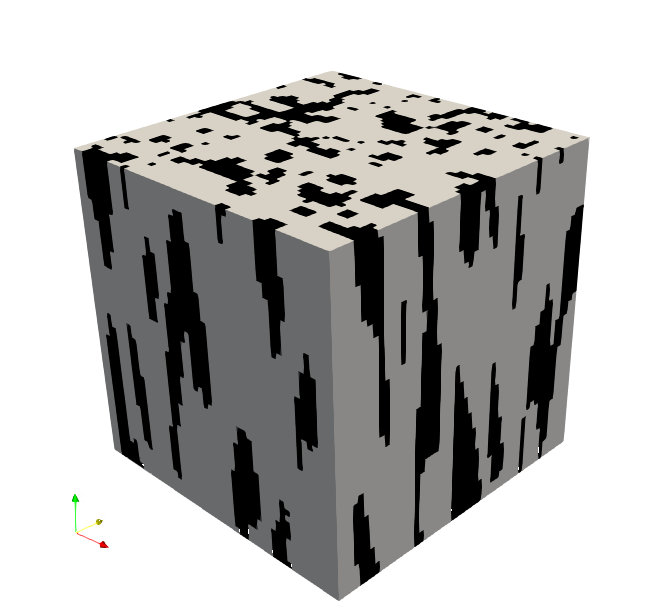
📊 实验亮点
实验结果显示,所提模型在正向预测中与最先进的模型性能相当,且在反向推断中能够准确推导出所需微观结构,避免了传统方法中昂贵的优化循环,提升了效率和准确性。
🎯 应用场景
该研究在材料科学领域具有广泛的应用潜力,尤其是在新材料的设计与优化方面。通过有效的微观结构与性质预测,能够加速材料开发过程,降低实验成本,推动智能材料的应用与发展。
📄 摘要(原文)
We propose a variational autoencoder (VAE)-based model for building forward and inverse structure-property linkages, a problem of paramount importance in computational materials science. Our model systematically combines VAE with regression, linking the two models through a two-level prior conditioned on the regression variables. The regression loss is optimized jointly with the reconstruction loss of the variational autoencoder, learning microstructure features relevant for property prediction and reconstruction. The resultant model can be used for both forward and inverse prediction i.e., for predicting the properties of a given microstructure as well as for predicting the microstructure required to obtain given properties. Since the inverse problem is ill-posed (one-to-many), we derive the objective function using a multi-modal Gaussian mixture prior enabling the model to infer multiple microstructures for a target set of properties. We show that for forward prediction, our model is as accurate as state-of-the-art forward-only models. Additionally, our method enables direct inverse inference. We show that the microstructures inferred using our model achieve desired properties reasonably accurately, avoiding the need for expensive optimization loops.