Parallelized Spatiotemporal Binding
作者: Gautam Singh, Yue Wang, Jiawei Yang, Boris Ivanovic, Sungjin Ahn, Marco Pavone, Tong Che
分类: cs.LG, cs.CV
发布日期: 2024-02-26
备注: See project page at https://parallel-st-binder.github.io
💡 一句话要点
提出并行时空绑定模型以解决长序列训练效率低下问题
🎯 匹配领域: 支柱八:物理动画 (Physics-based Animation)
关键词: 对象中心模型 时空绑定 并行计算 长序列训练 因果注意力 计算机视觉 场景理解
📋 核心要点
- 现有基于RNN的对象中心模型在处理长序列输入时存在稳定性差、训练速度慢等问题。
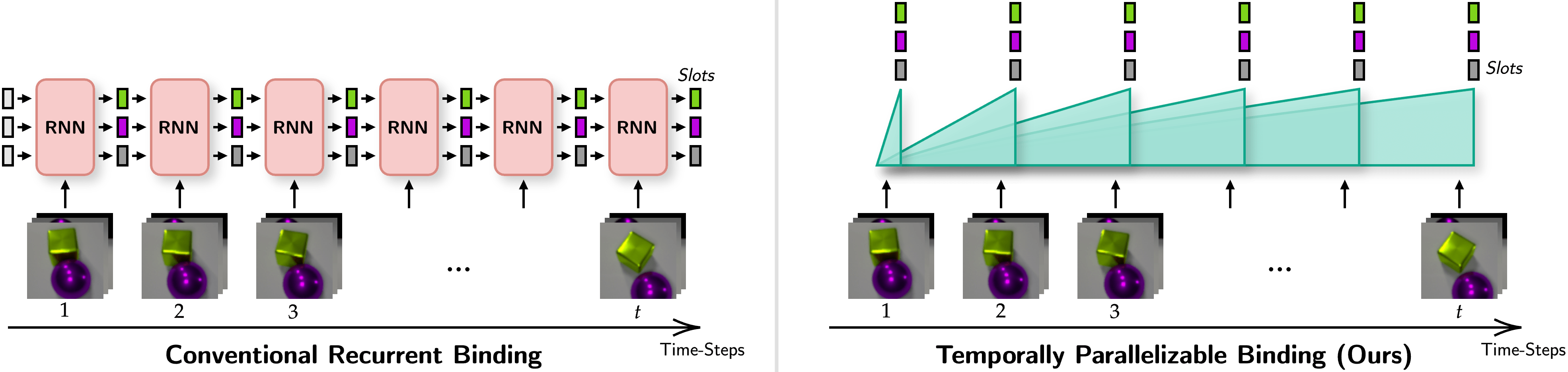
- 提出的PSB模型通过并行生成所有时间步的对象中心表示,利用因果注意力机制提升训练效率。
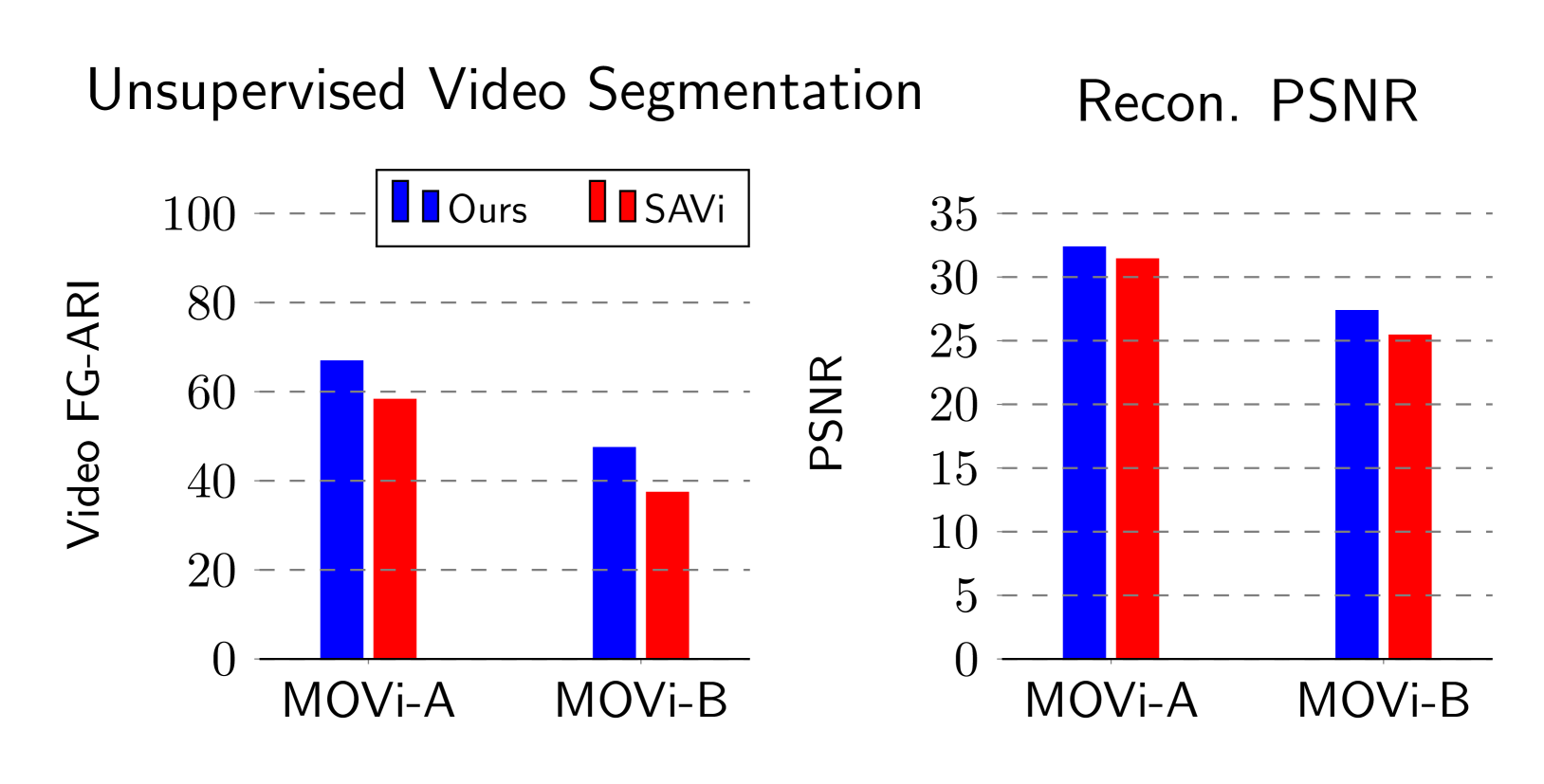
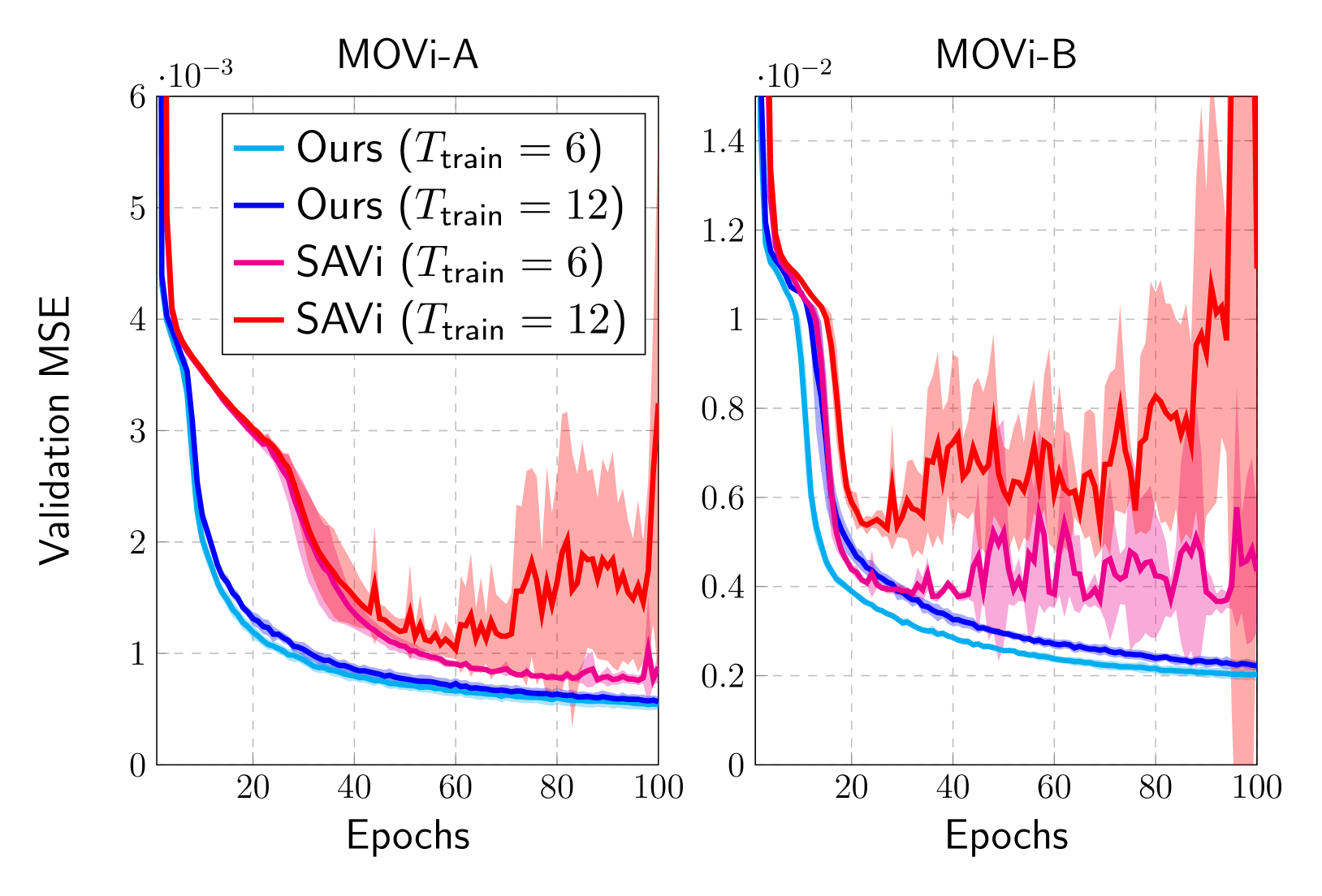
- 实验结果表明,PSB在长序列训练上表现稳定,训练速度提高60%,在场景分解与理解任务中性能优越。
📝 摘要(中文)
现代最佳实践提倡支持长距离交互的可扩展架构,但现有的对象中心模型尚未充分利用这些架构。特别是,现有基于RNN的对象中心模型在处理序列输入时表现出较差的稳定性和容量,并且在长序列上训练速度较慢。我们提出了可并行化的时空绑定器(PSB),这是首个针对序列输入的时间并行化槽学习架构。与传统的RNN方法不同,PSB能够并行生成所有时间步的对象中心表示(槽)。通过在固定层数的因果注意力机制下对初始槽进行精炼,PSB显著提高了训练效率。实验表明,PSB作为自编码框架中的编码器,能够在长序列上稳定训练,训练速度提高60%,并在无监督的2D和3D对象中心场景分解与理解任务中表现出色。
🔬 方法详解
问题定义:本论文旨在解决现有基于RNN的对象中心模型在处理长序列输入时的效率低下和不稳定性问题。现有方法在长序列上训练时速度缓慢且容易出现不稳定现象。
核心思路:论文提出的PSB模型通过并行处理所有时间步的输入,生成对象中心表示(槽),从而克服了传统RNN方法的局限性。该设计利用了并行计算的优势,显著提高了训练效率。
技术框架:PSB模型的整体架构包括多个层次的因果注意力机制,这些层次对初始槽进行精炼,确保在所有时间步上同时生成对象中心表示。模型的输入为序列数据,输出为各时间步的槽表示。
关键创新:PSB的核心创新在于其时间并行化的槽学习架构,使得所有时间步的表示能够同时生成,而不是依赖于序列的逐步处理。这一方法显著提高了训练速度和稳定性。
关键设计:模型采用固定层数的因果注意力机制,确保信息的有效传递和处理。损失函数设计上,结合了重构损失和对象中心表示的约束,以优化模型性能。
🖼️ 关键图片
📊 实验亮点
实验结果显示,PSB模型在长序列训练上表现出显著的稳定性,训练速度提高了60%。在无监督的2D和3D对象中心场景分解与理解任务中,PSB的性能与现有最先进模型相当或更优,展示了其强大的应用潜力。
🎯 应用场景
该研究的潜在应用领域包括计算机视觉中的对象识别、场景理解以及机器人导航等任务。PSB模型的高效性和稳定性使其在处理长序列数据时具有实际价值,能够推动相关领域的研究和应用发展,尤其是在需要实时处理的场景中。
📄 摘要(原文)
While modern best practices advocate for scalable architectures that support long-range interactions, object-centric models are yet to fully embrace these architectures. In particular, existing object-centric models for handling sequential inputs, due to their reliance on RNN-based implementation, show poor stability and capacity and are slow to train on long sequences. We introduce Parallelizable Spatiotemporal Binder or PSB, the first temporally-parallelizable slot learning architecture for sequential inputs. Unlike conventional RNN-based approaches, PSB produces object-centric representations, known as slots, for all time-steps in parallel. This is achieved by refining the initial slots across all time-steps through a fixed number of layers equipped with causal attention. By capitalizing on the parallelism induced by our architecture, the proposed model exhibits a significant boost in efficiency. In experiments, we test PSB extensively as an encoder within an auto-encoding framework paired with a wide variety of decoder options. Compared to the state-of-the-art, our architecture demonstrates stable training on longer sequences, achieves parallelization that results in a 60% increase in training speed, and yields performance that is on par with or better on unsupervised 2D and 3D object-centric scene decomposition and understanding.