DeepForge: Leveraging AI for Microstructural Control in Metal Forming via Model Predictive Control
作者: Jan Petrik, Markus Bambach
分类: cs.LG, eess.SY
发布日期: 2024-02-25
期刊: Journal of Manufacturing Processes 121 (2024) 193-204
DOI: 10.1016/j.jmapro.2024.05.023
💡 一句话要点
提出DeepForge以解决金属成形微观结构控制问题
🎯 匹配领域: 支柱一:机器人控制 (Robot Control)
关键词: 微观结构控制 模型预测控制 深度学习 金属成形 热锻 机器学习 有限元仿真
📋 核心要点
- 现有的金属成形方法在微观结构控制方面存在挑战,尤其是在温度扰动影响下难以实现精确控制。
- 论文提出DeepForge模型,结合MPC和深度学习,利用温度数据预测微观结构变化,从而实现更精确的控制。
- 实验结果显示DeepForge在微观结构预测中取得了0.4±0.3%的平均绝对误差,显著提高了锻造过程的控制精度。
📝 摘要(中文)
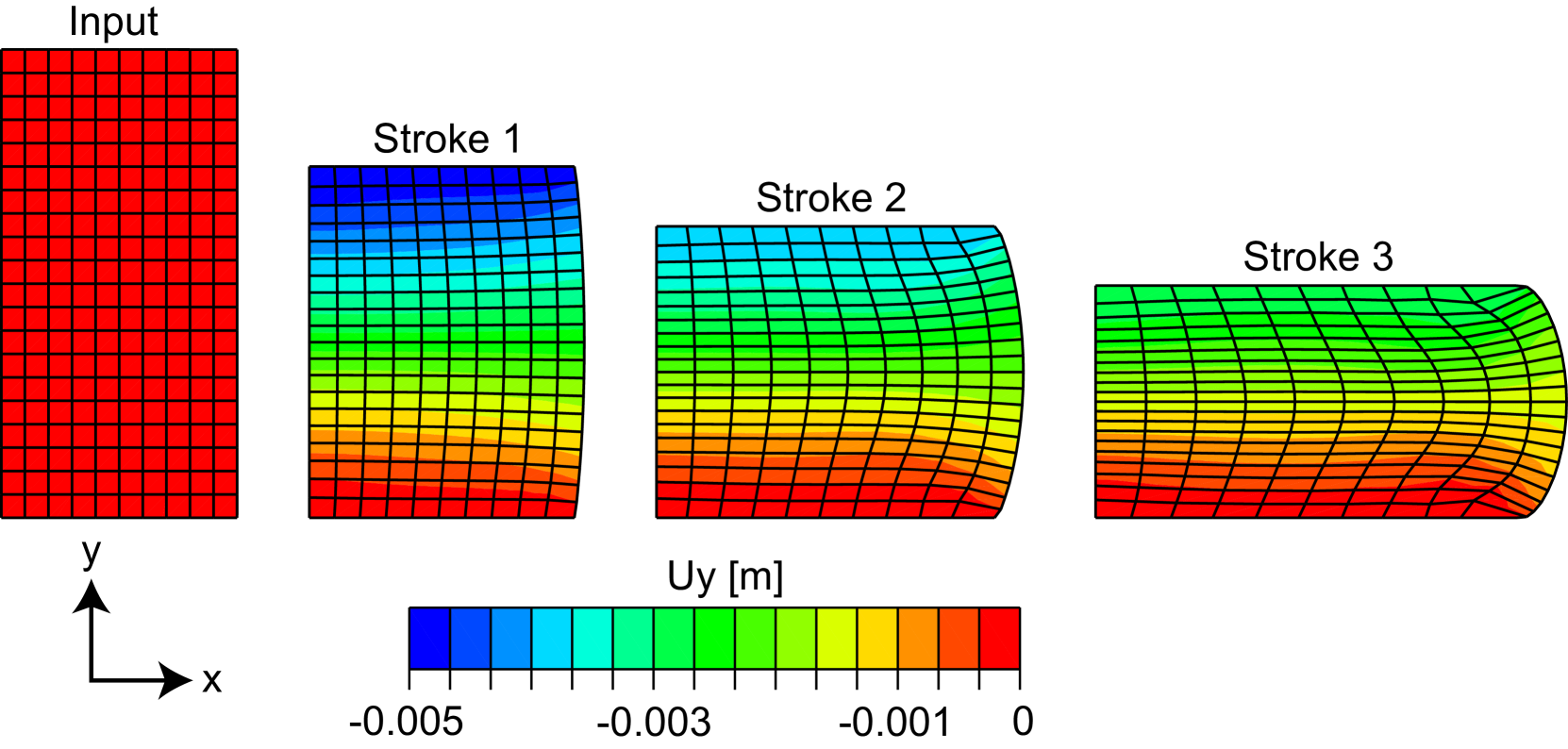
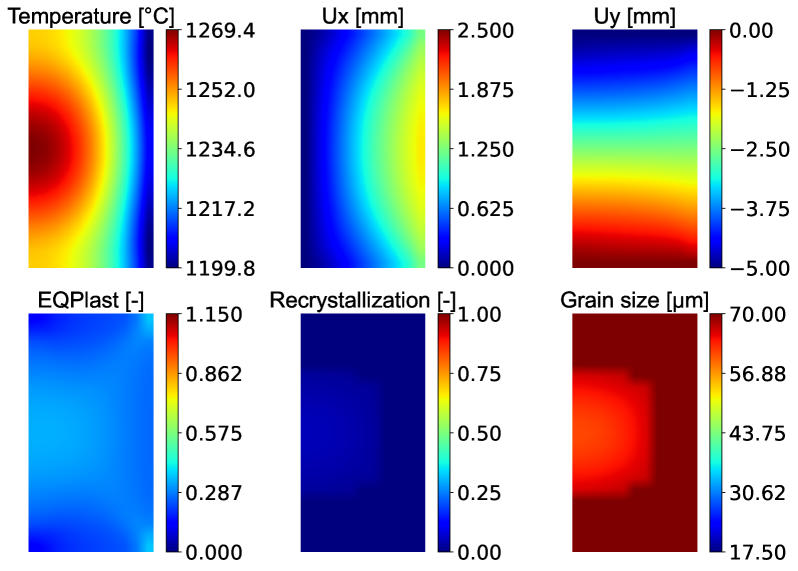
本研究提出了一种新颖的方法,通过模型预测控制(MPC)结合名为DeepForge的机器学习模型,实现闭模热锻中的微观结构控制。DeepForge采用了一种结合一维卷积神经网络和门控递归单元的架构,利用工件的表面温度测量作为输入,预测锻造过程中的微观结构变化。研究详细描述了DeepForge的架构及用于生成数据集的有限元仿真模型,采用三冲程锻造过程。结果表明,DeepForge在微观结构预测中实现了平均绝对误差为0.4±0.3%。此外,研究探讨了MPC在调整冲程间等待时间中的应用,有效抵消温度扰动,以实现特定二维区域内小于35微米的目标晶粒尺寸。这些结果经过实验验证,展示了在锻造过程中利用温度作为额外自由度以改善控制和质量的显著进展。
🔬 方法详解
问题定义:本研究旨在解决闭模热锻过程中微观结构控制的难题,现有方法在温度扰动下难以保持稳定的微观结构,影响最终产品质量。
核心思路:论文提出的DeepForge模型结合了模型预测控制(MPC)与深度学习,利用工件表面温度作为输入,预测锻造过程中的微观结构变化,旨在提高控制精度和响应速度。
技术框架:DeepForge的整体架构包括一维卷积神经网络和门控递归单元,首先通过有限元仿真生成数据集,然后利用MPC调整冲程间等待时间,以应对温度扰动。
关键创新:DeepForge的创新在于将MPC与深度学习模型结合,利用温度作为额外的自由度进行微观结构控制,这一方法在现有技术中尚属首次。
关键设计:DeepForge模型的关键设计包括一维卷积层用于特征提取,门控递归单元用于时间序列建模,损失函数采用均方误差以优化预测精度,确保模型在动态环境下的鲁棒性。
🖼️ 关键图片

📊 实验亮点
实验结果显示,DeepForge在微观结构预测中实现了平均绝对误差为0.4±0.3%,并成功调整冲程间等待时间以应对温度扰动,确保特定区域内晶粒尺寸小于35微米,显著提升了锻造过程的控制精度。
🎯 应用场景
该研究的潜在应用领域包括金属成形、航空航天和汽车制造等行业,能够显著提高锻造过程的微观结构控制精度,从而提升产品质量和性能。未来,DeepForge有望扩展到其他材料加工领域,推动智能制造的发展。
📄 摘要(原文)
This study presents a novel method for microstructure control in closed die hot forging that combines Model Predictive Control (MPC) with a developed machine learning model called DeepForge. DeepForge uses an architecture that combines 1D convolutional neural networks and gated recurrent units. It uses surface temperature measurements of a workpiece as input to predict microstructure changes during forging. The paper also details DeepForge's architecture and the finite element simulation model used to generate the data set, using a three-stroke forging process. The results demonstrate DeepForge's ability to predict microstructure with a mean absolute error of 0.4$\pm$0.3%. In addition, the study explores the use of MPC to adjust inter-stroke wait times, effectively counteracting temperature disturbances to achieve a target grain size of less than 35 microns within a specific 2D region of the workpiece. These results are then verified experimentally, demonstrating a significant step towards improved control and quality in forging processes where temperature can be used as an additional degree of freedom in the process.