Reinforcement Learning as a Parsimonious Alternative to Prediction Cascades: A Case Study on Image Segmentation
作者: Bharat Srikishan, Anika Tabassum, Srikanth Allu, Ramakrishnan Kannan, Nikhil Muralidhar
分类: cs.LG, cs.CV
发布日期: 2024-02-19
🔗 代码/项目: GITHUB
💡 一句话要点
提出PaSeR以解决低资源环境下图像分割问题
🎯 匹配领域: 支柱二:RL算法与架构 (RL & Architecture)
关键词: 图像分割 强化学习 低资源环境 计算效率 性能评估 深度学习 决策级联
📋 核心要点
- 现有的级联预测方法在低资源环境中导致了不必要的中间计算开销,影响了效率。
- 本文提出PaSeR,采用强化学习的方式,构建非级联的成本意识学习管道,以降低计算成本。
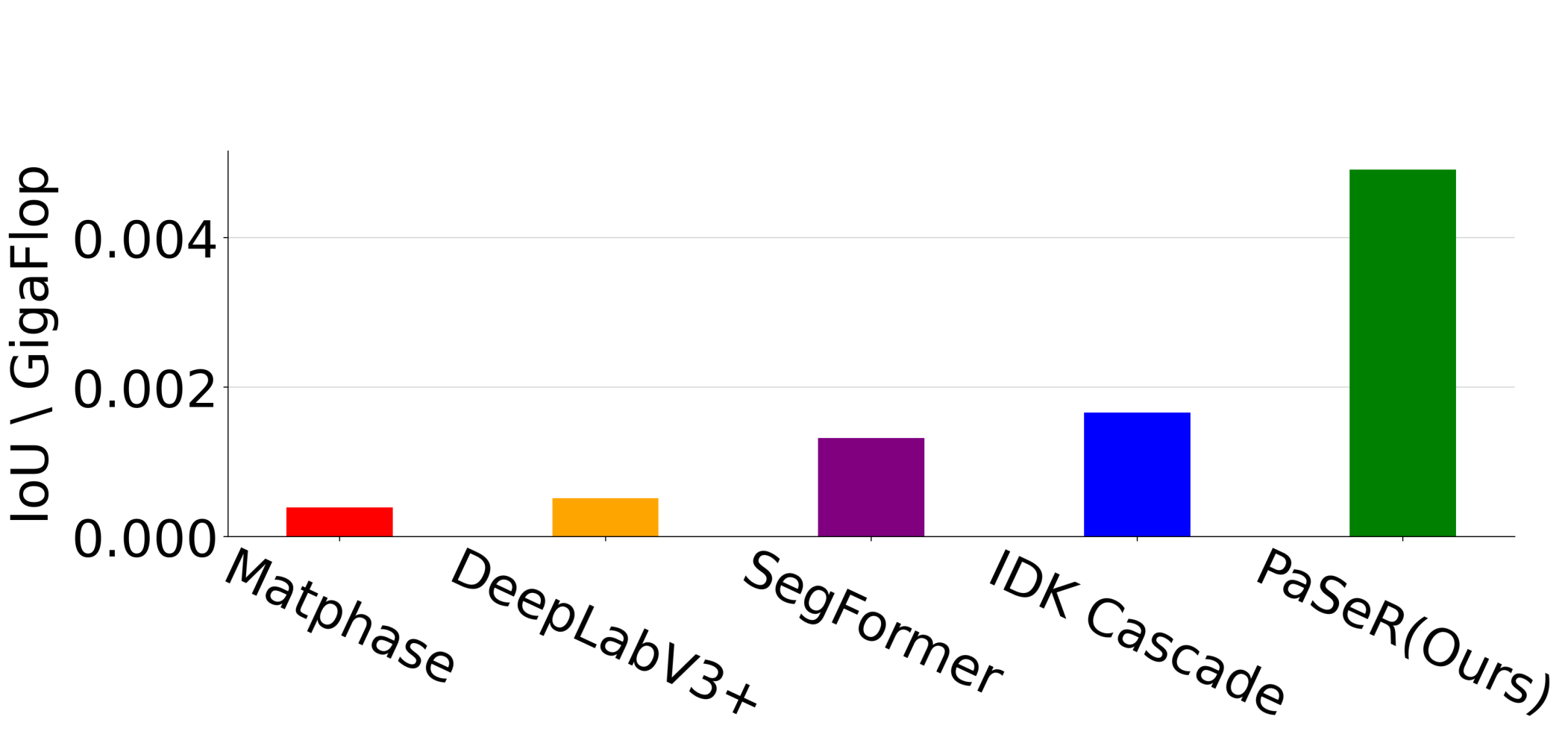
- 实验结果表明,PaSeR在多个数据集上相较于基线模型实现了显著的性能提升,尤其在IoU/GigaFlop指标上表现突出。
📝 摘要(中文)
深度学习架构在计算机视觉任务中取得了最先进的性能,但通常伴随较高的计算和内存需求。在低资源环境中,传统的决策级联方法导致了不必要的计算开销。为此,本文提出了一种新的非级联、成本意识的学习管道PaSeR(Parsimonious Segmentation with Reinforcement Learning),通过实验验证,PaSeR在准确性和计算成本上优于级联模型,并引入了新的评估指标IoU/GigaFlop。在电池材料相分割的实际任务中,PaSeR在IoU/GigaFlop指标上相较基线实现了至少174%的性能提升。
🔬 方法详解
问题定义:本文旨在解决在低资源环境中,传统级联预测方法导致的高计算成本和效率低下的问题。现有方法在实现高准确率的同时,往往需要大量的计算资源,难以在资源受限的场景中应用。
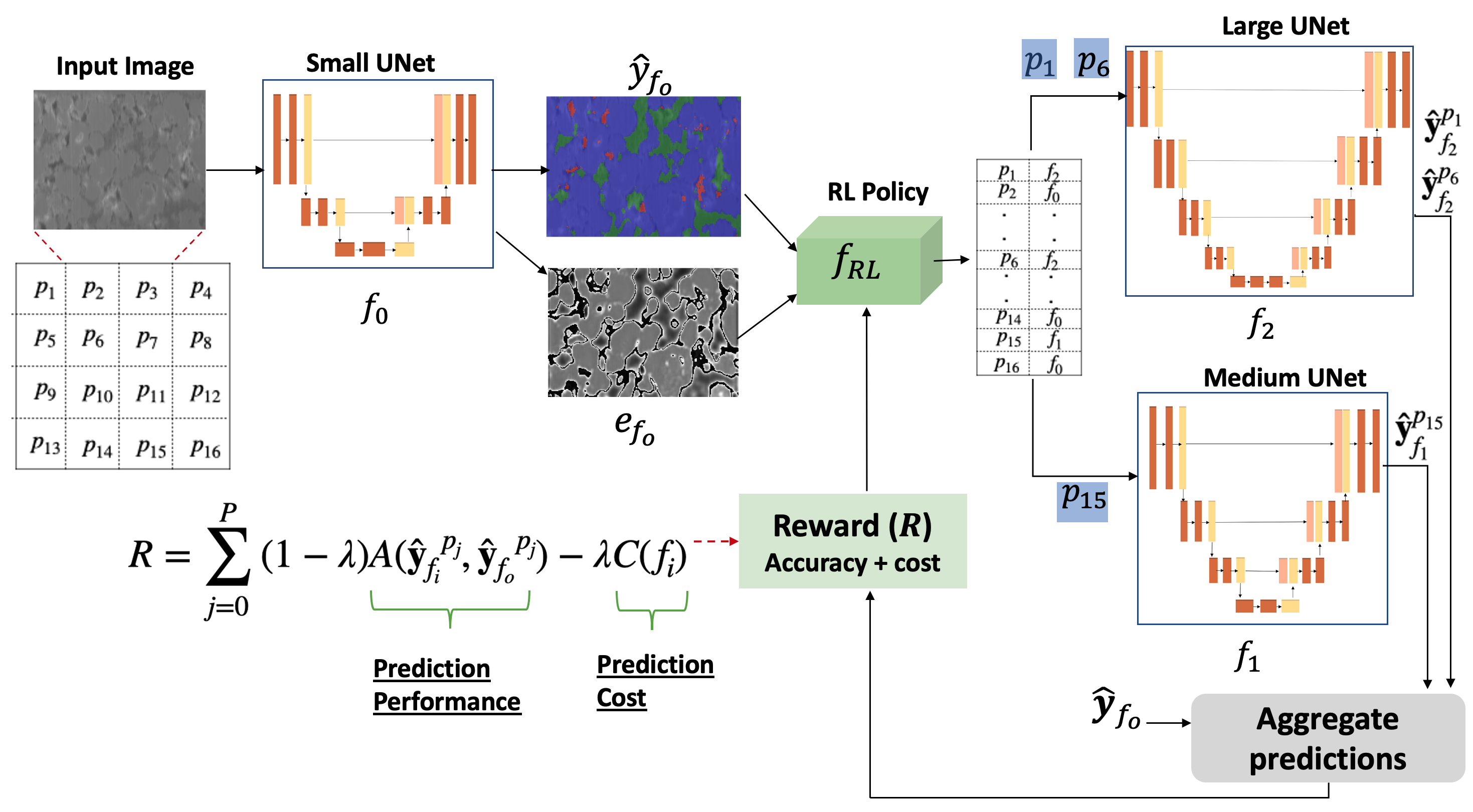
核心思路:论文提出的PaSeR通过强化学习实现非级联的图像分割,旨在减少中间计算的浪费,优化计算效率与性能的平衡。通过这种方式,PaSeR能够在保持或提升准确率的同时,显著降低计算成本。
技术框架:PaSeR的整体架构包括数据输入、强化学习模型训练和输出预测三个主要模块。首先,输入数据经过强化学习模型进行处理,模型根据反馈不断优化决策,最终输出分割结果。
关键创新:PaSeR的核心创新在于引入了IoU/GigaFlop这一新指标,用于评估模型在性能与计算成本之间的平衡。这一指标能够更好地反映模型在实际应用中的有效性,区别于传统的仅关注准确率的评估方式。
关键设计:在模型设计上,PaSeR采用了特定的损失函数以优化分割效果,并通过强化学习的策略更新机制来提升模型的适应性和准确性。具体的参数设置和网络结构细节在实验部分进行了详细描述。
🖼️ 关键图片
📊 实验亮点
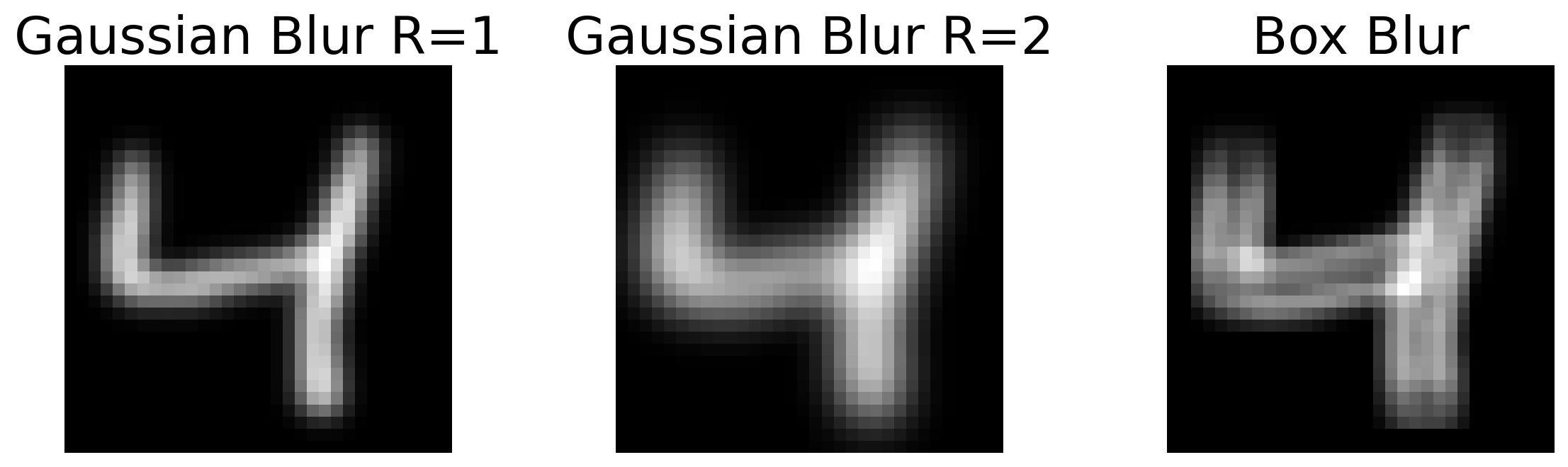
在电池材料相分割的实际任务中,PaSeR在IoU/GigaFlop指标上相较于基线模型实现了至少174%的性能提升。此外,在噪声MNIST数据集上,PaSeR在IoU/GigaFlop指标上也实现了13.4%的性能提升,显示出其良好的适应性。
🎯 应用场景
该研究的潜在应用领域包括物联网设备、移动端图像处理和其他资源受限的环境。通过优化计算效率,PaSeR能够在实际应用中实现更快的响应时间和更低的能耗,具有重要的实际价值和广泛的应用前景。
📄 摘要(原文)
Deep learning architectures have achieved state-of-the-art (SOTA) performance on computer vision tasks such as object detection and image segmentation. This may be attributed to the use of over-parameterized, monolithic deep learning architectures executed on large datasets. Although such architectures lead to increased accuracy, this is usually accompanied by a large increase in computation and memory requirements during inference. While this is a non-issue in traditional machine learning pipelines, the recent confluence of machine learning and fields like the Internet of Things has rendered such large architectures infeasible for execution in low-resource settings. In such settings, previous efforts have proposed decision cascades where inputs are passed through models of increasing complexity until desired performance is achieved. However, we argue that cascaded prediction leads to increased computational cost due to wasteful intermediate computations. To address this, we propose PaSeR (Parsimonious Segmentation with Reinforcement Learning) a non-cascading, cost-aware learning pipeline as an alternative to cascaded architectures. Through experimental evaluation on real-world and standard datasets, we demonstrate that PaSeR achieves better accuracy while minimizing computational cost relative to cascaded models. Further, we introduce a new metric IoU/GigaFlop to evaluate the balance between cost and performance. On the real-world task of battery material phase segmentation, PaSeR yields a minimum performance improvement of 174% on the IoU/GigaFlop metric with respect to baselines. We also demonstrate PaSeR's adaptability to complementary models trained on a noisy MNIST dataset, where it achieved a minimum performance improvement on IoU/GigaFlop of 13.4% over SOTA models. Code and data are available at https://github.com/scailab/paser .