BotSSCL: Social Bot Detection with Self-Supervised Contrastive Learning
作者: Mohammad Majid Akhtar, Navid Shadman Bhuiyan, Rahat Masood, Muhammad Ikram, Salil S. Kanhere
分类: cs.SI, cs.CY, cs.LG
发布日期: 2024-02-06
💡 一句话要点
提出BotSSCL以解决社交机器人检测中的挑战
🎯 匹配领域: 支柱一:机器人控制 (Robot Control) 支柱二:RL算法与架构 (RL & Architecture)
关键词: 社交机器人 对比学习 自监督学习 模型鲁棒性 数据泛化 虚假信息检测 在线社交网络
📋 核心要点
- 现有社交机器人检测方法在识别复杂机器人方面存在显著不足,且易受简单特征操控影响。
- 本文提出BotSSCL框架,利用自监督对比学习提高社交机器人与人类的区分能力,增强模型的鲁棒性和泛化性。
- 实验结果表明,BotSSCL在两个数据集上均超越其他监督、无监督和自监督基线方法,F1性能提升显著。
📝 摘要(中文)
社交机器人(social bots)的检测在在线社交网络中日益重要。现有方法在检测复杂机器人方面存在局限,且通常依赖易受操控的简单特征,导致模型的泛化能力不足。为此,本文提出了一种新颖的自监督对比学习框架BotSSCL,通过对比学习在嵌入空间中区分社交机器人与人类,提升线性可分性。BotSSCL在两个数据集上的实验结果显示,其在对抗性操控下的鲁棒性优于其他基线方法,F1性能提升约6%至8%,并在跨数据集测试中实现67%的F1,展示了其良好的泛化能力。
🔬 方法详解
问题定义:本文旨在解决社交机器人检测中的两个主要问题:一是现有模型难以识别复杂的社交机器人,二是依赖简单特征导致的模型易受操控和泛化能力不足。
核心思路:BotSSCL框架通过自监督对比学习,增强社交机器人与人类在嵌入空间的线性可分性,从而提高检测的准确性和鲁棒性。
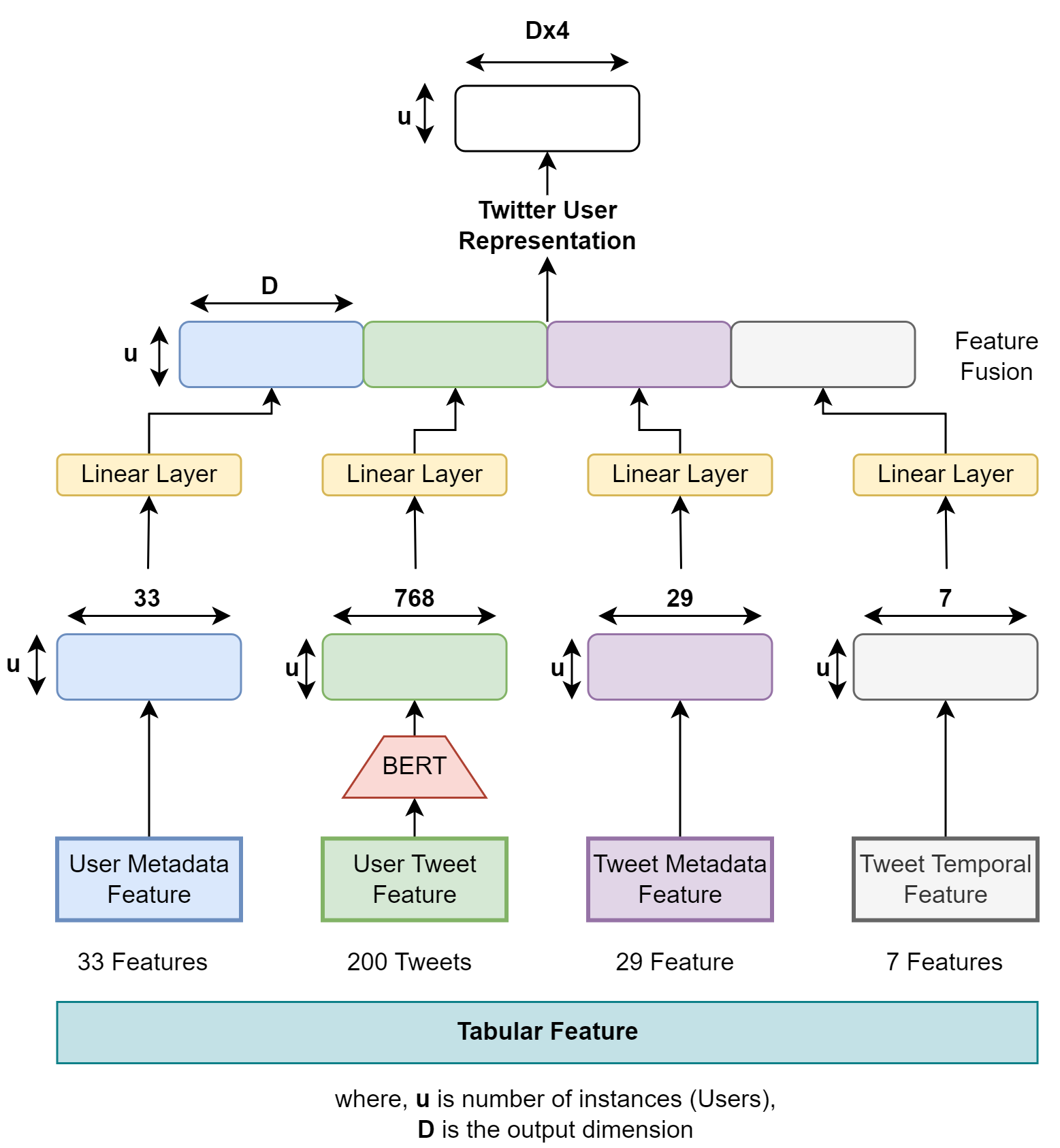
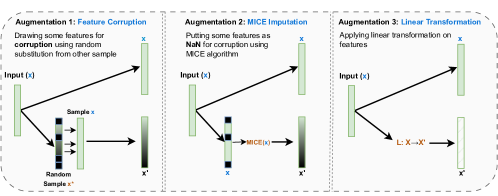
技术框架:BotSSCL的整体架构包括数据预处理、特征提取、对比学习模块和分类器。通过对比学习,模型能够在多样化的数据分布中学习到更具代表性的特征。
关键创新:BotSSCL的核心创新在于引入自监督对比学习机制,使得模型在面对对抗性操控时表现出更强的鲁棒性和更好的泛化能力,这与传统方法形成了鲜明对比。
关键设计:在模型设计中,采用了特定的损失函数以优化对比学习效果,并在网络结构上进行了调整,以适应不同数据集的特征分布。
🖼️ 关键图片

📊 实验亮点
BotSSCL在两个数据集上的实验结果显示,其F1性能比现有最先进方法高出约6%至8%。此外,BotSSCL在跨数据集测试中实现67%的F1,表明其良好的泛化能力。同时,模型在对抗性操控下仅允许4%的成功率,显示出其强大的鲁棒性。
🎯 应用场景
BotSSCL的研究成果可广泛应用于社交媒体平台、在线社区及其他需要识别自动化账户的场景。其提高的检测能力能够有效维护网络环境的真实性,减少虚假信息传播,具有重要的社会价值和实际意义。
📄 摘要(原文)
The detection of automated accounts, also known as "social bots", has been an increasingly important concern for online social networks (OSNs). While several methods have been proposed for detecting social bots, significant research gaps remain. First, current models exhibit limitations in detecting sophisticated bots that aim to mimic genuine OSN users. Second, these methods often rely on simplistic profile features, which are susceptible to manipulation. In addition to their vulnerability to adversarial manipulations, these models lack generalizability, resulting in subpar performance when trained on one dataset and tested on another. To address these challenges, we propose a novel framework for social Bot detection with Self-Supervised Contrastive Learning (BotSSCL). Our framework leverages contrastive learning to distinguish between social bots and humans in the embedding space to improve linear separability. The high-level representations derived by BotSSCL enhance its resilience to variations in data distribution and ensure generalizability. We evaluate BotSSCL's robustness against adversarial attempts to manipulate bot accounts to evade detection. Experiments on two datasets featuring sophisticated bots demonstrate that BotSSCL outperforms other supervised, unsupervised, and self-supervised baseline methods. We achieve approx. 6% and approx. 8% higher (F1) performance than SOTA on both datasets. In addition, BotSSCL also achieves 67% F1 when trained on one dataset and tested with another, demonstrating its generalizability. Lastly, BotSSCL increases adversarial complexity and only allows 4% success to the adversary in evading detection.