Decoding-time Realignment of Language Models
作者: Tianlin Liu, Shangmin Guo, Leonardo Bianco, Daniele Calandriello, Quentin Berthet, Felipe Llinares, Jessica Hoffmann, Lucas Dixon, Michal Valko, Mathieu Blondel
分类: cs.LG, cs.AI, cs.CL
发布日期: 2024-02-05 (更新: 2024-05-24)
备注: In Proceedings of the 41st International Conference on Machine Learning (ICML 2024)
💡 一句话要点
提出解码时重对齐方法以优化语言模型对人类偏好的适应性
🎯 匹配领域: 支柱二:RL算法与架构 (RL & Architecture)
关键词: 语言模型 人类偏好对齐 解码时重对齐 正则化强度 超参数调优
📋 核心要点
- 现有的对齐技术在选择正则化强度时面临资源消耗大和效率低的问题。
- 本文提出的解码时重对齐(DeRa)方法允许用户在不重训练模型的情况下调整对齐程度。
- DeRa方法提高了超参数调优的效率,能够快速识别有效的正则化强度。
📝 摘要(中文)
对语言模型进行与人类偏好的对齐至关重要,以减少模型中的错误和偏见。现有的对齐技术,如基于人类反馈的强化学习(RLHF),通常需要在奖励和正则化项之间进行权衡。选择合适的正则化水平至关重要,但传统方法需要多次重训练模型,资源消耗大。为此,本文提出了解码时重对齐(DeRa)方法,允许在不重训练的情况下探索和评估不同的正则化强度,从而提高超参数调优的效率。
🔬 方法详解
问题定义:本文旨在解决语言模型对齐过程中正则化强度选择的挑战。现有方法需要多次重训练模型,导致资源消耗大且效率低下。
核心思路:提出解码时重对齐(DeRa)方法,通过在解码阶段调整正则化强度,允许用户灵活控制模型的对齐程度,而无需重训练模型。
技术框架:DeRa方法的整体架构包括模型解码模块和正则化强度调整模块。用户可以在解码过程中实时调整正则化参数,观察模型输出的变化。
关键创新:DeRa的主要创新在于其无需重训练即可探索不同的正则化强度,这与传统方法形成鲜明对比,显著提高了对齐过程的灵活性和效率。
关键设计:在DeRa中,正则化强度的选择通过验证数据集进行优化,确保在不同的对齐程度下,模型性能能够得到有效评估。
🖼️ 关键图片

📊 实验亮点
实验结果表明,DeRa方法在不同正则化强度下能够有效提高模型的对齐性能。与基线模型相比,DeRa在特定任务上提升了模型的准确性和用户满意度,展示了其在超参数调优中的优势。
🎯 应用场景
该研究的潜在应用领域包括自然语言处理、对话系统和文本生成等。通过提高语言模型的对齐能力,DeRa方法能够在实际应用中减少偏见和错误,从而提升用户体验和模型的可靠性。未来,DeRa可能会影响更多领域的模型训练和优化策略。
📄 摘要(原文)
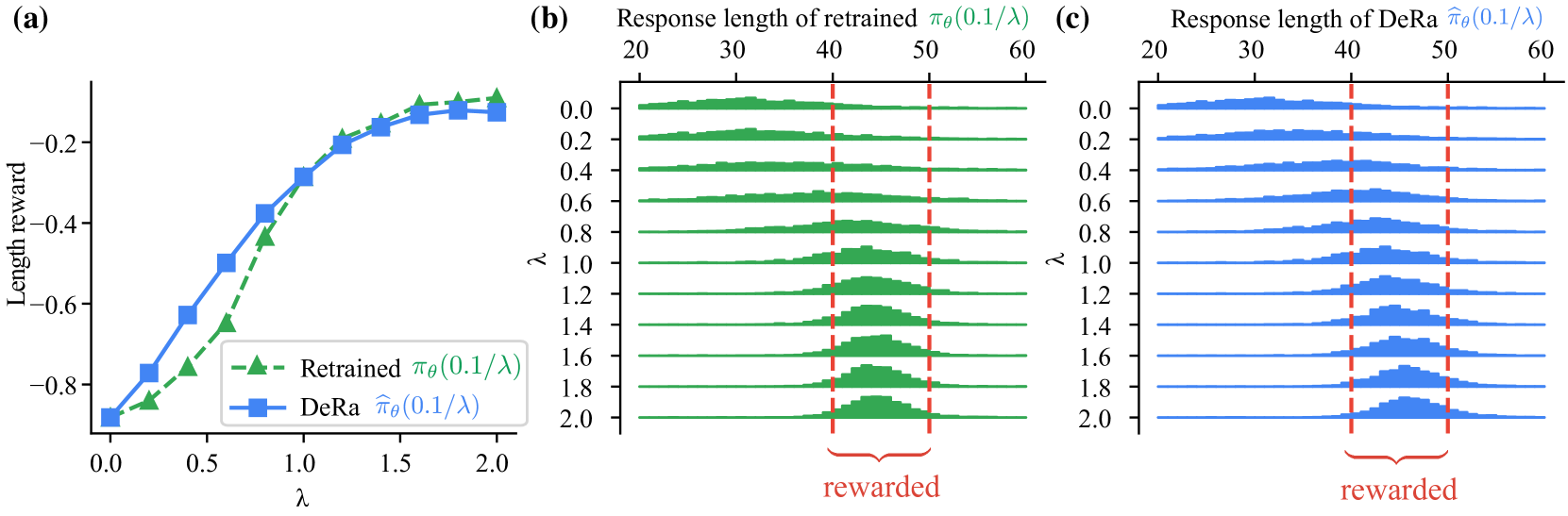
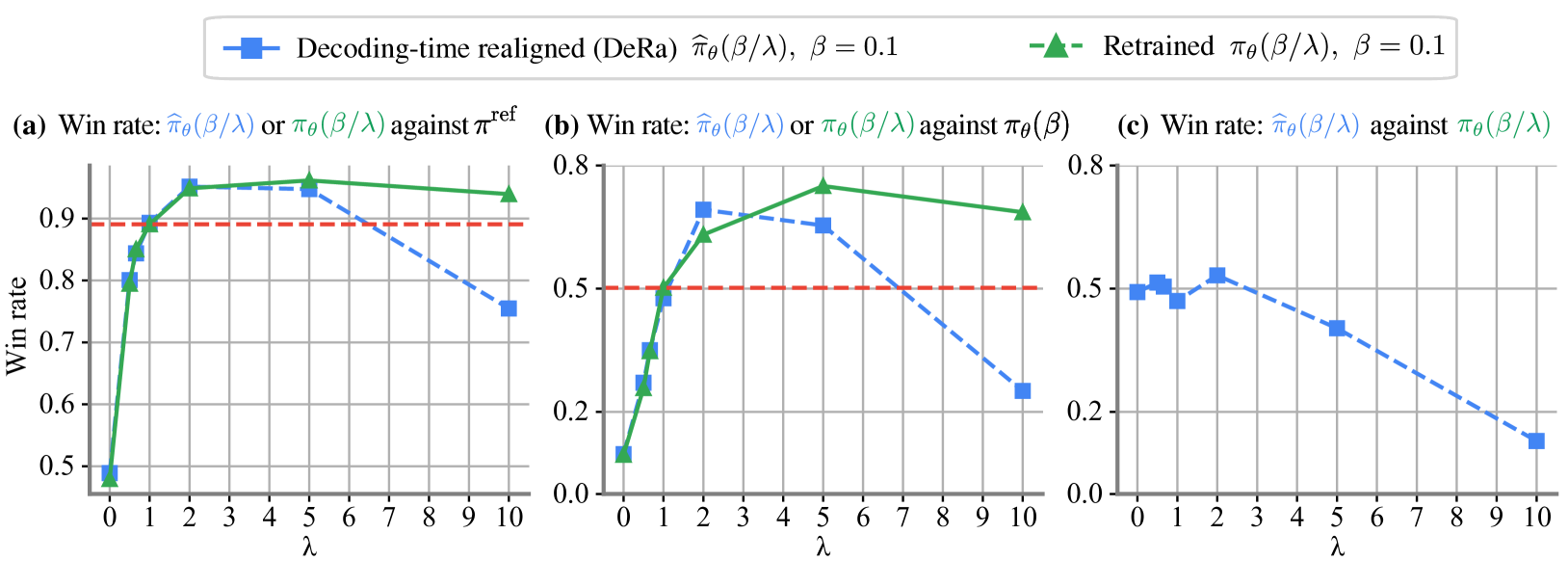
Aligning language models with human preferences is crucial for reducing errors and biases in these models. Alignment techniques, such as reinforcement learning from human feedback (RLHF), are typically cast as optimizing a tradeoff between human preference rewards and a proximity regularization term that encourages staying close to the unaligned model. Selecting an appropriate level of regularization is critical: insufficient regularization can lead to reduced model capabilities due to reward hacking, whereas excessive regularization hinders alignment. Traditional methods for finding the optimal regularization level require retraining multiple models with varying regularization strengths. This process, however, is resource-intensive, especially for large models. To address this challenge, we propose decoding-time realignment (DeRa), a simple method to explore and evaluate different regularization strengths in aligned models without retraining. DeRa enables control over the degree of alignment, allowing users to smoothly transition between unaligned and aligned models. It also enhances the efficiency of hyperparameter tuning by enabling the identification of effective regularization strengths using a validation dataset.