GuardML: Efficient Privacy-Preserving Machine Learning Services Through Hybrid Homomorphic Encryption
作者: Eugene Frimpong, Khoa Nguyen, Mindaugas Budzys, Tanveer Khan, Antonis Michalas
分类: cs.LG, cs.CR
发布日期: 2024-01-26
备注: 10 pages, accepted at The 39th ACM/SIGAPP Symposium on Applied Computing (SAC) conference
💡 一句话要点
提出混合同态加密以解决隐私保护机器学习问题
🎯 匹配领域: 支柱五:交互与反应 (Interaction & Reaction)
关键词: 隐私保护 同态加密 机器学习 混合同态加密 心脏病分类 数据安全 终端设备
📋 核心要点
- 现有的隐私保护机器学习方法在处理大规模数据时效率低下,传统同态加密的计算和通信成本过高。
- 本文提出了一种基于混合同态加密的隐私保护机器学习方案,旨在提高在终端设备上进行安全学习的效率。
- 实验结果表明,尽管与明文数据推理相比准确性略有下降,但通信和计算成本均保持在最低水平,展示了该方法的实用性。
📝 摘要(中文)
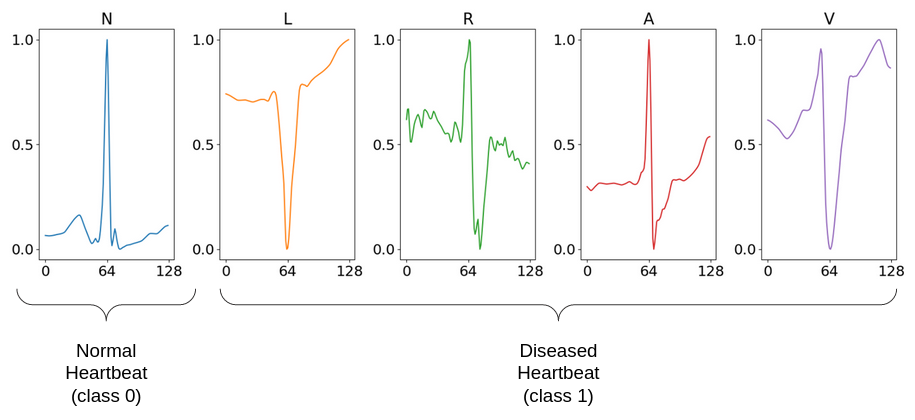
机器学习(ML)作为数据科学中最具变革性和影响力的领域之一,其广泛应用引发了隐私相关的担忧,尤其是针对ML模型的恶意攻击日益增多。为了解决这些问题,隐私保护机器学习(PPML)方法应运而生,其中同态加密(HE)是一种重要的技术。然而,传统HE的显著缺陷和低效性使其在高度可扩展的场景中不够实用。本文引入了一种现代密码学方案——混合同态加密(HHE),结合了对称密码学和HE的优势,以克服这些挑战。我们设计了一种针对终端设备的PPML方案,利用HHE作为基础构建块,实现对加密数据的安全分类学习,同时保护输入数据和ML模型的隐私。我们通过开发和评估基于HHE的PPML应用,展示了其在基于敏感ECG数据的心脏病分类中的实际应用潜力。
🔬 方法详解
问题定义:本文旨在解决传统同态加密在隐私保护机器学习中的低效性和不实用性,尤其是在大规模数据处理场景下的计算和通信成本问题。
核心思路:通过引入混合同态加密(HHE),结合对称加密和同态加密的优点,设计出一种高效的隐私保护机器学习方案,以支持终端设备的安全学习。
技术框架:整体架构包括数据加密模块、HHE处理模块和分类模型模块。首先对输入数据进行加密,然后利用HHE进行安全的分类学习,最后输出分类结果。
关键创新:最重要的技术创新在于将HHE引入到隐私保护机器学习中,显著提高了在资源受限的终端设备上进行安全学习的效率,克服了传统HE的局限性。
关键设计:在设计中,HHE的参数设置经过优化,以确保在保证隐私的同时,尽量减少计算和通信开销。损失函数和网络结构经过调整,以适应加密数据的特性。
🖼️ 关键图片

📊 实验亮点
实验结果显示,与明文数据推理相比,基于HHE的PPML方案在准确性上略有下降,但通信和计算成本显著降低,表明该方法在实际应用中的可行性和有效性。
🎯 应用场景
该研究的潜在应用领域包括医疗健康、金融服务和智能家居等,尤其是在需要处理敏感数据的场景中,能够有效保护用户隐私。未来,该技术有望推动更多隐私保护机器学习应用的落地,促进数据共享与合作。
📄 摘要(原文)
Machine Learning (ML) has emerged as one of data science's most transformative and influential domains. However, the widespread adoption of ML introduces privacy-related concerns owing to the increasing number of malicious attacks targeting ML models. To address these concerns, Privacy-Preserving Machine Learning (PPML) methods have been introduced to safeguard the privacy and security of ML models. One such approach is the use of Homomorphic Encryption (HE). However, the significant drawbacks and inefficiencies of traditional HE render it impractical for highly scalable scenarios. Fortunately, a modern cryptographic scheme, Hybrid Homomorphic Encryption (HHE), has recently emerged, combining the strengths of symmetric cryptography and HE to surmount these challenges. Our work seeks to introduce HHE to ML by designing a PPML scheme tailored for end devices. We leverage HHE as the fundamental building block to enable secure learning of classification outcomes over encrypted data, all while preserving the privacy of the input data and ML model. We demonstrate the real-world applicability of our construction by developing and evaluating an HHE-based PPML application for classifying heart disease based on sensitive ECG data. Notably, our evaluations revealed a slight reduction in accuracy compared to inference on plaintext data. Additionally, both the analyst and end devices experience minimal communication and computation costs, underscoring the practical viability of our approach. The successful integration of HHE into PPML provides a glimpse into a more secure and privacy-conscious future for machine learning on relatively constrained end devices.