Asynchronous Parallel Reinforcement Learning for Optimizing Propulsive Performance in Fin Ray Control
作者: Xin-Yang Liu, Dariush Bodaghi, Qian Xue, Xudong Zheng, Jian-Xun Wang
分类: physics.flu-dyn, cs.LG, eess.SY
发布日期: 2024-01-21
备注: 37 pages, 12 figures
💡 一句话要点
提出异步并行强化学习以优化鱼鳍控制的推进性能
🎯 匹配领域: 支柱一:机器人控制 (Robot Control) 支柱二:RL算法与架构 (RL & Architecture)
关键词: 深度强化学习 鱼鳍控制 流体-结构相互作用 异步并行训练 非线性动态
📋 核心要点
- 现有的深度强化学习方法在处理复杂非线性动态时,试错性质限制了其在计算密集型环境交互中的应用。
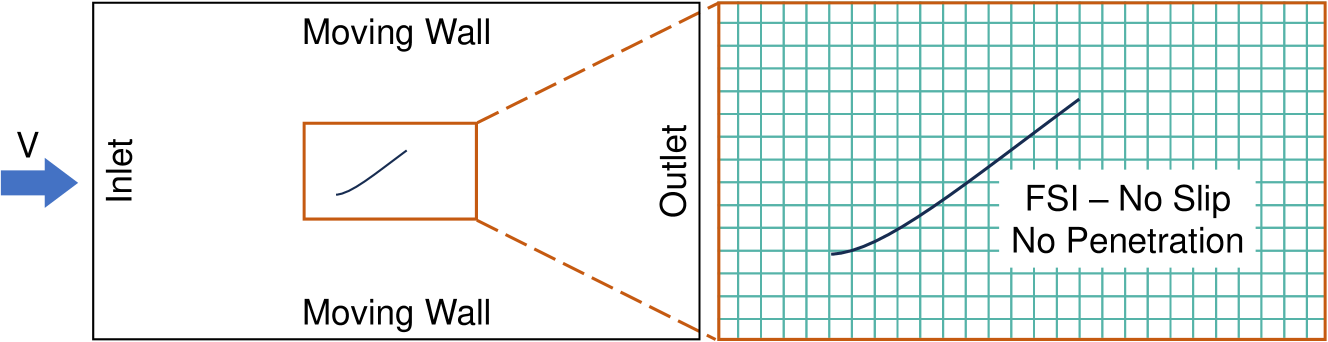
- 本文提出了一种异步并行训练策略,能够有效解耦流体-结构相互作用与策略优化,从而提高训练效率。
- 实验结果显示,所提方法在鱼鳍驱动控制中发现了优于传统正弦驱动函数的复杂策略,推进性能显著提升。
📝 摘要(中文)
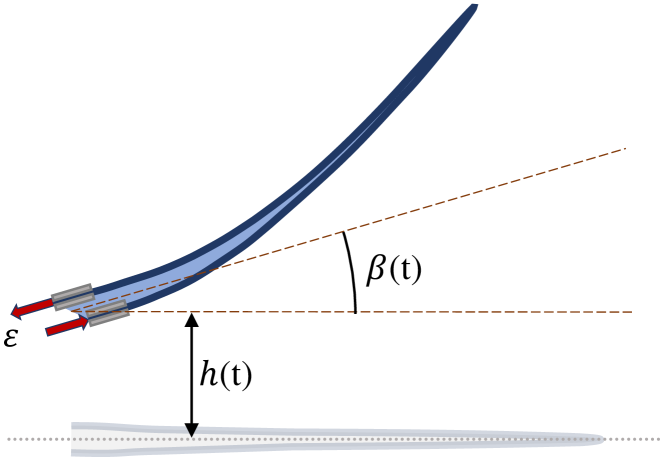
鱼鳍是辐鳍鱼类复杂的控制系统,能够在复杂流体环境中实现多样化的运动。尽管对鱼类运动的运动学和流体动力学进行了广泛研究,但鱼鳍驱动的复杂控制策略仍然未被充分探索。本文提出了一种先进的离线策略深度强化学习(DRL)算法,能够与流体-结构相互作用(FSI)环境进行交互,以获取针对不同推进性能目标的复杂鱼鳍控制策略。为提高训练效率并实现可扩展的并行性,提出了一种创新的异步并行训练(APT)策略,完全解耦了FSI环境交互与策略/价值网络优化。实验结果表明,该方法在发现鱼鳍驱动控制的最佳复杂策略方面取得了成功,相较于通过参数网格搜索识别的最佳正弦驱动函数,推进性能显著提升。
🔬 方法详解
问题定义:本文旨在解决鱼鳍控制中的复杂策略优化问题,现有方法在处理流体-结构相互作用时效率低下,难以实现高效的策略学习。
核心思路:通过引入异步并行训练策略,论文实现了流体-结构相互作用与策略优化的完全解耦,从而提高了训练的并行性和效率。
技术框架:整体架构包括流体-结构相互作用环境的模拟模块、策略/价值网络的优化模块,以及异步并行训练的调度机制,确保各模块高效协同工作。
关键创新:最重要的技术创新在于提出的异步并行训练策略,能够在不牺牲学习质量的前提下,显著提高训练速度,与传统的DRL训练方法相比具有本质区别。
关键设计:在参数设置上,采用了适应性学习率和经验回放机制,损失函数设计为结合策略梯度和价值函数的复合损失,网络结构则使用了深度卷积神经网络以处理复杂的输入数据。
🖼️ 关键图片

📊 实验亮点
实验结果表明,所提异步并行训练方法在鱼鳍驱动控制中发现的复杂策略,推进性能相比于传统的正弦驱动函数提升了显著的幅度,具体性能数据未明确给出,但相较于基线方法表现出明显的优势。
🎯 应用场景
该研究的潜在应用领域包括水下机器人、仿生机器人以及流体动力学相关的工程问题。通过优化鱼鳍控制策略,可以提升水下运动的灵活性和效率,具有重要的实际价值和广泛的应用前景。
📄 摘要(原文)
Fish fin rays constitute a sophisticated control system for ray-finned fish, facilitating versatile locomotion within complex fluid environments. Despite extensive research on the kinematics and hydrodynamics of fish locomotion, the intricate control strategies in fin-ray actuation remain largely unexplored. While deep reinforcement learning (DRL) has demonstrated potential in managing complex nonlinear dynamics; its trial-and-error nature limits its application to problems involving computationally demanding environmental interactions. This study introduces a cutting-edge off-policy DRL algorithm, interacting with a fluid-structure interaction (FSI) environment to acquire intricate fin-ray control strategies tailored for various propulsive performance objectives. To enhance training efficiency and enable scalable parallelism, an innovative asynchronous parallel training (APT) strategy is proposed, which fully decouples FSI environment interactions and policy/value network optimization. The results demonstrated the success of the proposed method in discovering optimal complex policies for fin-ray actuation control, resulting in a superior propulsive performance compared to the optimal sinusoidal actuation function identified through a parametric grid search. The merit and effectiveness of the APT approach are also showcased through comprehensive comparison with conventional DRL training strategies in numerical experiments of controlling nonlinear dynamics.