Mining Temporal Attack Patterns from Cyberthreat Intelligence Reports
作者: Md Rayhanur Rahman, Brandon Wroblewski, Quinn Matthews, Brantley Morgan, Tim Menzies, Laurie Williams
分类: cs.CR, cs.IR, cs.LG, cs.SE
发布日期: 2024-01-03
备注: A modified version of this pre-print is submitted to IEEE Transactions on Software Engineering, and is under review
💡 一句话要点
提出ChronoCTI以挖掘网络威胁情报中的时间攻击模式
🎯 匹配领域: 支柱九:具身大模型 (Embodied Foundation Models)
关键词: 网络安全 时间攻击模式 网络威胁情报 自动化挖掘 机器学习 自然语言处理 安全防护
📋 核心要点
- 现有方法难以系统性地识别和防御网络攻击中的重复行为链,导致安全防护不足。
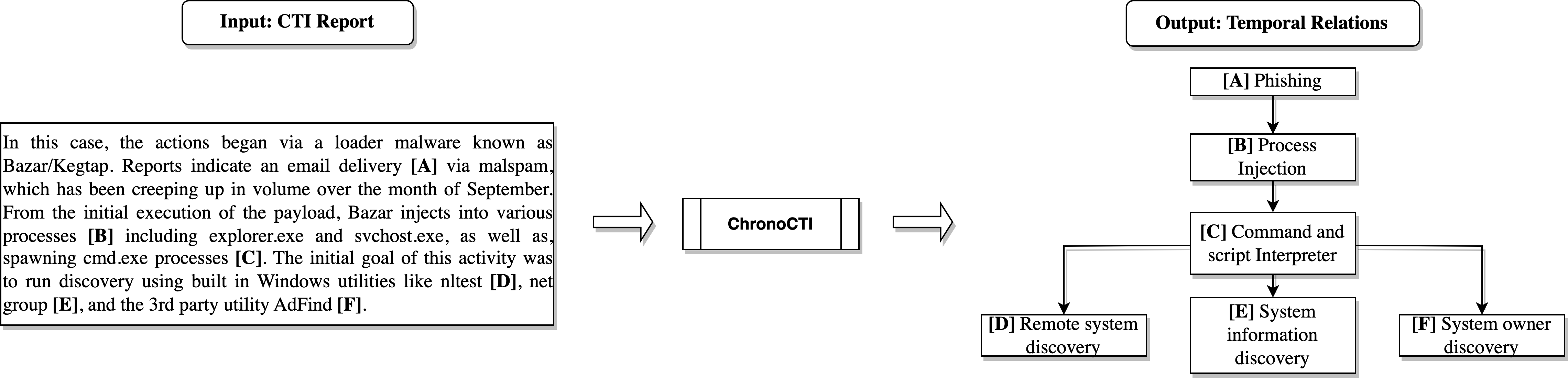
- 论文提出ChronoCTI,通过自动化挖掘网络威胁情报报告中的时间攻击模式,帮助安全从业者进行主动防御。
- 在713份网络威胁情报报告中,ChronoCTI识别出124种时间攻击模式,显著提升了对网络攻击的理解和防御能力。
📝 摘要(中文)
防御网络攻击需要从高层次理解对手行为。网络威胁情报报告描述了过去网络攻击事件中恶意行为的时间链。为了避免重复攻击,安全从业者必须主动识别和防御重复的行为链,本文提出ChronoCTI,一个自动化的管道,用于从网络威胁情报报告中挖掘时间攻击模式。通过构建时间攻击模式的真实数据集,并应用先进的语言模型和机器学习技术,ChronoCTI在713份报告中识别出124种时间攻击模式,并将其分类为九种模式类别。研究建议组织培训用户网络安全最佳实践,并设计针对重复攻击模式的对策。
🔬 方法详解
问题定义:本文旨在解决如何从网络威胁情报报告中系统性挖掘时间攻击模式的问题。现有方法往往缺乏有效的自动化工具,导致对重复攻击行为的识别不足。
核心思路:ChronoCTI的核心思路是利用先进的自然语言处理和机器学习技术,自动化地从历史网络攻击报告中提取时间攻击模式,以便为安全从业者提供结构化的信息。
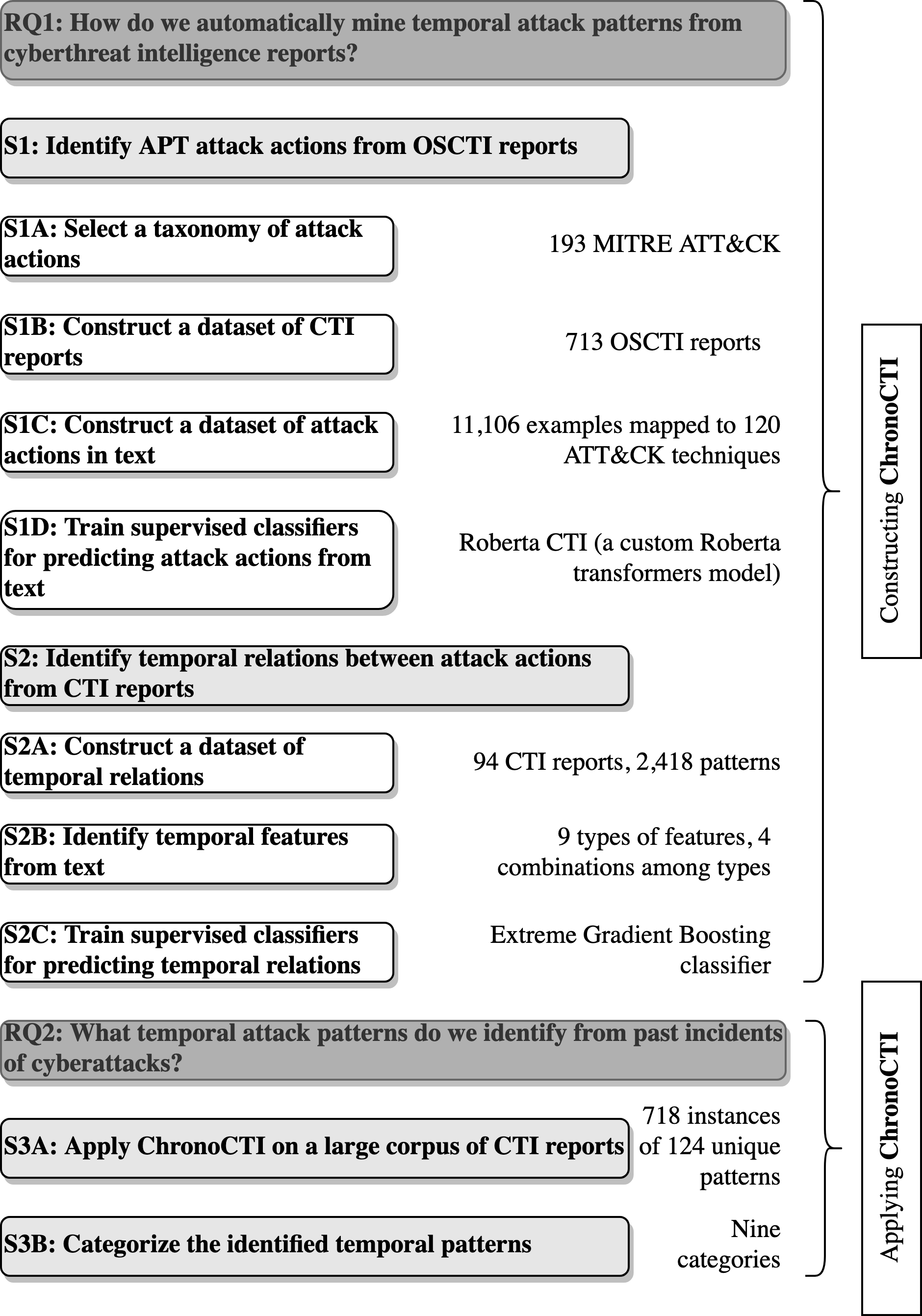
技术框架:ChronoCTI的整体架构包括数据收集、数据预处理、模式挖掘和结果分析四个主要模块。首先收集网络威胁情报报告,然后进行文本处理,接着应用机器学习算法挖掘时间攻击模式,最后对结果进行分类和分析。
关键创新:最重要的技术创新在于构建了一个真实的时间攻击模式数据集,并结合最新的语言模型进行模式挖掘。这一方法与传统的手动分析方法相比,显著提高了效率和准确性。
关键设计:在设计过程中,采用了先进的自然语言处理技术,结合特定的损失函数和模型架构,以确保挖掘出的模式具有较高的准确性和实用性。
🖼️ 关键图片
📊 实验亮点
在713份网络威胁情报报告中,ChronoCTI成功识别出124种时间攻击模式,涵盖九种模式类别。最常见的模式是诱使受害者执行恶意代码,其次是绕过受害网络的反恶意软件系统。这些发现为组织提供了重要的安全防护建议。
🎯 应用场景
该研究的潜在应用领域包括网络安全防护、事件响应和安全意识培训。通过自动化挖掘时间攻击模式,组织可以更有效地识别潜在威胁,并制定相应的防御策略,从而提升整体安全水平。未来,ChronoCTI有望与其他安全工具集成,形成更全面的安全防护体系。
📄 摘要(原文)
Defending from cyberattacks requires practitioners to operate on high-level adversary behavior. Cyberthreat intelligence (CTI) reports on past cyberattack incidents describe the chain of malicious actions with respect to time. To avoid repeating cyberattack incidents, practitioners must proactively identify and defend against recurring chain of actions - which we refer to as temporal attack patterns. Automatically mining the patterns among actions provides structured and actionable information on the adversary behavior of past cyberattacks. The goal of this paper is to aid security practitioners in prioritizing and proactive defense against cyberattacks by mining temporal attack patterns from cyberthreat intelligence reports. To this end, we propose ChronoCTI, an automated pipeline for mining temporal attack patterns from cyberthreat intelligence (CTI) reports of past cyberattacks. To construct ChronoCTI, we build the ground truth dataset of temporal attack patterns and apply state-of-the-art large language models, natural language processing, and machine learning techniques. We apply ChronoCTI on a set of 713 CTI reports, where we identify 124 temporal attack patterns - which we categorize into nine pattern categories. We identify that the most prevalent pattern category is to trick victim users into executing malicious code to initiate the attack, followed by bypassing the anti-malware system in the victim network. Based on the observed patterns, we advocate organizations to train users about cybersecurity best practices, introduce immutable operating systems with limited functionalities, and enforce multi-user authentications. Moreover, we advocate practitioners to leverage the automated mining capability of ChronoCTI and design countermeasures against the recurring attack patterns.