Robust Network Slicing: Multi-Agent Policies, Adversarial Attacks, and Defensive Strategies
作者: Feng Wang, M. Cenk Gursoy, Senem Velipasalar
分类: cs.LG, cs.CR, cs.MA
发布日期: 2023-11-19
备注: Published in IEEE Transactions on Machine Learning in Communications and Networking (TMLCN)
DOI: 10.1109/TMLCN.2023.3334236
💡 一句话要点
提出多智能体深度强化学习框架以增强网络切片的鲁棒性
🎯 匹配领域: 支柱二:RL算法与架构 (RL & Architecture)
关键词: 深度强化学习 网络切片 多智能体系统 干扰器设计 纳什均衡 动态环境 性能优化
📋 核心要点
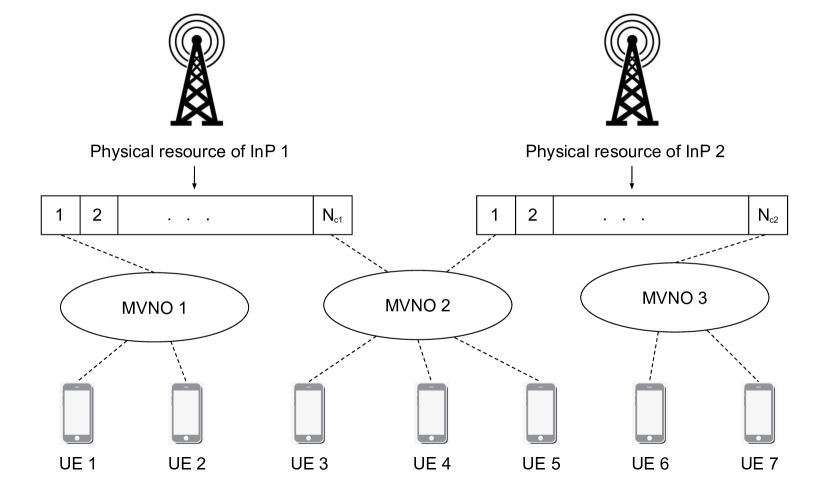
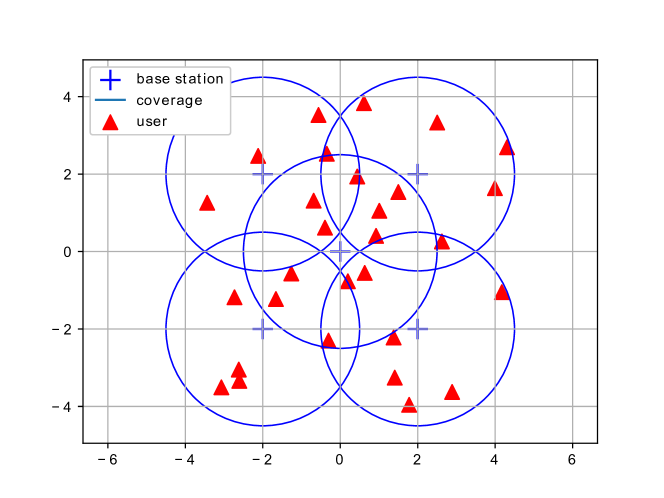
- 现有网络切片方法在动态环境中面临多用户和多基站的挑战,导致性能不稳定。
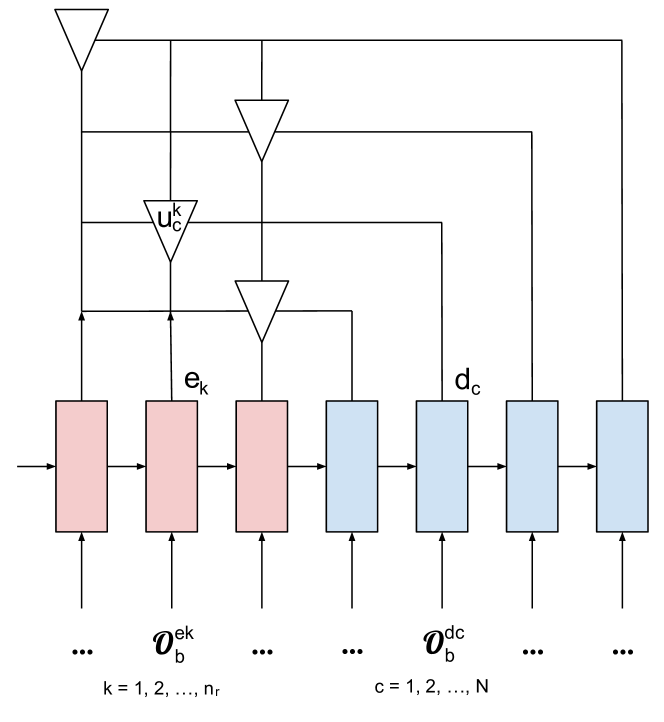
- 论文提出了一种多智能体深度强化学习框架,利用指针网络适应输入变化,增强网络切片的鲁棒性。
- 实验结果表明,所提干扰器能够在没有直接反馈的情况下显著降低网络切片代理的性能。
📝 摘要(中文)
本文提出了一种多智能体深度强化学习框架,用于在动态环境中进行网络切片,涉及多个基站和用户。我们引入了一种新颖的多演员集中式评论员(MACC)框架,其中演员使用指针网络以适应输入的变化维度。通过仿真评估该算法的有效性。此外,我们开发了一种基于深度强化学习的干扰器,旨在在有限的先验信息和功率预算下,最小化网络切片的传输速率,从而降低网络切片代理的性能。最后,我们设计了一种基于纳什均衡的策略集成混合策略,以应对干扰,并通过仿真实验验证其有效性。
🔬 方法详解
问题定义:本文旨在解决动态环境中网络切片的鲁棒性问题,现有方法在多用户和多基站场景下性能不稳定,难以适应变化的网络条件。
核心思路:提出的多智能体深度强化学习框架通过多个演员和集中式评论员的设计,利用指针网络处理输入维度的变化,从而提高网络切片的适应性和性能。
技术框架:整体架构包括多个演员负责执行策略,集中式评论员负责评估策略的效果。框架中还引入了基于深度强化学习的干扰器,优化干扰位置和信道。
关键创新:最重要的创新在于引入了指针网络作为演员的实现方式,使得框架能够灵活应对输入维度的变化,同时设计了干扰器以有效降低网络切片性能。
关键设计:在干扰器设计中,设置了监听和干扰两个阶段,优化了干扰位置和信道,采用深度强化学习进行策略训练,确保干扰效果最大化。
🖼️ 关键图片
📊 实验亮点
实验结果显示,所提干扰器在优化位置和信道的情况下,能够在没有先验知识的条件下,显著降低网络切片代理的传输速率,提升干扰效果,验证了所提方法的有效性。
🎯 应用场景
该研究的潜在应用领域包括5G及未来网络的资源管理、智能交通系统和物联网等场景。通过增强网络切片的鲁棒性,能够提高网络的整体性能和用户体验,具有重要的实际价值和未来影响。
📄 摘要(原文)
In this paper, we present a multi-agent deep reinforcement learning (deep RL) framework for network slicing in a dynamic environment with multiple base stations and multiple users. In particular, we propose a novel deep RL framework with multiple actors and centralized critic (MACC) in which actors are implemented as pointer networks to fit the varying dimension of input. We evaluate the performance of the proposed deep RL algorithm via simulations to demonstrate its effectiveness. Subsequently, we develop a deep RL based jammer with limited prior information and limited power budget. The goal of the jammer is to minimize the transmission rates achieved with network slicing and thus degrade the network slicing agents' performance. We design a jammer with both listening and jamming phases and address jamming location optimization as well as jamming channel optimization via deep RL. We evaluate the jammer at the optimized location, generating interference attacks in the optimized set of channels by switching between the jamming phase and listening phase. We show that the proposed jammer can significantly reduce the victims' performance without direct feedback or prior knowledge on the network slicing policies. Finally, we devise a Nash-equilibrium-supervised policy ensemble mixed strategy profile for network slicing (as a defensive measure) and jamming. We evaluate the performance of the proposed policy ensemble algorithm by applying on the network slicing agents and the jammer agent in simulations to show its effectiveness.