Challenges for Predictive Modeling with Neural Network Techniques using Error-Prone Dietary Intake Data
作者: Dylan Spicker, Amir Nazemi, Joy Hutchinson, Paul Fieguth, Sharon I. Kirkpatrick, Michael Wallace, Kevin W. Dodd
分类: cs.LG, stat.AP
发布日期: 2023-11-15
期刊: Statistics in Medicine. 44.5 (2025)
DOI: 10.1002/sim.70013
💡 一句话要点
探讨神经网络在饮食摄入数据预测建模中的挑战与解决方案
🎯 匹配领域: 支柱二:RL算法与架构 (RL & Architecture)
关键词: 饮食摄入数据 测量误差 神经网络 预测建模 健康关系 机器学习 数据质量
📋 核心要点
- 饮食摄入数据的测量误差严重影响了饮食与健康关系的研究,现有方法未能系统性探讨这一问题。
- 本文提出了在存在测量误差的情况下,如何谨慎使用神经网络进行饮食健康关系建模的思路。
- 研究表明,样本量和重复测量对模型性能有显著影响,强调了防止过拟合的重要性。
📝 摘要(中文)
饮食摄入数据常用于研究饮食与健康之间的关系,但这些数据往往存在测量误差,扭曲真实关系。除了测量误差外,不同饮食成分之间可能存在复杂的协同或对抗作用,进一步复杂化了饮食与健康结果之间的关系。本文展示了测量误差如何影响神经网络的预测性能,并强调在存在误差时使用这些模型所需的谨慎。我们探讨了样本量和重复测量对模型性能的影响,并指出了对加性变换的研究动机,以及防止模型过拟合所需的谨慎。尽管神经网络在多个领域的表现使其成为研究饮食与健康关系的有吸引力的候选者,但我们的研究表明,应用这些技术以提高预测性能需要更多的关注和方法论发展。
🔬 方法详解
问题定义:本文解决的是饮食摄入数据中测量误差对神经网络预测建模性能的影响。现有方法未能充分考虑这一问题,导致模型性能下降。
核心思路:论文的核心思路是通过分析测量误差对神经网络的影响,提出在建模过程中需要谨慎处理数据和模型参数,以提高预测准确性。
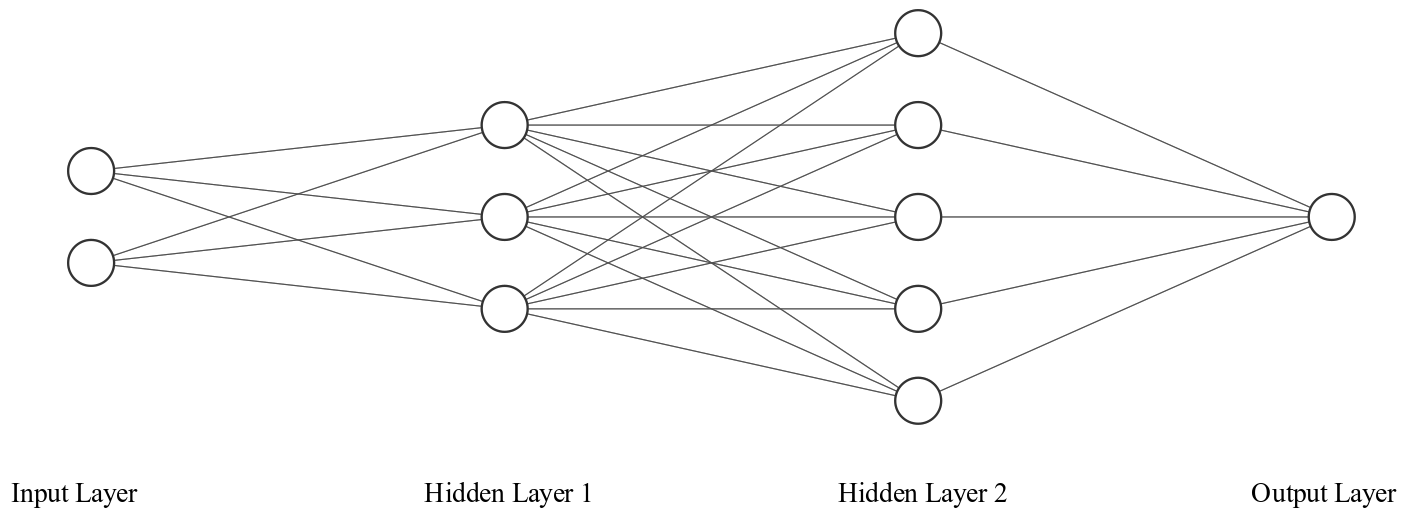
技术框架:整体架构包括数据收集、误差分析、模型训练和性能评估四个主要阶段。数据收集阶段强调样本量和重复测量的重要性,误差分析阶段则探讨如何量化测量误差对模型的影响。
关键创新:最重要的技术创新点在于系统性地分析了测量误差对神经网络性能的影响,并提出了相应的解决策略。这与现有方法的本质区别在于强调了数据质量对模型性能的关键作用。
关键设计:在模型设计中,采用了特定的损失函数来处理测量误差,并在网络结构上进行了调整,以适应复杂的饮食成分交互作用。
🖼️ 关键图片


📊 实验亮点
实验结果表明,在考虑测量误差的情况下,神经网络的预测性能显著下降。通过增加样本量和进行重复测量,模型性能得到了改善,表明在数据质量提升的情况下,神经网络的优势能够得到充分发挥。
🎯 应用场景
该研究的潜在应用领域包括公共卫生、营养学和个性化饮食建议等。通过提高饮食摄入数据的预测准确性,能够更好地理解饮食与健康之间的关系,从而为政策制定和健康干预提供科学依据。未来,该研究可能推动更为精确的饮食评估工具的开发。
📄 摘要(原文)
Dietary intake data are routinely drawn upon to explore diet-health relationships. However, these data are often subject to measurement error, distorting the true relationships. Beyond measurement error, there are likely complex synergistic and sometimes antagonistic interactions between different dietary components, complicating the relationships between diet and health outcomes. Flexible models are required to capture the nuance that these complex interactions introduce. This complexity makes research on diet-health relationships an appealing candidate for the application of machine learning techniques, and in particular, neural networks. Neural networks are computational models that are able to capture highly complex, nonlinear relationships so long as sufficient data are available. While these models have been applied in many domains, the impacts of measurement error on the performance of predictive modeling has not been systematically investigated. However, dietary intake data are typically collected using self-report methods and are prone to large amounts of measurement error. In this work, we demonstrate the ways in which measurement error erodes the performance of neural networks, and illustrate the care that is required for leveraging these models in the presence of error. We demonstrate the role that sample size and replicate measurements play on model performance, indicate a motivation for the investigation of transformations to additivity, and illustrate the caution required to prevent model overfitting. While the past performance of neural networks across various domains make them an attractive candidate for examining diet-health relationships, our work demonstrates that substantial care and further methodological development are both required to observe increased predictive performance when applying these techniques, compared to more traditional statistical procedures.