Explicit Foundation Model Optimization with Self-Attentive Feed-Forward Neural Units
作者: Jake Ryland Williams, Haoran Zhao
分类: cs.LG, math.PR, physics.data-an, stat.ML
发布日期: 2023-11-13
💡 一句话要点
提出显式基础模型优化方法以降低神经网络计算成本
🎯 匹配领域: 支柱九:具身大模型 (Embodied Foundation Models)
关键词: 神经网络优化 显式优化 自注意力机制 低资源应用 多层神经网络 变换器模型 高效训练
📋 核心要点
- 现有的反向传播方法在大规模优化神经网络时计算成本高,限制了其在低资源环境中的应用。
- 论文提出了一种显式优化方法,通过自注意力前馈单元(SAFFU)层来提高多层神经网络的训练效率。
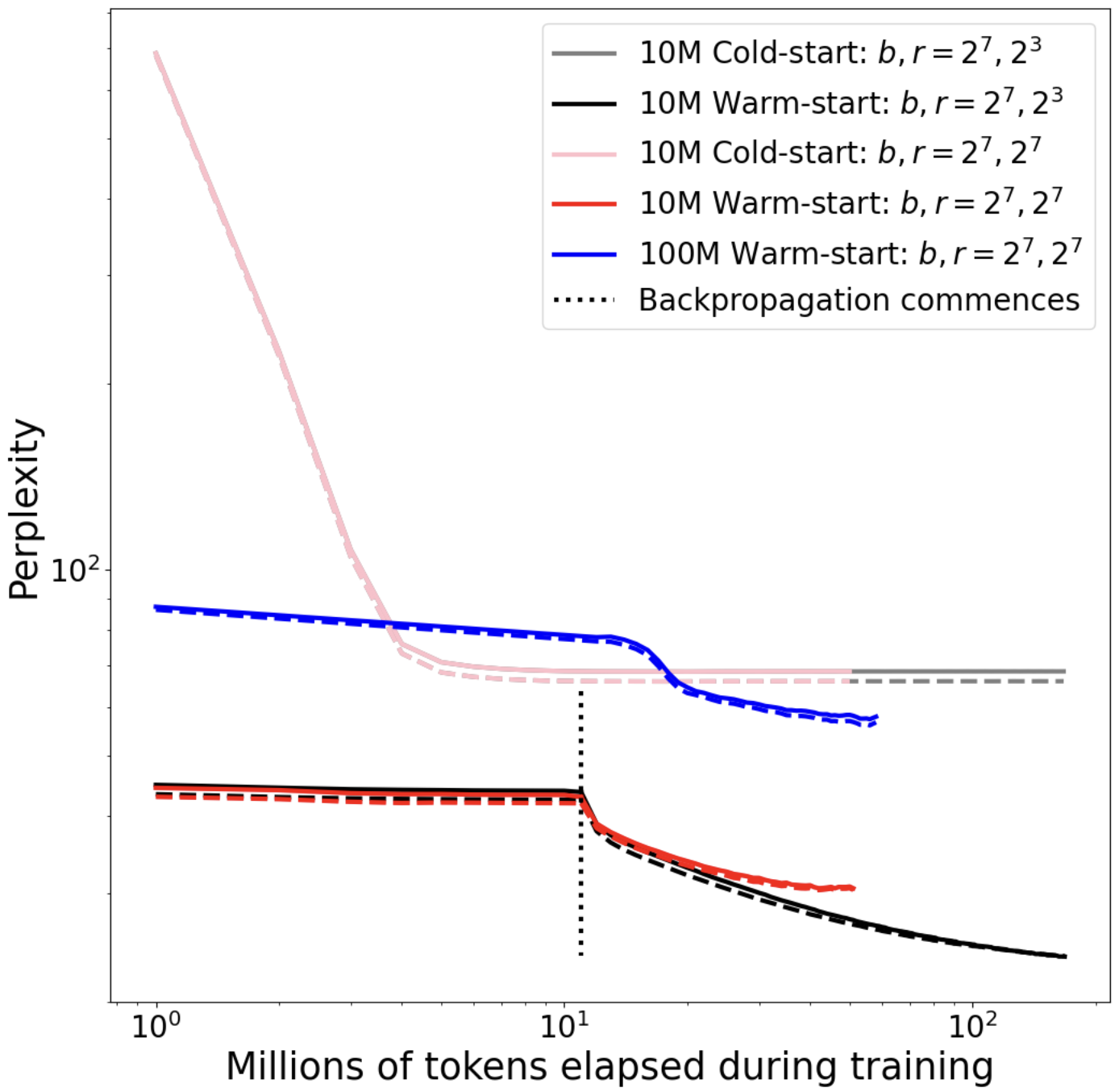
- 实验结果显示,显式解决方案在性能上优于传统反向传播优化,且在小数据集上训练有效模型的能力显著提升。
📝 摘要(中文)
迭代近似方法通过反向传播优化神经网络,但在大规模应用中计算成本高昂。本文提出了一种高效的替代方案,旨在降低神经网络的扩展成本,并为低资源应用提供高效优化。我们讨论了前馈神经网络的一般结果,并将该解决方案扩展到复合(多层)网络,应用于简化的变换器块,包含前馈和自注意力层。通过训练复杂的多层神经架构(自注意力前馈单元SAFFU层),我们开发了一种在小规模认知数据上表现良好的变换器。测试表明,显式解决方案的性能优于仅通过反向传播优化的模型。此外,在显式解决方案后进一步应用反向传播,能够从较小的数据规模中获得更好的最优解,显著提高了模型的训练效率。
🔬 方法详解
问题定义:本文旨在解决传统反向传播方法在大规模神经网络优化中的高计算成本问题,尤其是在低资源环境下的应用限制。
核心思路:提出了一种显式优化方法,通过自注意力前馈单元(SAFFU)层来替代传统的反向传播,从而提高训练效率和模型性能。
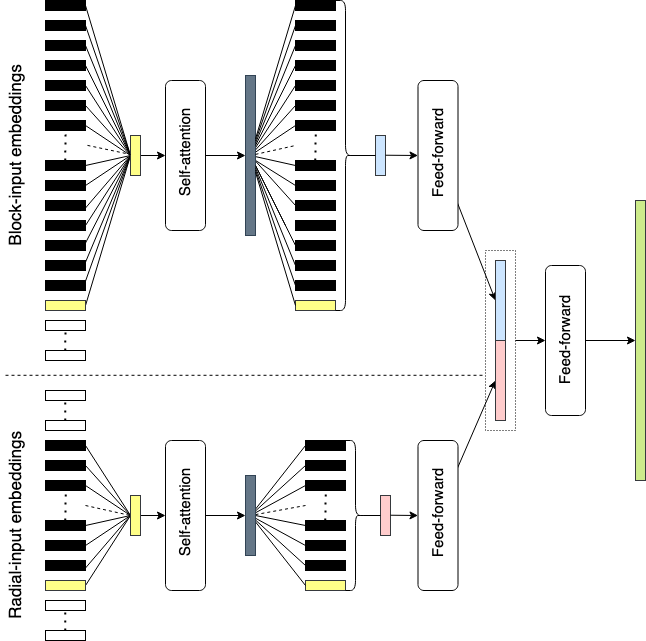
技术框架:整体架构包括前馈神经网络和自注意力机制的组合,首先通过显式优化方法训练基础模型,然后在此基础上应用反向传播进行进一步优化。
关键创新:最重要的技术创新在于显式优化方法的引入,使得模型在小规模数据上也能达到良好的泛化能力,与传统方法相比,显著降低了计算成本。
关键设计:在网络结构上,设计了自注意力前馈单元(SAFFU)层,优化了参数设置和损失函数,以适应低资源环境下的高效训练。
🖼️ 关键图片

📊 实验亮点
实验结果表明,显式解决方案的模型在性能上优于仅通过反向传播优化的模型,尤其是在小规模数据集上,能够显著提高训练效率。具体而言,多个不同架构变体的表现均优于基线,且一些最佳模型的参数量并不高,显示出良好的泛化能力。
🎯 应用场景
该研究的潜在应用领域包括低资源环境下的人工智能模型训练,如移动设备和边缘计算设备。通过显式优化方法,可以在数据稀缺的情况下有效训练复杂模型,推动AI技术在更多实际场景中的应用。
📄 摘要(原文)
Iterative approximation methods using backpropagation enable the optimization of neural networks, but they remain computationally expensive, especially when used at scale. This paper presents an efficient alternative for optimizing neural networks that reduces the costs of scaling neural networks and provides high-efficiency optimizations for low-resource applications. We will discuss a general result about feed-forward neural networks and then extend this solution to compositional (mult-layer) networks, which are applied to a simplified transformer block containing feed-forward and self-attention layers. These models are used to train highly-specified and complex multi-layer neural architectures that we refer to as self-attentive feed-forward unit (SAFFU) layers, which we use to develop a transformer that appears to generalize well over small, cognitively-feasible, volumes of data. Testing demonstrates explicit solutions outperform models optimized by backpropagation alone. Moreover, further application of backpropagation after explicit solutions leads to better optima from smaller scales of data, training effective models from much less data is enabled by explicit solution warm starts. We then carry out ablation experiments training a roadmap of about 250 transformer models over 1-million tokens to determine ideal settings. We find that multiple different architectural variants produce highly-performant models, and discover from this ablation that some of the best are not the most parameterized. This appears to indicate well-generalized models could be reached using less data by using explicit solutions, and that architectural exploration using explicit solutions pays dividends in guiding the search for efficient variants with fewer parameters, and which could be incorporated into low-resource hardware where AI might be embodied.