Clipped-Objective Policy Gradients for Pessimistic Policy Optimization
作者: Jared Markowitz, Edward W. Staley
分类: cs.LG
发布日期: 2023-11-10
备注: 12 pages, 8 figures
💡 一句话要点
提出剪切目标策略梯度以优化悲观策略
🎯 匹配领域: 支柱二:RL算法与架构 (RL & Architecture)
关键词: 策略梯度 深度强化学习 悲观策略优化 方差减少 多任务学习
📋 核心要点
- 现有的PPO方法在连续动作空间中的表现受限,且在探索方面存在不足。
- 论文提出了一种新的剪切目标策略梯度(COPG),通过简单的目标修改来提高学习效率。
- 实验证明,COPG在多种学习任务中表现优于PPO,且计算复杂度保持在较低水平。
📝 摘要(中文)
为了促进高效学习,深度强化学习中的策略梯度方法通常与方差减少措施和基于经验批次的安全策略变更策略相结合。本文发现,PPO在连续动作空间中的表现可以通过简单的目标更改得到一致改善。我们推荐使用剪切的基本策略梯度,替代PPO的重采样目标。尽管两者都产生相对于RL目标的偏差梯度估计,但它们的方差显著低于无偏的离线策略梯度。此外,剪切目标策略梯度(COPG)在平均上表现出“悲观”特性,促进了更好的探索。实验证明,COPG在单任务、约束和多任务学习中均优于PPO,且未增加显著的计算成本或复杂性。
🔬 方法详解
问题定义:本文旨在解决现有PPO方法在连续动作空间中的表现不足,尤其是在探索效率方面的挑战。现有方法在进行策略更新时,可能导致学习过程中的不稳定性和低效性。
核心思路:论文提出的COPG方法通过引入剪切的基本策略梯度,替代PPO的重采样目标,旨在减少方差并提高学习的稳定性和效率。这样的设计使得策略更新更加安全且有效。
技术框架:COPG方法的整体架构包括策略梯度计算、剪切操作和优化步骤。首先计算策略梯度,然后对其进行剪切,最后通过优化算法更新策略。该方法保持了PPO的简单性,同时引入了新的目标函数。
关键创新:COPG的主要创新在于其“悲观”特性,这种特性使得策略更新更加谨慎,从而促进了更好的探索。与PPO相比,COPG在保持简单性的同时,提供了更优的学习性能。
关键设计:在COPG中,损失函数采用了剪切的基本策略梯度形式,确保了在多次优化步骤中保持稳定性。此外,参数设置与网络结构设计保持了PPO的框架,使得实现过程相对简单。通过这些设计,COPG在多任务学习中表现出色。
🖼️ 关键图片

📊 实验亮点
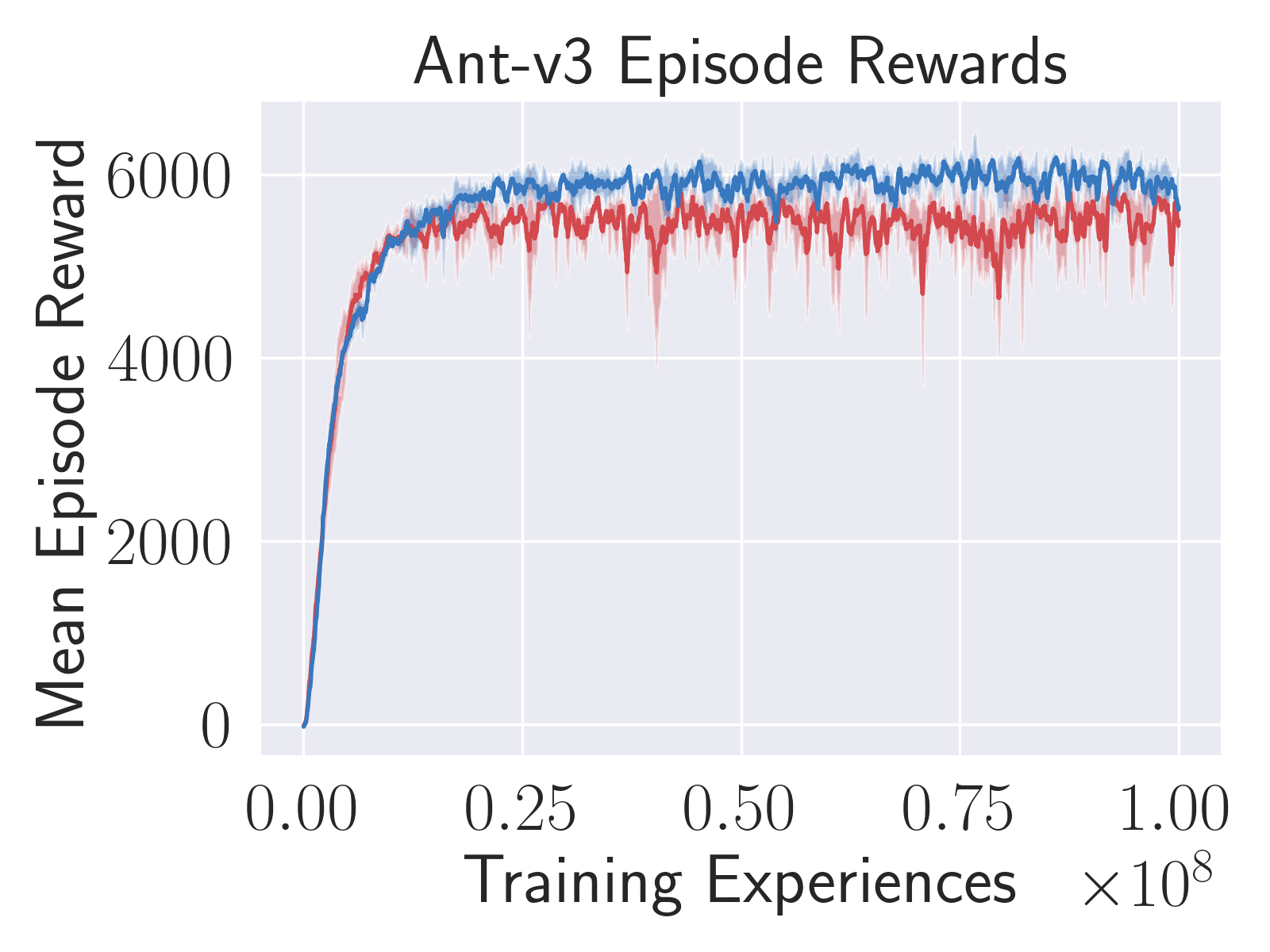
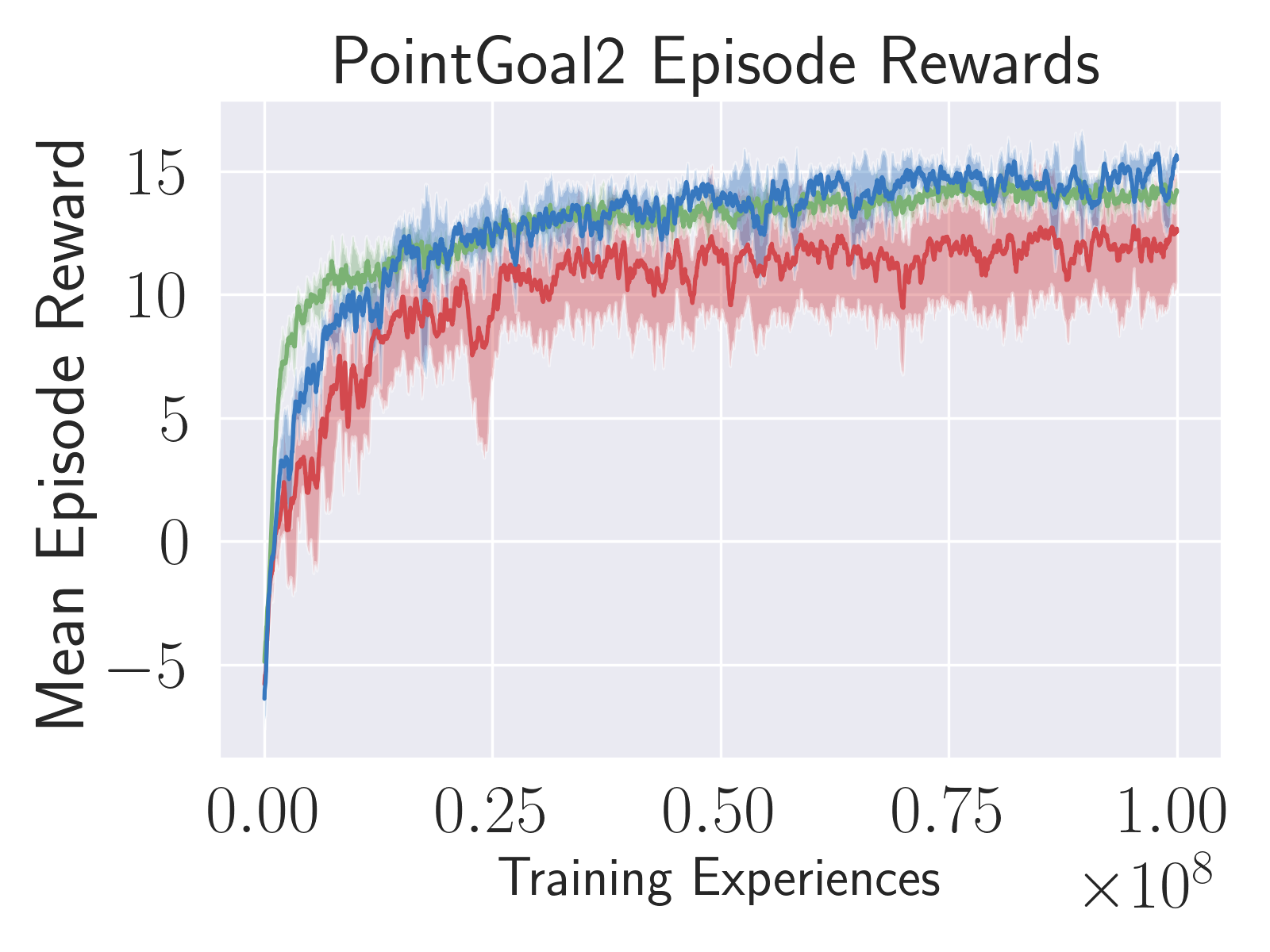
实验结果显示,COPG在单任务、约束和多任务学习中均优于PPO,且在性能上与TRPO相当或更优。具体而言,COPG在多个基准测试中实现了显著的学习效率提升,方差降低,且计算复杂度保持在较低水平。
🎯 应用场景
该研究的潜在应用领域包括机器人控制、自动驾驶、游戏智能体等需要高效学习和探索的场景。COPG方法的高效性和稳定性使其在实际应用中具有重要价值,能够提升智能体在复杂环境中的表现。未来,该方法可能推动更多领域的强化学习研究与应用。
📄 摘要(原文)
To facilitate efficient learning, policy gradient approaches to deep reinforcement learning (RL) are typically paired with variance reduction measures and strategies for making large but safe policy changes based on a batch of experiences. Natural policy gradient methods, including Trust Region Policy Optimization (TRPO), seek to produce monotonic improvement through bounded changes in policy outputs. Proximal Policy Optimization (PPO) is a commonly used, first-order algorithm that instead uses loss clipping to take multiple safe optimization steps per batch of data, replacing the bound on the single step of TRPO with regularization on multiple steps. In this work, we find that the performance of PPO, when applied to continuous action spaces, may be consistently improved through a simple change in objective. Instead of the importance sampling objective of PPO, we instead recommend a basic policy gradient, clipped in an equivalent fashion. While both objectives produce biased gradient estimates with respect to the RL objective, they also both display significantly reduced variance compared to the unbiased off-policy policy gradient. Additionally, we show that (1) the clipped-objective policy gradient (COPG) objective is on average "pessimistic" compared to both the PPO objective and (2) this pessimism promotes enhanced exploration. As a result, we empirically observe that COPG produces improved learning compared to PPO in single-task, constrained, and multi-task learning, without adding significant computational cost or complexity. Compared to TRPO, the COPG approach is seen to offer comparable or superior performance, while retaining the simplicity of a first-order method.