Improving Computational Efficiency for Powered Descent Guidance via Transformer-based Tight Constraint Prediction
作者: Julia Briden, Trey Gurga, Breanna Johnson, Abhishek Cauligi, Richard Linares
分类: math.OC, cs.LG, cs.RO, eess.SY
发布日期: 2023-11-09 (更新: 2023-12-11)
备注: Accepted to AIAA SciTech 2024 on 25-Aug-2023. Full manuscript submitted to AIAA SciTech 2024 on 25-May-2023
💡 一句话要点
提出基于Transformer的动力下降引导算法以提高计算效率
🎯 匹配领域: 支柱一:机器人控制 (Robot Control)
关键词: 动力下降引导 Transformer 轨迹优化 计算效率 航天器控制
📋 核心要点
- 现有的动力下降引导方法在计算复杂度上存在挑战,尤其是在实时应用中难以满足快速响应的需求。
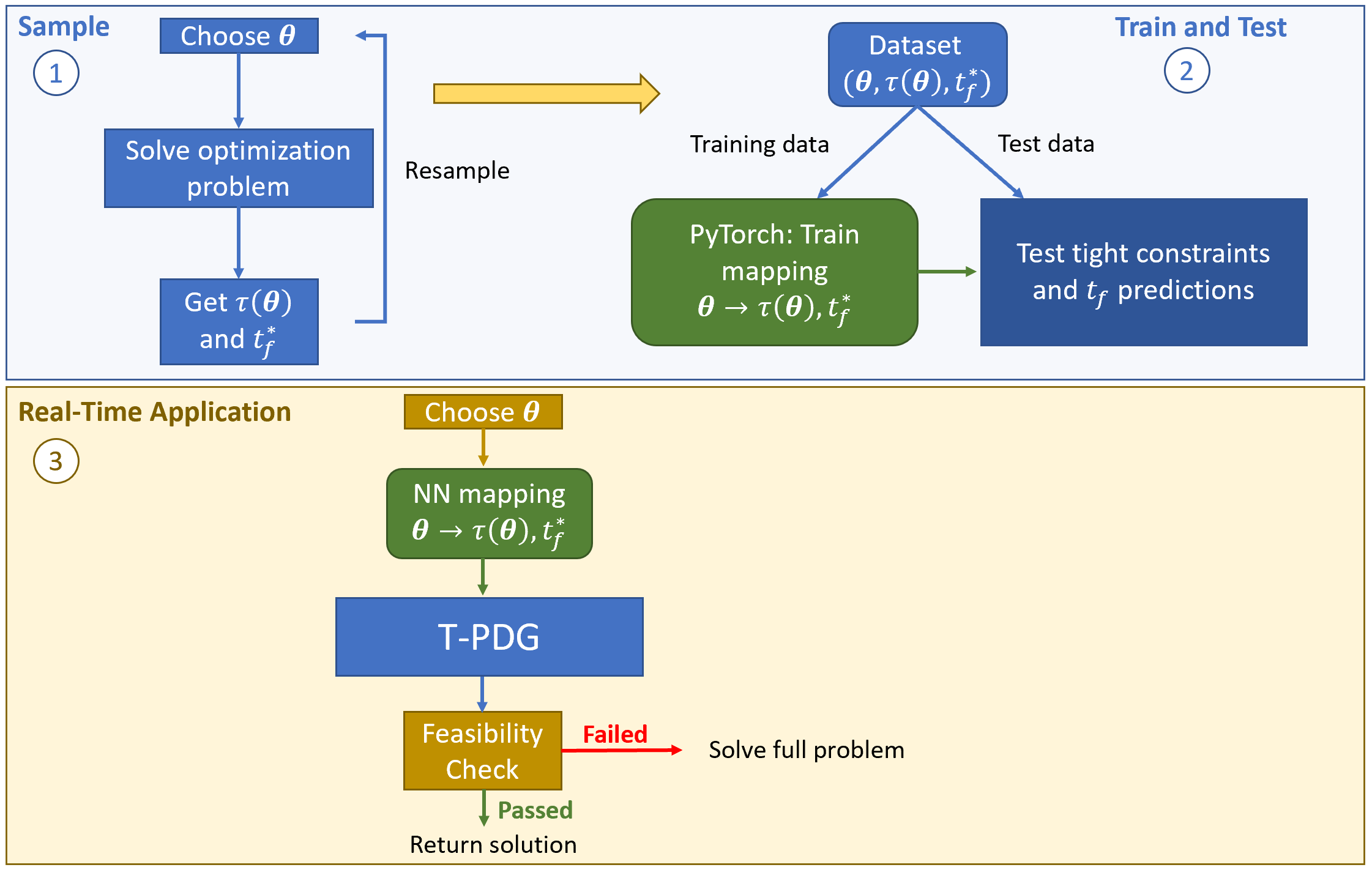
- 论文提出的T-PDG算法通过训练Transformer网络,利用历史数据预测最优轨迹的紧约束,从而显著提高计算效率。
- 实验结果表明,T-PDG在火星动力下降引导问题上,计算时间从1-8秒减少到500毫秒以下,表现出显著的性能提升。
📝 摘要(中文)
本研究提出了一种基于Transformer的动力下降引导算法(T-PDG),旨在降低航天器动力下降引导问题的计算复杂度。T-PDG利用先前轨迹优化算法的运行数据训练Transformer神经网络,准确预测问题参数与全局最优解之间的关系。该解以紧约束集的形式编码,确保了安全和最优的着陆方案。应用于火星动力下降引导时,T-PDG将计算三自由度燃料最优轨迹的时间从1-8秒减少到500毫秒以内。
🔬 方法详解
问题定义:本论文旨在解决航天器动力下降引导中的计算复杂度问题。现有方法在实时性和计算效率上存在不足,尤其是在处理复杂的轨迹优化时。
核心思路:论文的核心思路是利用Transformer神经网络,通过历史轨迹优化数据训练模型,预测问题参数与最优解之间的关系,从而减少计算时间。
技术框架:T-PDG的整体架构包括数据收集、Transformer模型训练、约束预测和可行性检查四个主要模块。首先收集历史数据,然后训练模型以预测紧约束,最后进行可行性检查以确保安全性。
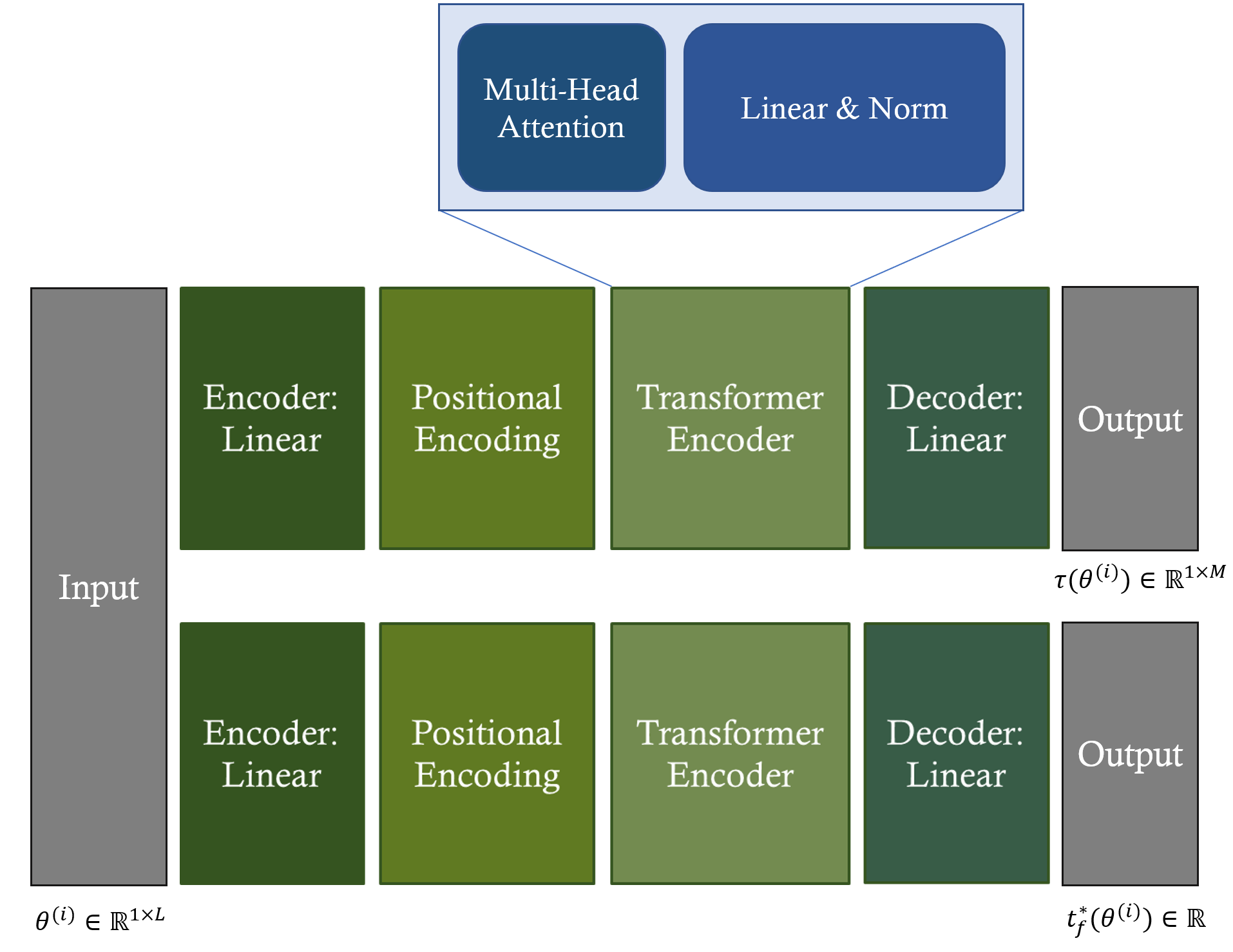
关键创新:最重要的技术创新在于将Transformer网络应用于动力下降引导问题,利用其注意力机制有效处理长时间序列数据,显著提高了预测精度和计算效率。
关键设计:在设计中,T-PDG使用了特定的损失函数来优化约束预测的准确性,并采用了适合时间序列数据的Transformer网络结构,确保了模型的高效性和准确性。
🖼️ 关键图片
📊 实验亮点
实验结果显示,T-PDG在火星动力下降引导问题上的计算时间从1-8秒减少到500毫秒以下,展现出显著的性能提升。与无损凸化方法相比,T-PDG在计算效率上具有明显优势,确保了安全且最优的着陆方案。
🎯 应用场景
该研究的潜在应用领域包括航天器的自动着陆系统、无人机的自主飞行控制以及其他需要实时轨迹优化的机器人系统。通过提高计算效率,T-PDG能够在复杂环境中实现更安全、更高效的自主导航与控制,具有重要的实际价值和未来影响。
📄 摘要(原文)
In this work, we present Transformer-based Powered Descent Guidance (T-PDG), a scalable algorithm for reducing the computational complexity of the direct optimization formulation of the spacecraft powered descent guidance problem. T-PDG uses data from prior runs of trajectory optimization algorithms to train a transformer neural network, which accurately predicts the relationship between problem parameters and the globally optimal solution for the powered descent guidance problem. The solution is encoded as the set of tight constraints corresponding to the constrained minimum-cost trajectory and the optimal final time of landing. By leveraging the attention mechanism of transformer neural networks, large sequences of time series data can be accurately predicted when given only the spacecraft state and landing site parameters. When applied to the real problem of Mars powered descent guidance, T-PDG reduces the time for computing the 3 degree of freedom fuel-optimal trajectory, when compared to lossless convexification, from an order of 1-8 seconds to less than 500 milliseconds. A safe and optimal solution is guaranteed by including a feasibility check in T-PDG before returning the final trajectory.