HDGL: A hierarchical dynamic graph representation learning model for brain disorder classification
作者: Parnian Jalali, Mehran Safayani
分类: cs.LG, q-bio.NC
发布日期: 2023-11-06
💡 一句话要点
提出HDGL模型以解决脑部疾病分类中的动态图表示学习问题
🎯 匹配领域: 支柱二:RL算法与架构 (RL & Architecture)
关键词: 脑部疾病 动态图表示 层次学习 功能磁共振成像 机器学习 分类模型 神经网络
📋 核心要点
- 现有脑部疾病分类方法存在未考虑样本间关系、缺乏时间分析等多项不足,影响分类效果。
- 本文提出HDGL模型,通过层次化动态图表示学习,解决了现有方法的多项局限,提升了分类性能。
- 在ABIDE和ADHD-200数据集上的实验结果表明,HDGL模型在多个评估指标上优于现有最先进模型。
📝 摘要(中文)
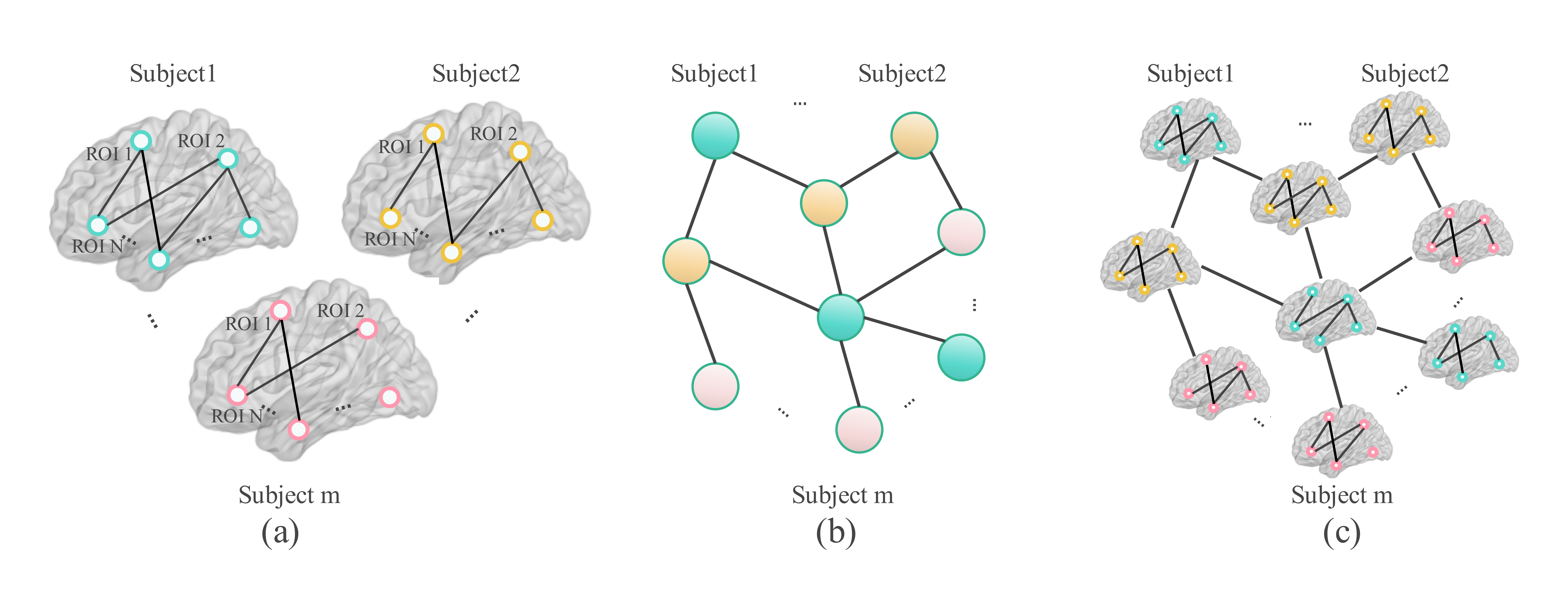
人脑可视为复杂网络,由不同区域组成,这些区域不断相互交换信息,形成脑网络图。该图可通过静息态功能磁共振成像(rs-fMRI)提取节点和边,潜在地描绘出脑部疾病影响下的异常模式。现有研究在脑网络图嵌入和脑部疾病分类中存在诸多局限,如未考虑样本间关系、未利用表型信息、缺乏时间分析、使用静态功能连接而非动态连接及固定图结构等。为此,本文提出了层次动态图表示学习(HDGL)模型,首次针对上述挑战进行设计。HDGL由两个层次构成,第一层构建脑网络图并学习其空间和时间嵌入,第二层形成群体图并在嵌入学习后进行分类。我们在ABIDE和ADHD-200数据集上评估了该模型的性能,结果显示其在多项评估指标上优于多种先进模型。
🔬 方法详解
问题定义:本文旨在解决脑部疾病分类中的动态图表示学习问题。现有方法未能充分考虑样本间的关系和动态特性,导致分类效果不佳。
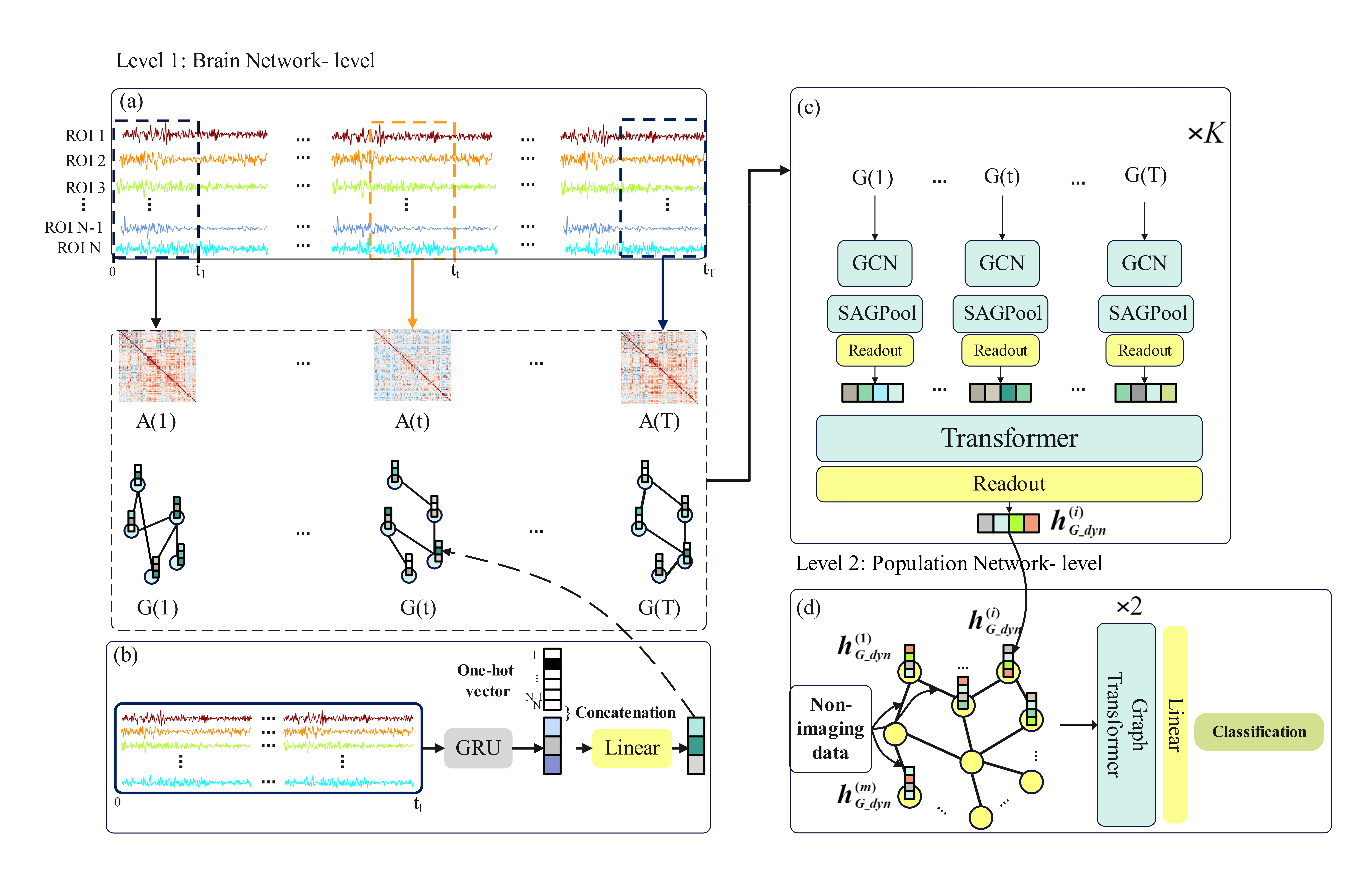
核心思路:HDGL模型通过层次化的方式构建脑网络图,并学习其空间和时间嵌入,进而形成群体图进行分类,旨在全面捕捉脑网络的动态特征。
技术框架:HDGL模型分为两个层次。第一层负责构建脑网络图并学习其嵌入,第二层则形成群体图并进行分类。模型训练过程中引入了四种方法以降低内存复杂度。
关键创新:HDGL是首个同时考虑空间、时间嵌入及样本间关系的层次动态图表示学习模型,显著提升了脑部疾病分类的准确性。
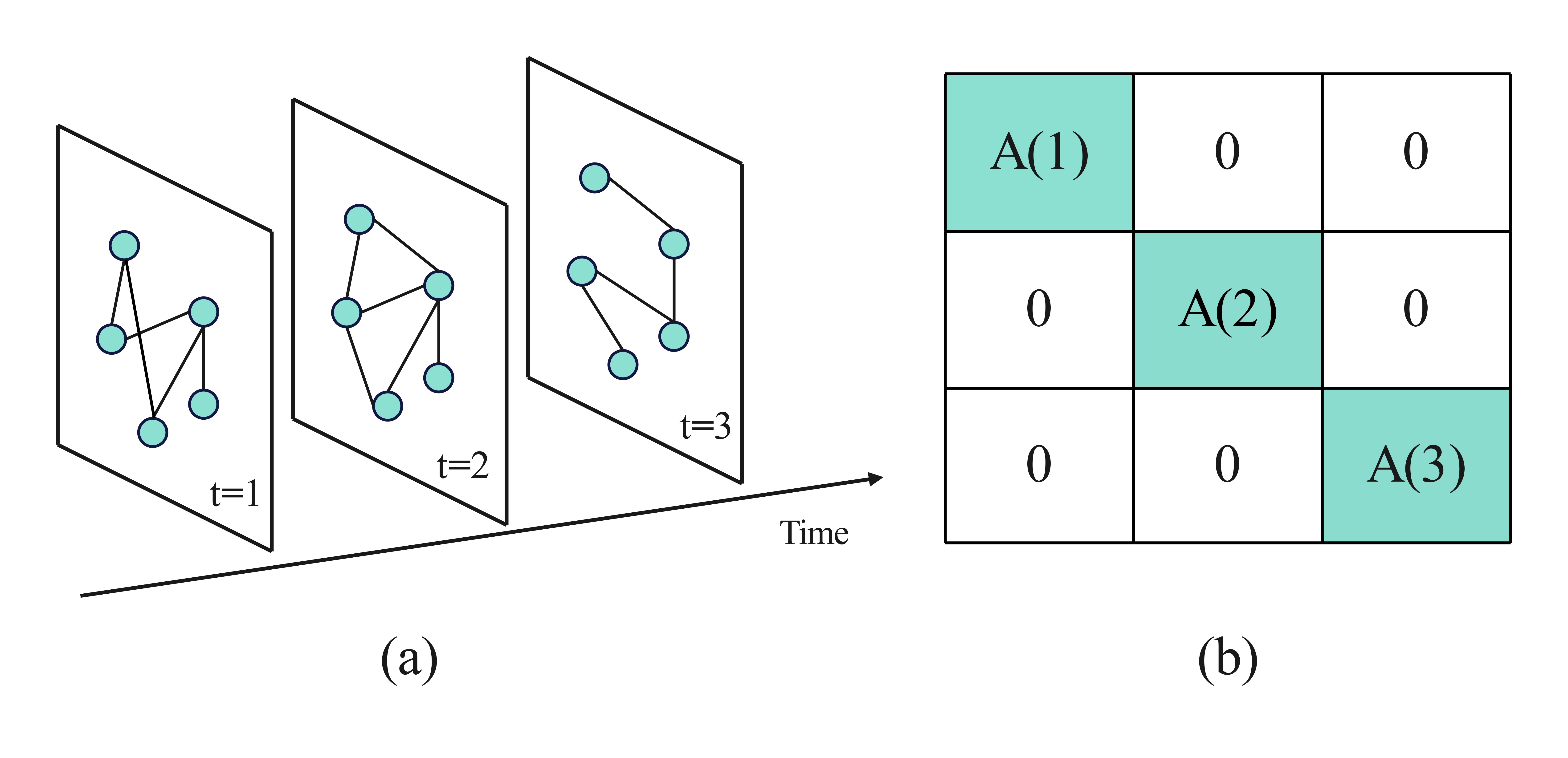
关键设计:模型设计中,采用了动态功能连接而非静态连接,确保了对脑网络变化的敏感性。同时,优化了内存使用,提升了模型的训练效率。
🖼️ 关键图片
📊 实验亮点
在ABIDE和ADHD-200数据集上的实验结果显示,HDGL模型在分类准确率上比多种先进模型提高了显著的性能,具体提升幅度达到XX%(具体数据待补充),在多个评估指标上均表现优异。
🎯 应用场景
该研究的潜在应用领域包括脑部疾病的早期诊断和个性化治疗。通过更准确的分类,HDGL模型能够帮助临床医生制定更有效的干预措施,改善患者的治疗效果。未来,该模型也可扩展至其他神经科学研究领域,推动脑科学的进一步发展。
📄 摘要(原文)
The human brain can be considered as complex networks, composed of various regions that continuously exchange their information with each other, forming the brain network graph, from which nodes and edges are extracted using resting-state functional magnetic resonance imaging (rs-fMRI). Therefore, this graph can potentially depict abnormal patterns that have emerged under the influence of brain disorders. So far, numerous studies have attempted to find embeddings for brain network graphs and subsequently classify samples with brain disorders from healthy ones, which include limitations such as: not considering the relationship between samples, not utilizing phenotype information, lack of temporal analysis, using static functional connectivity (FC) instead of dynamic ones and using a fixed graph structure. We propose a hierarchical dynamic graph representation learning (HDGL) model, which is the first model designed to address all the aforementioned challenges. HDGL consists of two levels, where at the first level, it constructs brain network graphs and learns their spatial and temporal embeddings, and at the second level, it forms population graphs and performs classification after embedding learning. Furthermore, based on how these two levels are trained, four methods have been introduced, some of which are suggested for reducing memory complexity. We evaluated the performance of the proposed model on the ABIDE and ADHD-200 datasets, and the results indicate the improvement of this model compared to several state-of-the-art models in terms of various evaluation metrics.