BarcodeBERT: Transformers for Biodiversity Analysis
作者: Pablo Millan Arias, Niousha Sadjadi, Monireh Safari, ZeMing Gong, Austin T. Wang, Joakim Bruslund Haurum, Iuliia Zarubiieva, Dirk Steinke, Lila Kari, Angel X. Chang, Scott C. Lowe, Graham W. Taylor
分类: cs.LG
发布日期: 2023-11-04 (更新: 2025-07-10)
备注: Main text: 14 pages, Total: 23 pages, 10 figures, formerly accepted at the 4th Workshop on Self-Supervised Learning: Theory and Practice (NeurIPS 2023)
期刊: Bioinformatics Advances (2026) vbag054
🔗 代码/项目: GITHUB
💡 一句话要点
提出BarcodeBERT以提升生物多样性分析的准确性与效率
🎯 匹配领域: 支柱九:具身大模型 (Embodied Foundation Models)
关键词: DNA条形码 生物多样性 机器学习 自监督学习 模型优化 生态学 生物信息学
📋 核心要点
- 现有的DNA条形码分析方法大多依赖于通用的监督学习算法,缺乏针对特定领域的优化,导致识别精度不足。
- 本文提出的BarcodeBERT模型专门针对生物多样性分析,采用自监督预训练策略,利用领域特定数据进行优化。
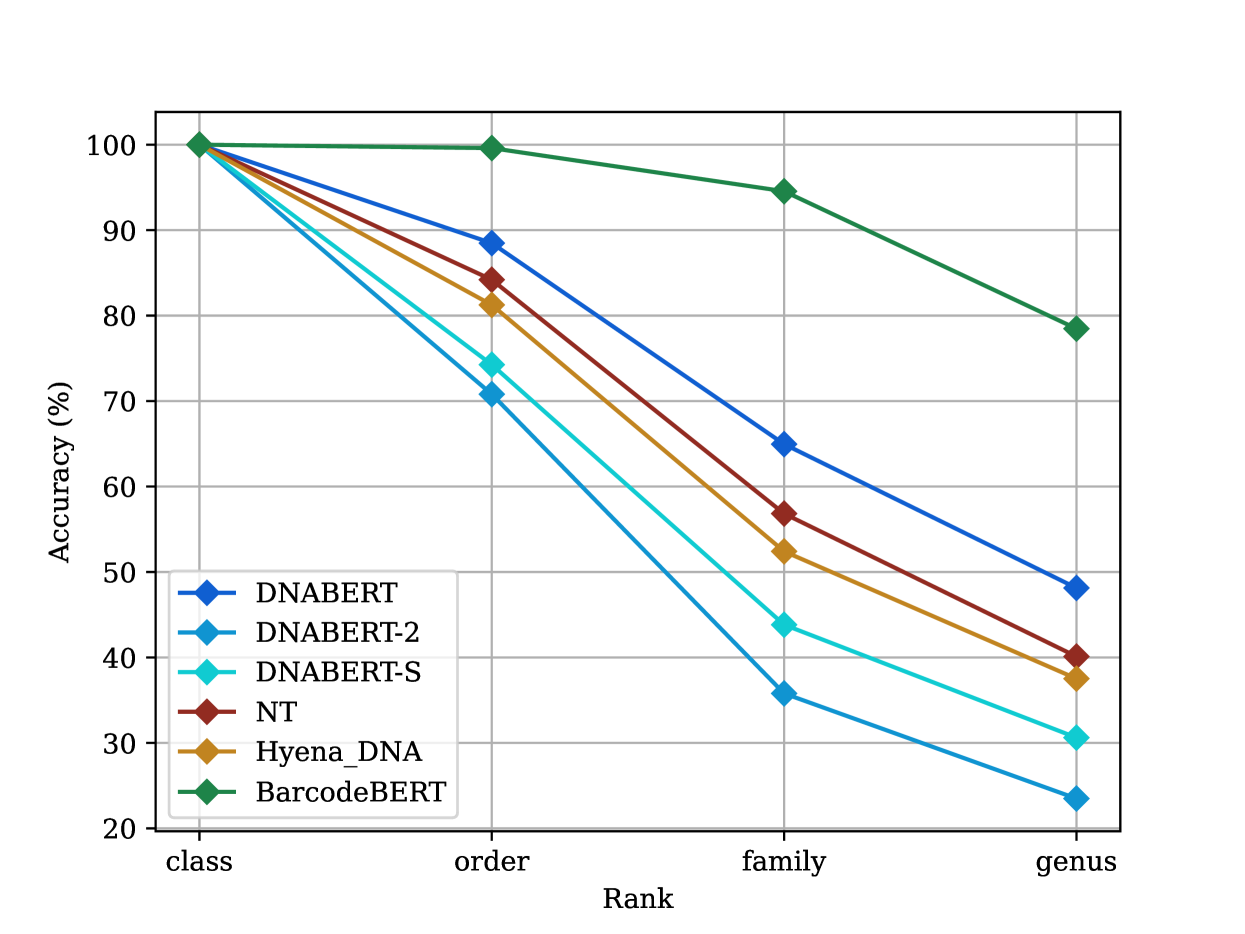
- 实验结果显示,BarcodeBERT在物种分类任务中与BLAST性能相当,但速度提升达55倍,尤其在低分类级别的识别任务中表现优异。
📝 摘要(中文)
在全球生物多样性理解与特征分析的挑战中,特定物种的短基因组序列(DNA条形码)发挥了关键作用,使得同一生命王国内的生物能够进行细致比较。尽管专门用于DNA条形码分析的机器学习算法日益流行,但大多数现有方法依赖于通用的监督训练算法。本文提出了BarcodeBERT,这是一系列专为生物多样性分析而设计的模型,专门在150万条无脊椎动物DNA条形码的参考库数据上进行训练。我们将BarcodeBERT在分类任务中的表现与多种机器学习方法进行了比较,发现其在低分类级别(如属和种)的识别任务中,表现优于微调的基础模型,并且在物种级分类中与BLAST工具的性能相当,但速度快55倍。我们对掩码和标记化策略的分析也为构建定制的DNA语言模型提供了实用指导。
🔬 方法详解
问题定义:本文旨在解决现有DNA条形码分析方法在特定领域应用中的不足,尤其是识别精度和效率问题。现有方法多依赖通用的监督学习,难以充分利用领域特定数据。
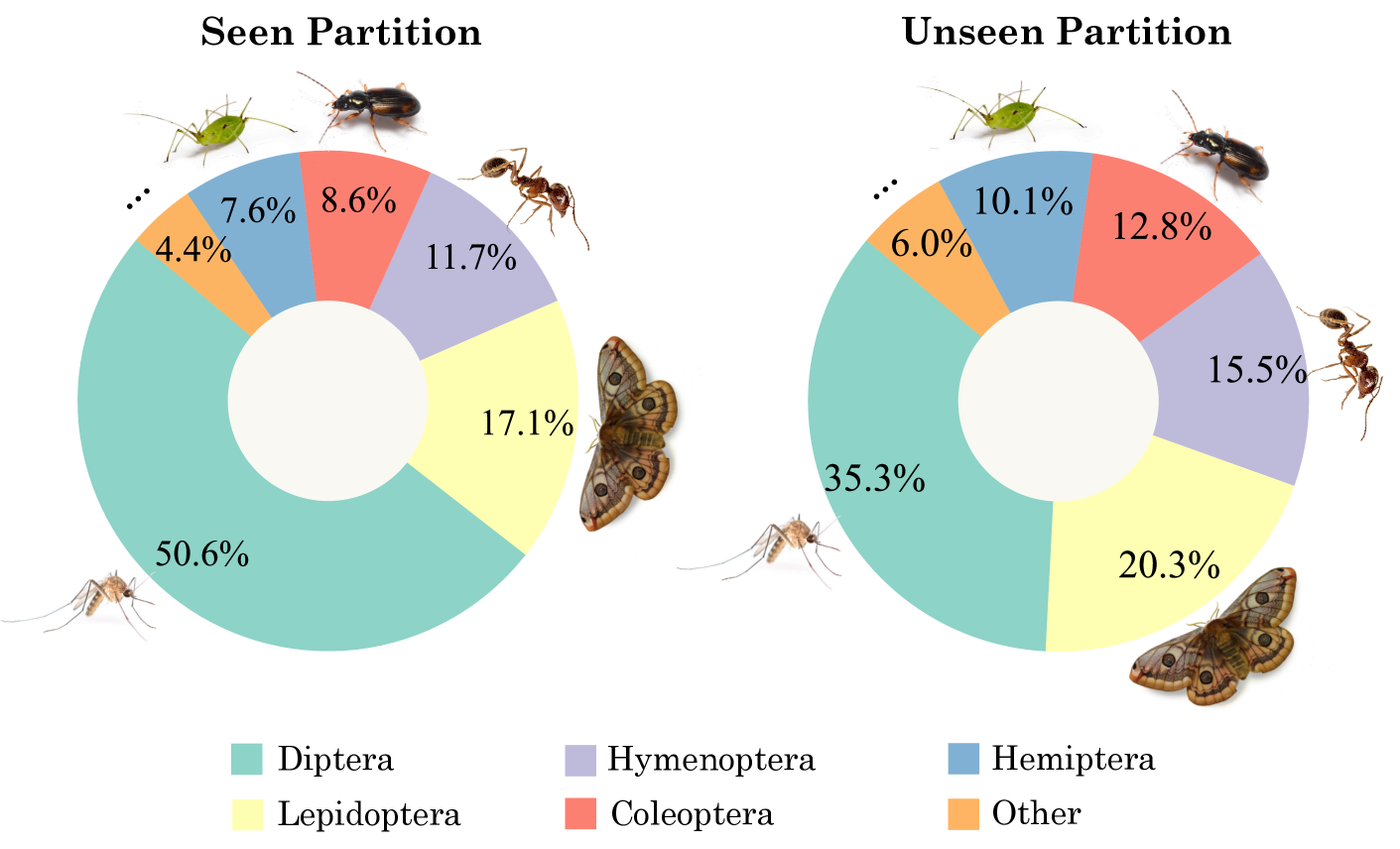
核心思路:BarcodeBERT通过自监督预训练策略,专注于生物多样性分析,利用1.5M条无脊椎动物DNA条形码数据进行训练,从而提高模型在特定任务上的表现。
技术框架:整体架构包括数据预处理、模型训练和评估三个主要阶段。首先对DNA条形码进行掩码和标记化处理,然后在特定数据集上进行自监督预训练,最后通过分类任务评估模型性能。
关键创新:最重要的创新在于提出了一种专为生物多样性分析设计的模型架构,结合自监督学习与领域特定数据,显著提升了识别精度和速度。与传统方法相比,BarcodeBERT在低分类级别的表现尤为突出。
关键设计:在模型设计中,采用了特定的掩码策略和标记化方法,以适应DNA序列的特性。此外,损失函数和网络结构经过精心调整,以优化模型在分类任务中的表现。通过这些设计,BarcodeBERT能够更好地捕捉DNA条形码的特征。
🖼️ 关键图片

📊 实验亮点
实验结果表明,BarcodeBERT在物种级分类任务中与BLAST工具的性能相当,同时速度提升达55倍。此外,在低分类级别的识别任务中,BarcodeBERT的表现显著优于传统的微调基础模型,展示了其在生物多样性分析中的强大潜力。
🎯 应用场景
该研究的潜在应用领域包括生态学、环境监测和生物多样性保护等。通过提高DNA条形码的分析效率和准确性,BarcodeBERT能够帮助科学家更好地识别和分类物种,从而为生物多样性研究和保护提供有力支持。未来,该模型可能在其他生物信息学领域也展现出广泛的应用价值。
📄 摘要(原文)
In the global challenge of understanding and characterizing biodiversity, short species-specific genomic sequences known as DNA barcodes play a critical role, enabling fine-grained comparisons among organisms within the same kingdom of life. Although machine learning algorithms specifically designed for the analysis of DNA barcodes are becoming more popular, most existing methodologies rely on generic supervised training algorithms. We introduce BarcodeBERT, a family of models tailored to biodiversity analysis and trained exclusively on data from a reference library of 1.5M invertebrate DNA barcodes. We compared the performance of BarcodeBERT on taxonomic identification tasks against a spectrum of machine learning approaches including supervised training of classical neural architectures and fine-tuning of general DNA foundation models. Our self-supervised pretraining strategies on domain-specific data outperform fine-tuned foundation models, especially in identification tasks involving lower taxa such as genera and species. We also compared BarcodeBERT with BLAST, one of the most widely used bioinformatics tools for sequence searching, and found that our method matched BLAST's performance in species-level classification while being 55 times faster. Our analysis of masking and tokenization strategies also provides practical guidance for building customized DNA language models, emphasizing the importance of aligning model training strategies with dataset characteristics and domain knowledge. The code repository is available at https://github.com/bioscan-ml/BarcodeBERT.