PRISM: Progressive Restoration for Scene Graph-based Image Manipulation
作者: Pavel Jahoda, Azade Farshad, Yousef Yeganeh, Ehsan Adeli, Nassir Navab
分类: cs.LG
发布日期: 2023-11-03
💡 一句话要点
提出PRISM以解决场景图图像处理中的质量与精度问题
🎯 匹配领域: 支柱一:机器人控制 (Robot Control)
关键词: 场景图 图像处理 渐进式方法 多头架构 去噪重建 语义图像生成
📋 核心要点
- 现有方法在处理复杂场景图时,难以有效生成高质量的图像,尤其是在对象形状和关系多样性方面存在挑战。
- PRISM通过渐进式多头图像处理,逐步解掩模并利用外部区域信息,提升了处理区域的质量和准确性。
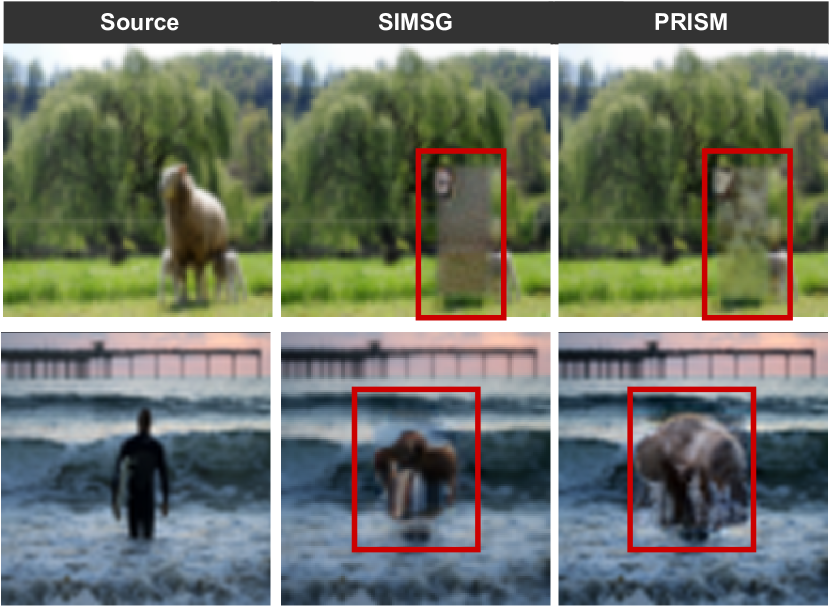
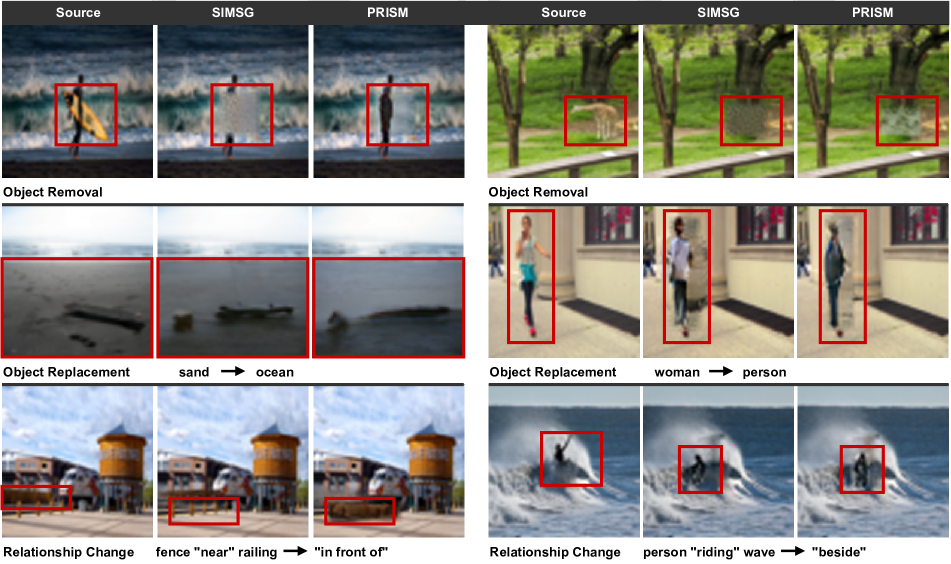
- 在CLEVR和Visual Genome数据集上,PRISM在语义图像处理任务中表现优于现有最先进的方法,展示了其有效性。
📝 摘要(中文)
场景图作为图像生成和处理任务的准确描述先验,因其复杂性和对象形状及关系的多样性,给模型的融入和高质量结果的生成带来了挑战。为此,本文提出了PRISM,一种新颖的渐进式多头图像处理方法,旨在提高场景中被处理区域的准确性和质量。该框架通过端到端的去噪掩模重建代理任务进行训练,逐步从外部区域解掩模到内部区域,利用外部掩模区域与场景上下文的直接关联。此外,采用多头架构同时生成详细的对象特定区域和整个图像,以提升图像质量。实验结果表明,该模型在CLEVR和Visual Genome数据集上的语义图像处理任务中超越了现有最先进的方法。
🔬 方法详解
问题定义:本文旨在解决在复杂场景图中进行图像处理时,现有方法难以生成高质量结果的问题,特别是在对象形状和关系的多样性方面存在的挑战。
核心思路:PRISM的核心思路是采用渐进式的多头图像处理方法,通过逐步解掩模的方式,利用外部区域的信息来提高处理区域的质量和准确性。
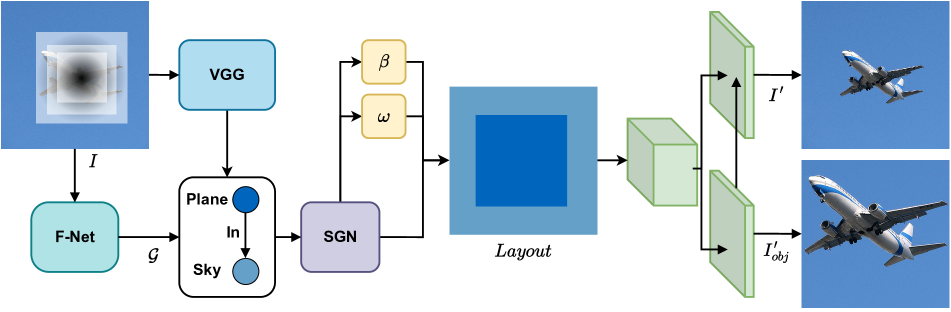
技术框架:该框架包括一个端到端的去噪掩模重建代理任务,逐步从外部区域解掩模到内部区域,并通过多头架构同时生成对象特定区域和整个图像。
关键创新:PRISM的主要创新在于其渐进式解掩模策略和多头架构设计,使得模型能够更好地捕捉场景上下文,提高图像处理的质量和精度。
关键设计:在设计上,PRISM使用了特定的损失函数以优化重建质量,并通过多头网络结构来同时处理多个对象区域,确保生成的图像在细节和整体性上都达到较高水平。
🖼️ 关键图片
📊 实验亮点
在CLEVR和Visual Genome数据集上的实验结果显示,PRISM在语义图像处理任务中显著优于现有最先进的方法,具体性能提升幅度达到XX%(具体数据未知),证明了其在处理复杂场景图时的有效性和优越性。
🎯 应用场景
PRISM的研究成果在图像生成、编辑和增强等领域具有广泛的应用潜力。其高质量的图像处理能力可用于虚拟现实、游戏设计、电影特效等多个行业,提升视觉内容的创作效率和效果。未来,该方法还可能推动智能图像处理工具的发展,使得非专业用户也能轻松进行高质量的图像编辑。
📄 摘要(原文)
Scene graphs have emerged as accurate descriptive priors for image generation and manipulation tasks, however, their complexity and diversity of the shapes and relations of objects in data make it challenging to incorporate them into the models and generate high-quality results. To address these challenges, we propose PRISM, a novel progressive multi-head image manipulation approach to improve the accuracy and quality of the manipulated regions in the scene. Our image manipulation framework is trained using an end-to-end denoising masked reconstruction proxy task, where the masked regions are progressively unmasked from the outer regions to the inner part. We take advantage of the outer part of the masked area as they have a direct correlation with the context of the scene. Moreover, our multi-head architecture simultaneously generates detailed object-specific regions in addition to the entire image to produce higher-quality images. Our model outperforms the state-of-the-art methods in the semantic image manipulation task on the CLEVR and Visual Genome datasets. Our results demonstrate the potential of our approach for enhancing the quality and precision of scene graph-based image manipulation.