SuGaR: Surface-Aligned Gaussian Splatting for Efficient 3D Mesh Reconstruction and High-Quality Mesh Rendering
作者: Antoine Guédon, Vincent Lepetit
分类: cs.GR, cs.CV
发布日期: 2023-11-21 (更新: 2023-12-02)
备注: We identified a minor typographical error in Equation 6; We updated the paper accordingly. Project Webpage: https://anttwo.github.io/sugar/
🔗 代码/项目: PROJECT_PAGE
💡 一句话要点
提出SuGaR以解决3D高斯点云网格提取问题
🎯 匹配领域: 支柱三:空间感知与语义 (Perception & Semantics)
关键词: 3D重建 高斯点云 泊松重建 网格提取 计算机图形学 虚拟现实 增强现实
📋 核心要点
- 现有的高斯点云网格提取方法效率低下,且难以处理优化后无序的高斯点。
- 论文提出了一种正则化方法,使高斯与表面对齐,并利用泊松重建提取网格。
- 实验表明,该方法在几分钟内完成可编辑网格提取,显著提升了渲染质量。
📝 摘要(中文)
我们提出了一种方法,能够从3D高斯点云中快速且精确地提取网格。高斯点云因其在渲染上表现出色且训练速度远快于NeRF而受到广泛关注。然而,从数百万个小高斯中提取网格面临挑战,因为这些高斯在优化后往往无序。我们的首个关键贡献是引入正则化项,促使高斯与场景表面良好对齐。接着,我们利用这种对齐性,通过泊松重建方法提取网格,速度快、可扩展且能保留细节,优于传统的Marching Cubes算法。最后,我们引入了一种可选的细化策略,通过高斯点云渲染共同优化高斯和网格,便于在传统软件中进行编辑、雕刻、绑定、动画、合成和重光照。与现有神经SDF方法相比,我们的方法在几分钟内即可获得可编辑的网格,且渲染质量更高。
🔬 方法详解
问题定义:本论文旨在解决从3D高斯点云中提取网格的效率和精度问题。现有方法在处理优化后无序的高斯点时,提取过程复杂且耗时。
核心思路:我们提出了一种正则化项,促使高斯点与场景表面对齐,从而利用这种对齐性进行高效的网格提取。通过泊松重建方法,能够快速生成高质量的网格。
技术框架:整体流程包括高斯点的正则化、基于对齐的泊松重建网格提取,以及可选的高斯与网格的联合优化。主要模块包括高斯对齐、网格提取和细化策略。
关键创新:本研究的核心创新在于引入高斯对齐的正则化项和泊松重建方法,显著提高了网格提取的速度和质量,区别于传统的Marching Cubes算法。
关键设计:在损失函数中加入了正则化项,确保高斯点与表面对齐,此外,采用泊松重建算法进行网格提取,优化过程中还考虑了高斯与网格的共同优化策略。
🖼️ 关键图片
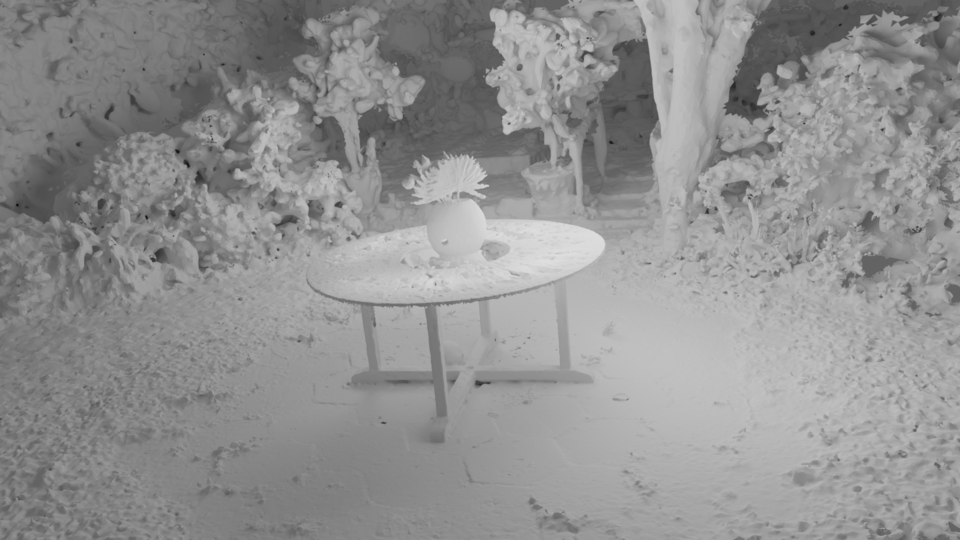

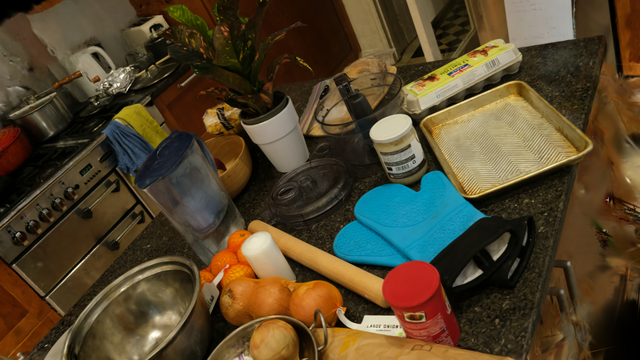
📊 实验亮点
实验结果显示,使用SuGaR方法提取的可编辑网格在几分钟内完成,相较于现有神经SDF方法的数小时,效率提升显著。同时,渲染质量也得到了改善,展示了该方法的实际应用价值。
🎯 应用场景
该研究具有广泛的应用潜力,尤其是在计算机图形学、虚拟现实和增强现实等领域。通过快速提取和编辑高质量网格,能够提升内容创作的效率和灵活性,推动相关技术的发展与应用。
📄 摘要(原文)
We propose a method to allow precise and extremely fast mesh extraction from 3D Gaussian Splatting. Gaussian Splatting has recently become very popular as it yields realistic rendering while being significantly faster to train than NeRFs. It is however challenging to extract a mesh from the millions of tiny 3D gaussians as these gaussians tend to be unorganized after optimization and no method has been proposed so far. Our first key contribution is a regularization term that encourages the gaussians to align well with the surface of the scene. We then introduce a method that exploits this alignment to extract a mesh from the Gaussians using Poisson reconstruction, which is fast, scalable, and preserves details, in contrast to the Marching Cubes algorithm usually applied to extract meshes from Neural SDFs. Finally, we introduce an optional refinement strategy that binds gaussians to the surface of the mesh, and jointly optimizes these Gaussians and the mesh through Gaussian splatting rendering. This enables easy editing, sculpting, rigging, animating, compositing and relighting of the Gaussians using traditional softwares by manipulating the mesh instead of the gaussians themselves. Retrieving such an editable mesh for realistic rendering is done within minutes with our method, compared to hours with the state-of-the-art methods on neural SDFs, while providing a better rendering quality. Our project page is the following: https://anttwo.github.io/sugar/