Motor Focus: Fast Ego-Motion Prediction for Assistive Visual Navigation
作者: Hao Wang, Jiayou Qin, Xiwen Chen, Ashish Bastola, John Suchanek, Zihao Gong, Abolfazl Razi
分类: cs.CV
发布日期: 2024-04-25 (更新: 2024-10-12)
DOI: 10.1109/BSN63547.2024.10780583
💡 一句话要点
提出Motor Focus以解决视觉导航中的自我运动预测问题
🎯 匹配领域: 支柱一:机器人控制 (Robot Control) 支柱二:RL算法与架构 (RL & Architecture) 支柱三:空间感知与语义 (Perception & Semantics) 支柱七:动作重定向 (Motion Retargeting) 支柱八:物理动画 (Physics-based Animation)
关键词: 自我运动预测 辅助视觉导航 光流分析 视觉信息处理 机器学习 智能机器人 复杂场景理解
📋 核心要点
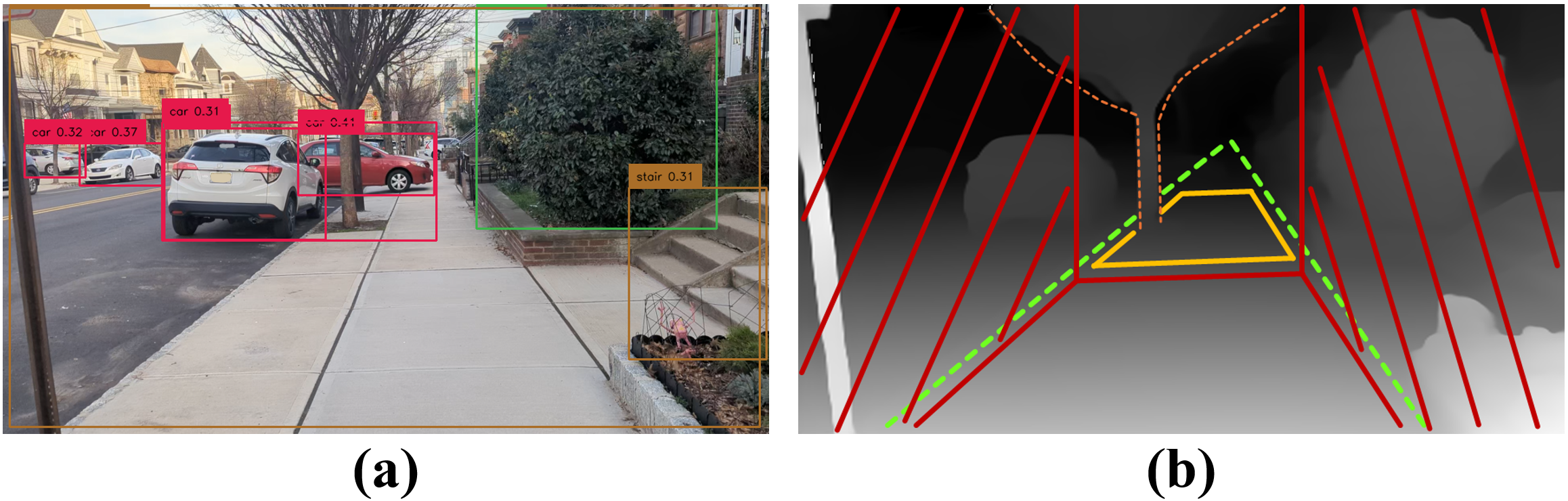
- 现有的辅助视觉导航系统在复杂场景中难以准确识别观察者的运动方向,影响用户体验。
- 本文提出Motor Focus框架,通过分析视觉信息预测自我运动,且无需相机校准,有效过滤相机运动。
- 实验结果显示,该框架在速度(>40FPS)、准确性(MAE=60像素)和鲁棒性(SNR=23dB)上均优于传统特征检测方法。
📝 摘要(中文)
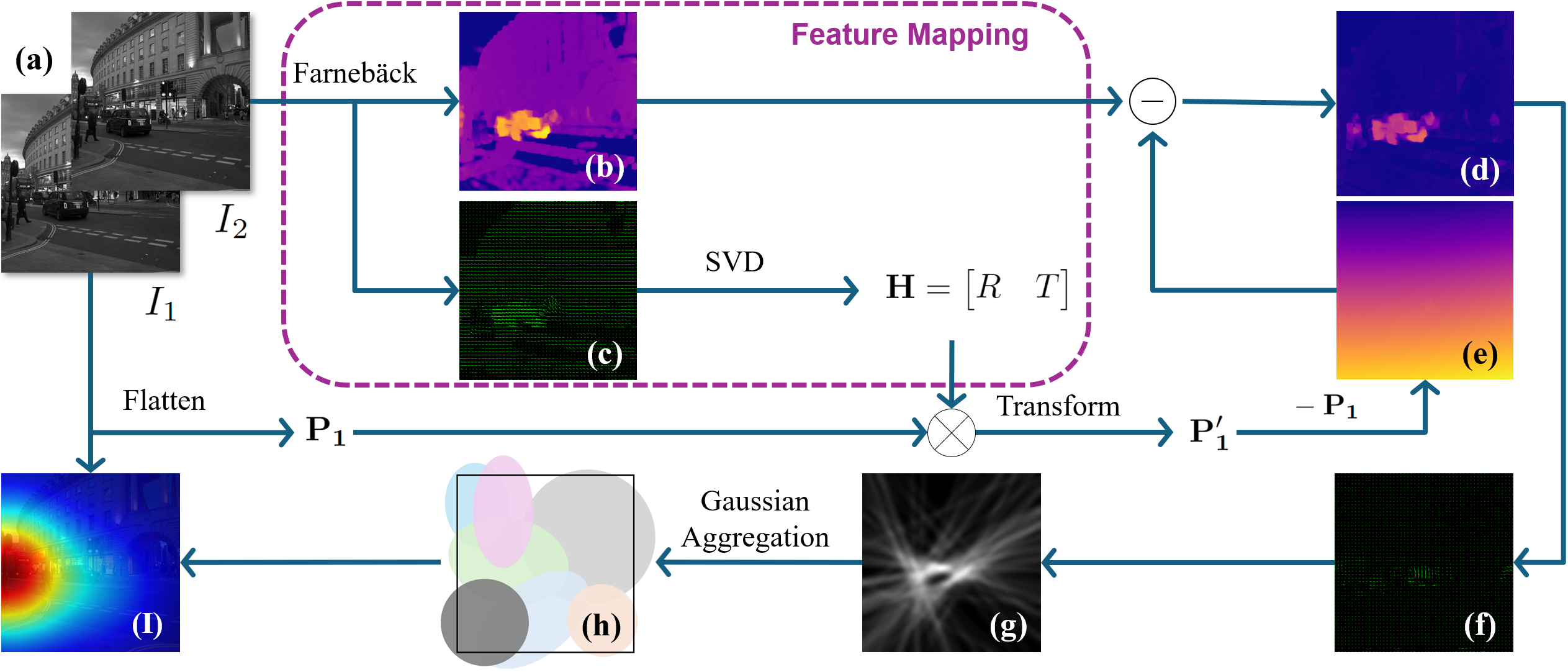
随着移动计算的普及,辅助视觉导航系统在视障人士中越来越受欢迎。这些设备通过将视觉信息转化为语音指令来工作。在复杂场景中,优先检测关键物体并及时通知用户至关重要。本文的关键贡献在于提出Motor Focus,一个轻量级的图像基础框架,通过处理视觉信息来预测观察者的运动方向(自我运动),并在不进行相机校准的情况下过滤相机运动。我们实现了一种基于光流的像素级时间分析方法,以补偿相机运动,并通过高斯聚合平滑运动预测区域。实验结果表明,该框架在速度、准确性和鲁棒性方面具有显著优势。
🔬 方法详解
问题定义:本文旨在解决在复杂环境中,辅助视觉导航系统无法准确识别用户自我运动方向的问题。现有方法往往依赖于相机校准,限制了其应用场景。
核心思路:提出Motor Focus框架,通过处理视觉信息直接预测用户的运动意图,避免了相机运动的干扰,提升了系统的实用性。
技术框架:该框架主要包括光流计算模块、像素级时间分析模块和高斯聚合模块。光流模块用于提取运动信息,时间分析模块则处理这些信息以预测运动方向,最后通过高斯聚合平滑预测结果。
关键创新:最重要的创新在于无需相机校准即可有效过滤相机运动,直接从视觉信息中提取用户的运动意图,这与传统方法有本质区别。
关键设计:在实现过程中,采用了经典特征检测算法(如SIFT和ORB)进行对比,设置了合适的参数以优化光流计算和高斯聚合过程,确保了预测的准确性和速度。
🖼️ 关键图片

📊 实验亮点
实验结果表明,Motor Focus框架在速度上超过40FPS,平均绝对误差(MAE)为60像素,信噪比(SNR)达到23dB,显示出其在复杂环境下的优越性能,相较于传统方法有显著提升。
🎯 应用场景
该研究的潜在应用领域包括辅助视觉导航设备、智能机器人和自动驾驶系统等。通过提升自我运动预测的准确性,能够显著改善视障人士的导航体验,并为其他领域的视觉理解提供新的思路和技术支持。
📄 摘要(原文)
Assistive visual navigation systems for visually impaired individuals have become increasingly popular thanks to the rise of mobile computing. Most of these devices work by translating visual information into voice commands. In complex scenarios where multiple objects are present, it is imperative to prioritize object detection and provide immediate notifications for key entities in specific directions. This brings the need for identifying the observer's motion direction (ego-motion) by merely processing visual information, which is the key contribution of this paper. Specifically, we introduce Motor Focus, a lightweight image-based framework that predicts the ego-motion - the humans (and humanoid machines) movement intentions based on their visual feeds, while filtering out camera motion without any camera calibration. To this end, we implement an optical flow-based pixel-wise temporal analysis method to compensate for the camera motion with a Gaussian aggregation to smooth out the movement prediction area. Subsequently, to evaluate the performance, we collect a dataset including 50 clips of pedestrian scenes in 5 different scenarios. We tested this framework with classical feature detectors such as SIFT and ORB to show the comparison. Our framework demonstrates its superiority in speed (> 40FPS), accuracy (MAE = 60pixels), and robustness (SNR = 23dB), confirming its potential to enhance the usability of vision-based assistive navigation tools in complex environments.