TDANet: Target-Directed Attention Network For Object-Goal Visual Navigation With Zero-Shot Ability
作者: Shiwei Lian, Feitian Zhang
分类: cs.CV, cs.RO
发布日期: 2024-04-12 (更新: 2024-08-12)
期刊: IEEE Robotics and Automation Letters,2024
💡 一句话要点
提出TDANet以解决物体目标视觉导航的零-shot能力问题
🎯 匹配领域: 支柱二:RL算法与架构 (RL & Architecture) 支柱九:具身大模型 (Embodied Foundation Models)
关键词: 目标导向注意 深度强化学习 视觉导航 泛化能力 Siamese网络 机器人导航
📋 核心要点
- 现有的物体目标视觉导航方法在面对新环境时,泛化能力不足,难以处理不同的物体类别和位置。
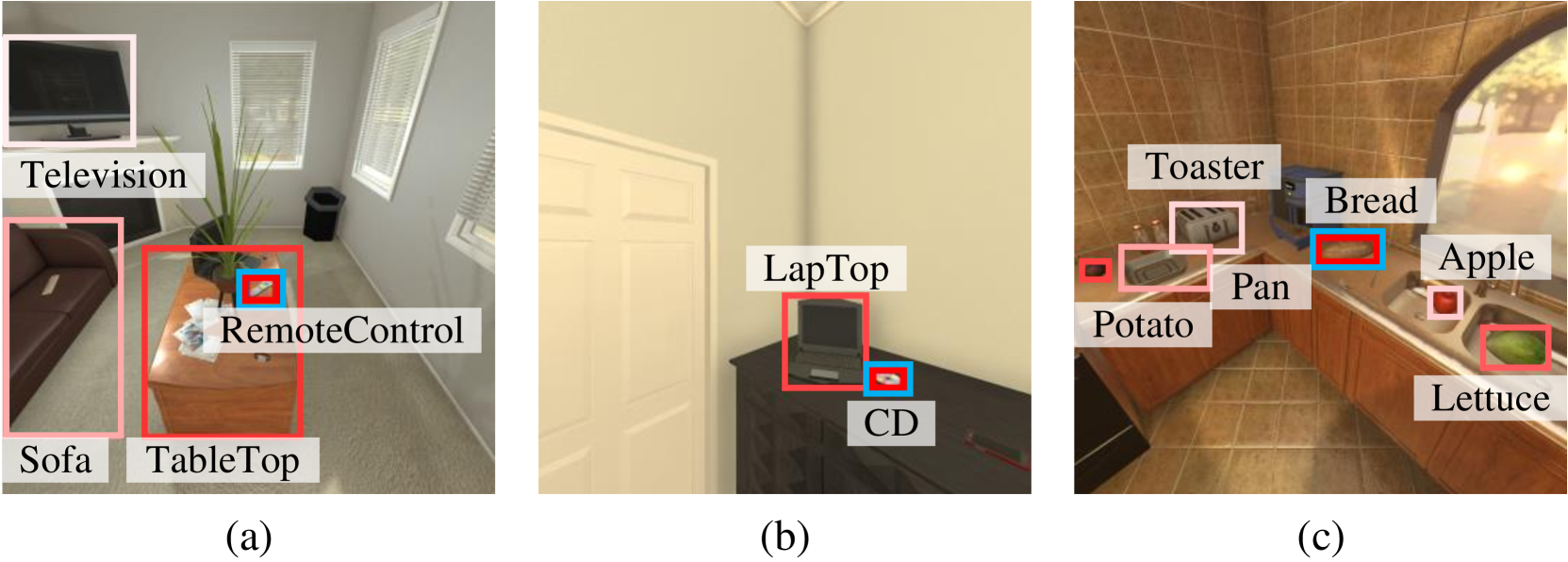
- 本文提出的TDANet通过目标导向注意模块,学习物体之间的空间和语义关系,从而实现更有效的导航策略。
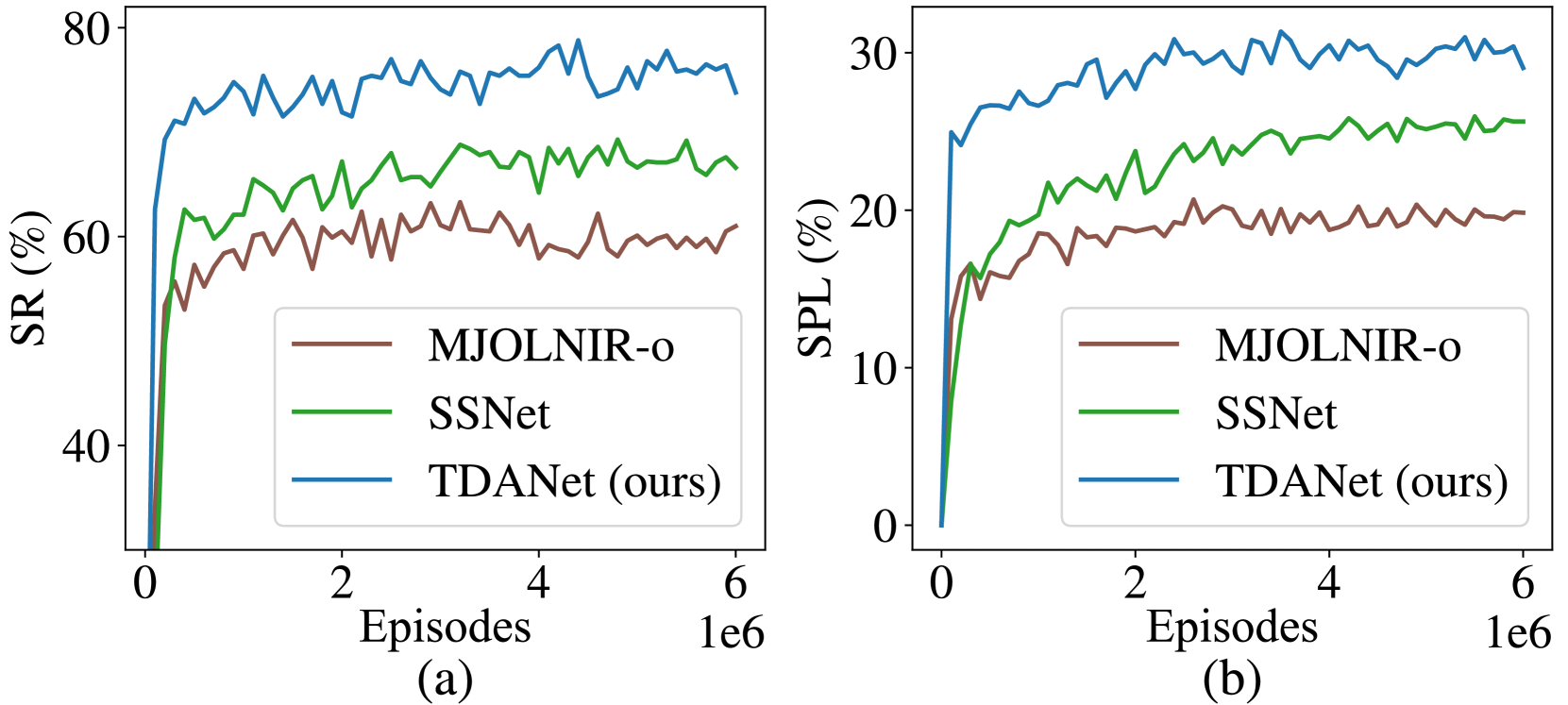
- 在AI2-THOR环境中的实验表明,TDANet在未见场景和目标物体上的导航成功率和成功加权长度均显著高于其他模型。
📝 摘要(中文)
物体目标视觉导航中的端到端深度强化学习(DRL)泛化能力一直是一个长期挑战,因为物体类别和位置在新的测试环境中会有所不同。学习领域无关的视觉表示对于使训练好的DRL代理能够泛化到未见场景和物体至关重要。本文提出了一种目标导向注意网络(TDANet),旨在学习具有零-shot能力的端到端物体目标视觉导航策略。TDANet的创新之处在于目标注意(TA)模块,该模块学习物体之间的空间和语义关系,帮助TDANet关注与目标最相关的观察物体。通过Siamese架构设计,TDANet区分当前状态与目标状态之间的差异,并生成领域无关的视觉表示。实验结果表明,TDANet在AI2-THOR环境中表现出强大的泛化能力,导航成功率和成功加权长度均优于其他先进模型。
🔬 方法详解
问题定义:本文旨在解决物体目标视觉导航中深度强化学习的泛化能力不足的问题,现有方法在新环境中对物体类别和位置的变化适应性差。
核心思路:TDANet通过引入目标导向注意模块,学习物体的空间和语义关系,使得模型能够聚焦于与目标最相关的物体,从而提高导航性能。
技术框架:TDANet采用Siamese架构设计,主要包括目标注意模块和领域无关视觉表示生成模块,整体流程为输入观察图像,提取特征,进行状态区分,最终输出导航策略。
关键创新:TDANet的核心创新在于目标注意模块的设计,使得模型能够有效地学习物体间的关系,并在不同环境中保持良好的泛化能力,这与传统方法的静态特征提取有本质区别。
关键设计:在网络结构上,TDANet使用了Siamese网络架构,结合了多层卷积和注意机制,损失函数设计上考虑了导航成功率和路径长度的加权,确保训练过程中的有效性和稳定性。
🖼️ 关键图片

📊 实验亮点
TDANet在AI2-THOR环境中的实验结果显示,其导航成功率(SR)和成功加权长度(SPL)均显著高于其他先进模型,具体提升幅度未知。此外,TDANet在真实场景中的部署也展示了良好的泛化能力,验证了其实际应用价值。
🎯 应用场景
TDANet的研究成果在机器人导航、智能家居、自动驾驶等领域具有广泛的应用潜力。通过提升机器人在复杂环境中的自主导航能力,能够有效推动智能系统的实用化和普及,未来可能在智能城市和服务机器人等场景中发挥重要作用。
📄 摘要(原文)
The generalization of the end-to-end deep reinforcement learning (DRL) for object-goal visual navigation is a long-standing challenge since object classes and placements vary in new test environments. Learning domain-independent visual representation is critical for enabling the trained DRL agent with the ability to generalize to unseen scenes and objects. In this letter, a target-directed attention network (TDANet) is proposed to learn the end-to-end object-goal visual navigation policy with zero-shot ability. TDANet features a novel target attention (TA) module that learns both the spatial and semantic relationships among objects to help TDANet focus on the most relevant observed objects to the target. With the Siamese architecture (SA) design, TDANet distinguishes the difference between the current and target states and generates the domain-independent visual representation. To evaluate the navigation performance of TDANet, extensive experiments are conducted in the AI2-THOR embodied AI environment. The simulation results demonstrate a strong generalization ability of TDANet to unseen scenes and target objects, with higher navigation success rate (SR) and success weighted by length (SPL) than other state-of-the-art models. TDANet is finally deployed on a wheeled robot in real scenes, demonstrating satisfactory generalization of TDANet to the real world.