Depth Estimation using Weighted-loss and Transfer Learning
作者: Muhammad Adeel Hafeez, Michael G. Madden, Ganesh Sistu, Ihsan Ullah
分类: cs.CV, cs.AI
发布日期: 2024-04-11
💡 一句话要点
提出加权损失与迁移学习以提升深度估计精度
🎯 匹配领域: 支柱二:RL算法与架构 (RL & Architecture) 支柱三:空间感知与语义 (Perception & Semantics)
关键词: 深度估计 迁移学习 加权损失 EfficientNet 计算机视觉 鲁棒性 模型优化
📋 核心要点
- 现有的深度估计方法在损失函数选择、模型架构和数据质量等方面存在不足,影响了准确性。
- 本研究提出了一种结合加权损失和迁移学习的深度估计方法,以提高模型的鲁棒性和泛化能力。
- 实验结果显示,EfficientNet模型在多个性能指标上表现优异,相较于其他模型有显著提升。
📝 摘要(中文)
从2D图像中进行深度估计是计算机视觉中的一项常见任务,广泛应用于自动驾驶、场景理解和机器人等领域。本研究提出了一种简化且可适应的方法,通过迁移学习和优化的损失函数来提高深度估计的准确性。优化的损失函数结合了加权损失,包括平均绝对误差(MAE)、边缘损失和结构相似性指数(SSIM),以增强模型的鲁棒性和泛化能力。实验表明,使用在ImageNet上预训练的EfficientNet作为编码器,配合简单的上采样解码器,能够在NYU Depth Dataset v2上实现最佳的深度估计结果,显著提高了准确性和鲁棒性。
🔬 方法详解
问题定义:本论文旨在解决从2D图像中进行深度估计的准确性问题。现有方法在损失函数选择和模型架构上存在局限,导致深度估计结果不够精确。
核心思路:论文提出了一种结合加权损失和迁移学习的深度估计方法,通过优化损失函数来增强模型的鲁棒性和泛化能力。采用多种编码器-解码器模型进行实验,以寻找最佳架构。
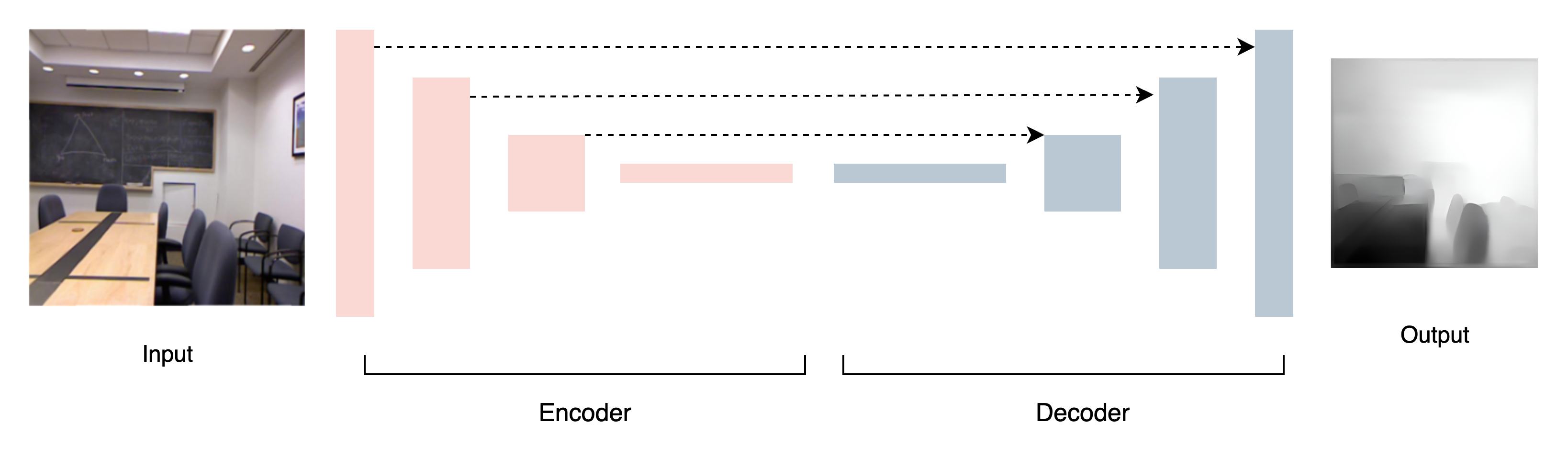
技术框架:整体方法包括三个主要模块:首先,使用迁移学习对EfficientNet进行预训练;其次,设计加权损失函数以优化深度估计;最后,利用简单的上采样解码器生成深度图。
关键创新:最重要的创新在于提出了一种加权损失函数的组合,结合了MAE、边缘损失和SSIM,显著提高了模型的鲁棒性和准确性。
关键设计:在损失函数中,通过网格搜索和随机搜索方法优化各个损失的权重,确保模型在不同场景下的表现均衡。实验中使用了DenseNet和EfficientNet等多种网络结构,最终选择EfficientNet作为编码器。
🖼️ 关键图片


📊 实验亮点
实验结果表明,使用EfficientNet作为编码器的模型在NYU Depth Dataset v2上取得了最佳的性能指标,具体为RSME为0.386,REL为0.113,log10为0.049,显示出相较于其他模型的显著提升,尤其在处理复杂场景时表现优异。
🎯 应用场景
该研究的深度估计方法具有广泛的应用潜力,特别是在自动驾驶、机器人导航和增强现实等领域。通过提高深度估计的准确性,可以显著提升这些应用的智能化水平和安全性。未来,该方法还可扩展到其他计算机视觉任务中,推动相关技术的发展。
📄 摘要(原文)
Depth estimation from 2D images is a common computer vision task that has applications in many fields including autonomous vehicles, scene understanding and robotics. The accuracy of a supervised depth estimation method mainly relies on the chosen loss function, the model architecture, quality of data and performance metrics. In this study, we propose a simplified and adaptable approach to improve depth estimation accuracy using transfer learning and an optimized loss function. The optimized loss function is a combination of weighted losses to which enhance robustness and generalization: Mean Absolute Error (MAE), Edge Loss and Structural Similarity Index (SSIM). We use a grid search and a random search method to find optimized weights for the losses, which leads to an improved model. We explore multiple encoder-decoder-based models including DenseNet121, DenseNet169, DenseNet201, and EfficientNet for the supervised depth estimation model on NYU Depth Dataset v2. We observe that the EfficientNet model, pre-trained on ImageNet for classification when used as an encoder, with a simple upsampling decoder, gives the best results in terms of RSME, REL and log10: 0.386, 0.113 and 0.049, respectively. We also perform a qualitative analysis which illustrates that our model produces depth maps that closely resemble ground truth, even in cases where the ground truth is flawed. The results indicate significant improvements in accuracy and robustness, with EfficientNet being the most successful architecture.