OmniParser: A Unified Framework for Text Spotting, Key Information Extraction and Table Recognition
作者: Jianqiang Wan, Sibo Song, Wenwen Yu, Yuliang Liu, Wenqing Cheng, Fei Huang, Xiang Bai, Cong Yao, Zhibo Yang
分类: cs.CV
发布日期: 2024-03-28
备注: CVPR 2024
🔗 代码/项目: GITHUB
💡 一句话要点
提出OmniParser以解决视觉文本解析的多任务问题
🎯 匹配领域: 支柱九:具身大模型 (Embodied Foundation Models)
关键词: 视觉文本解析 多任务学习 信息提取 表格识别 统一框架 编码解码架构 生成模型
📋 核心要点
- 现有VsTP方法通常为每个任务设计特定架构,导致模式孤立和复杂的工作流程。
- 提出OmniParser作为统一模型,能够同时处理文本检测、信息提取和表格识别任务,简化工作流程。
- 在七个数据集上进行的实验表明,OmniParser在三项任务上均达到了最先进的性能,展示了其有效性。
📝 摘要(中文)
近年来,视觉情境文本解析(VsTP)取得了显著进展,主要得益于对自动化文档理解的需求增加以及生成性大型语言模型(LLMs)的出现。尽管已有多种方法应对VsTP的挑战,但由于目标多样和模式异构,现有工作通常为每个任务设计特定架构和目标,导致模式孤立和复杂的工作流程。本文提出了一种统一的框架OmniParser,能够同时处理文本检测、关键信息提取和表格识别三项任务。OmniParser采用统一的编码-解码架构、统一的目标(点条件文本生成)以及统一的输入输出表示(提示与结构化序列)。大量实验表明,OmniParser在七个数据集上实现了最先进或高度竞争的性能,尽管其设计统一且简洁。
🔬 方法详解
问题定义:本文旨在解决视觉情境文本解析中的多任务处理问题,现有方法因任务特定而导致的模式孤立和复杂性是主要痛点。
核心思路:OmniParser通过统一的编码-解码架构和目标,整合文本检测、关键信息提取和表格识别任务,旨在简化流程并提高效率。
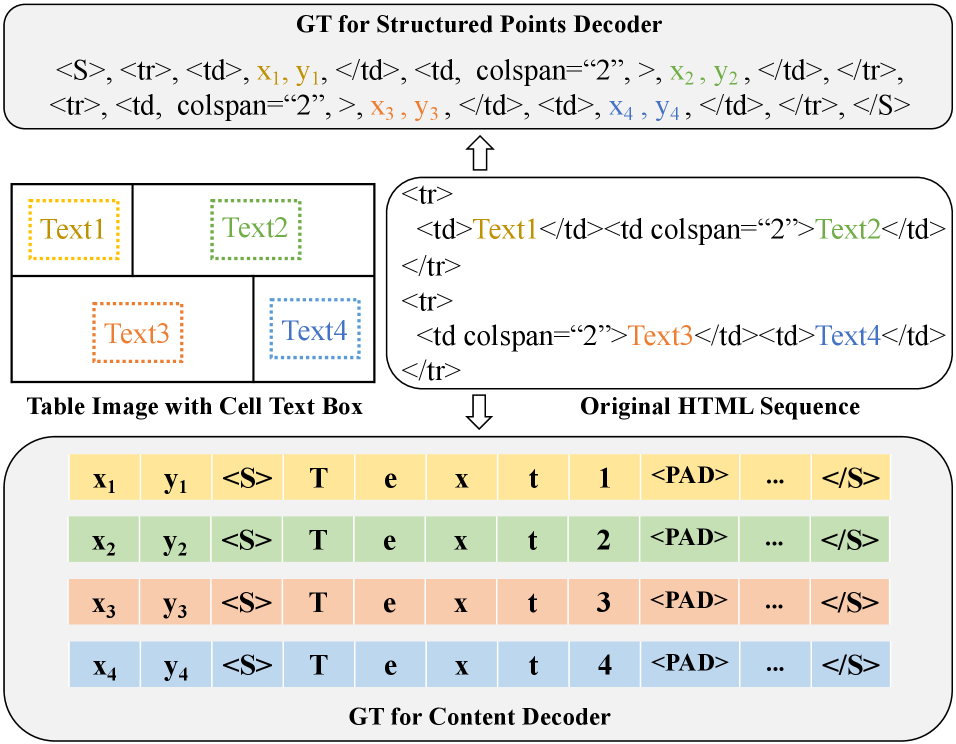
技术框架:OmniParser的整体架构包括一个共享的编码器-解码器,所有任务通过统一的输入(提示)和输出(结构化序列)进行处理,确保信息的高效流动。
关键创新:OmniParser的主要创新在于其统一的设计理念,使得不同任务之间可以共享知识,避免了传统方法中的任务隔离问题。
关键设计:模型采用点条件文本生成作为统一目标,设计了适应多任务的损失函数和网络结构,确保在不同任务间的有效迁移学习。
🖼️ 关键图片
📊 实验亮点
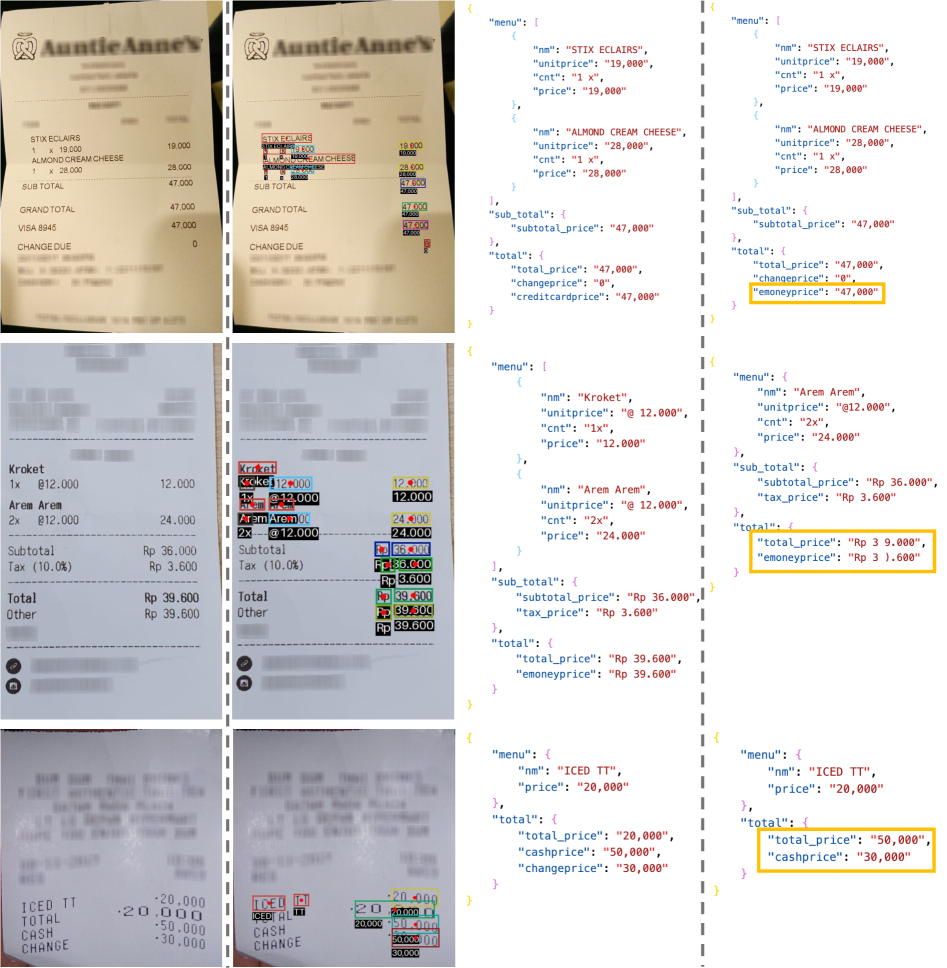
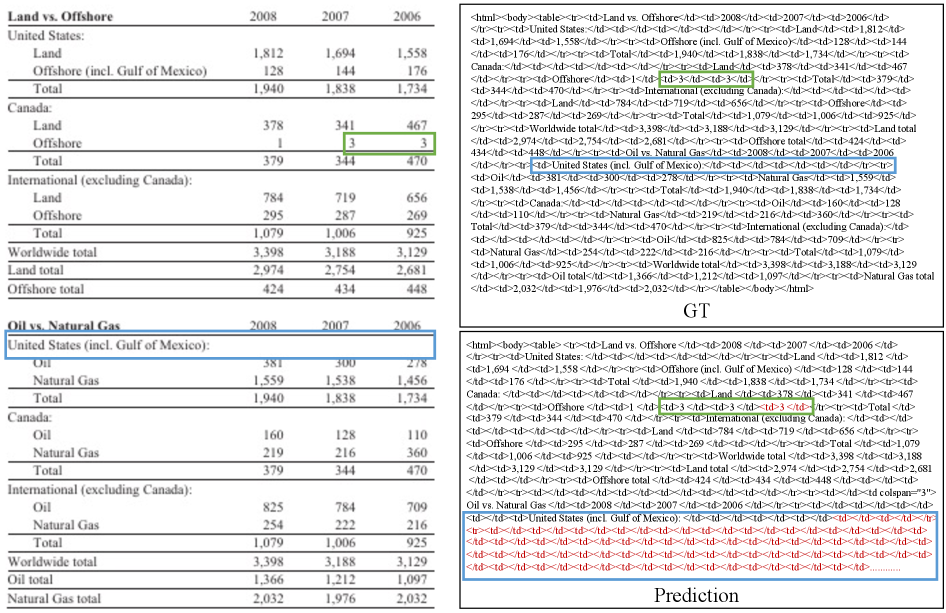
在七个数据集上的实验结果显示,OmniParser在文本检测、关键信息提取和表格识别任务上均达到了最先进的性能,尤其在某些任务上性能提升幅度超过了10%。
🎯 应用场景
OmniParser在文档自动化处理、智能问答系统和信息提取等领域具有广泛的应用潜力。其统一框架能够提高文档理解的效率,降低开发和维护成本,未来可能推动更多智能文档处理工具的发展。
📄 摘要(原文)
Recently, visually-situated text parsing (VsTP) has experienced notable advancements, driven by the increasing demand for automated document understanding and the emergence of Generative Large Language Models (LLMs) capable of processing document-based questions. Various methods have been proposed to address the challenging problem of VsTP. However, due to the diversified targets and heterogeneous schemas, previous works usually design task-specific architectures and objectives for individual tasks, which inadvertently leads to modal isolation and complex workflow. In this paper, we propose a unified paradigm for parsing visually-situated text across diverse scenarios. Specifically, we devise a universal model, called OmniParser, which can simultaneously handle three typical visually-situated text parsing tasks: text spotting, key information extraction, and table recognition. In OmniParser, all tasks share the unified encoder-decoder architecture, the unified objective: point-conditioned text generation, and the unified input & output representation: prompt & structured sequences. Extensive experiments demonstrate that the proposed OmniParser achieves state-of-the-art (SOTA) or highly competitive performances on 7 datasets for the three visually-situated text parsing tasks, despite its unified, concise design. The code is available at https://github.com/AlibabaResearch/AdvancedLiterateMachinery.