Edit3K: Universal Representation Learning for Video Editing Components
作者: Xin Gu, Libo Zhang, Fan Chen, Longyin Wen, Yufei Wang, Tiejian Luo, Sijie Zhu
分类: cs.CV
发布日期: 2024-03-24 (更新: 2025-02-25)
🔗 代码/项目: GITHUB
💡 一句话要点
提出Edit3K以解决视频编辑组件的表示学习问题
🎯 匹配领域: 支柱二:RL算法与架构 (RL & Architecture)
关键词: 视频编辑 视觉表示学习 数据集构建 特征提取 机器学习
📋 核心要点
- 现有视觉表示学习方法在视频编辑组件的视觉特征分离上表现不佳,难以有效理解编辑动作与原材料之间的关系。
- 本文提出了一种新颖的方法,通过关注编辑组件的外观特征,克服了现有方法的局限性,能够独立于原材料进行学习。
- 实验结果表明,本文的方法在编辑组件检索和识别上优于其他替代方案,并在过渡推荐任务中达到了最先进的性能。
📝 摘要(中文)
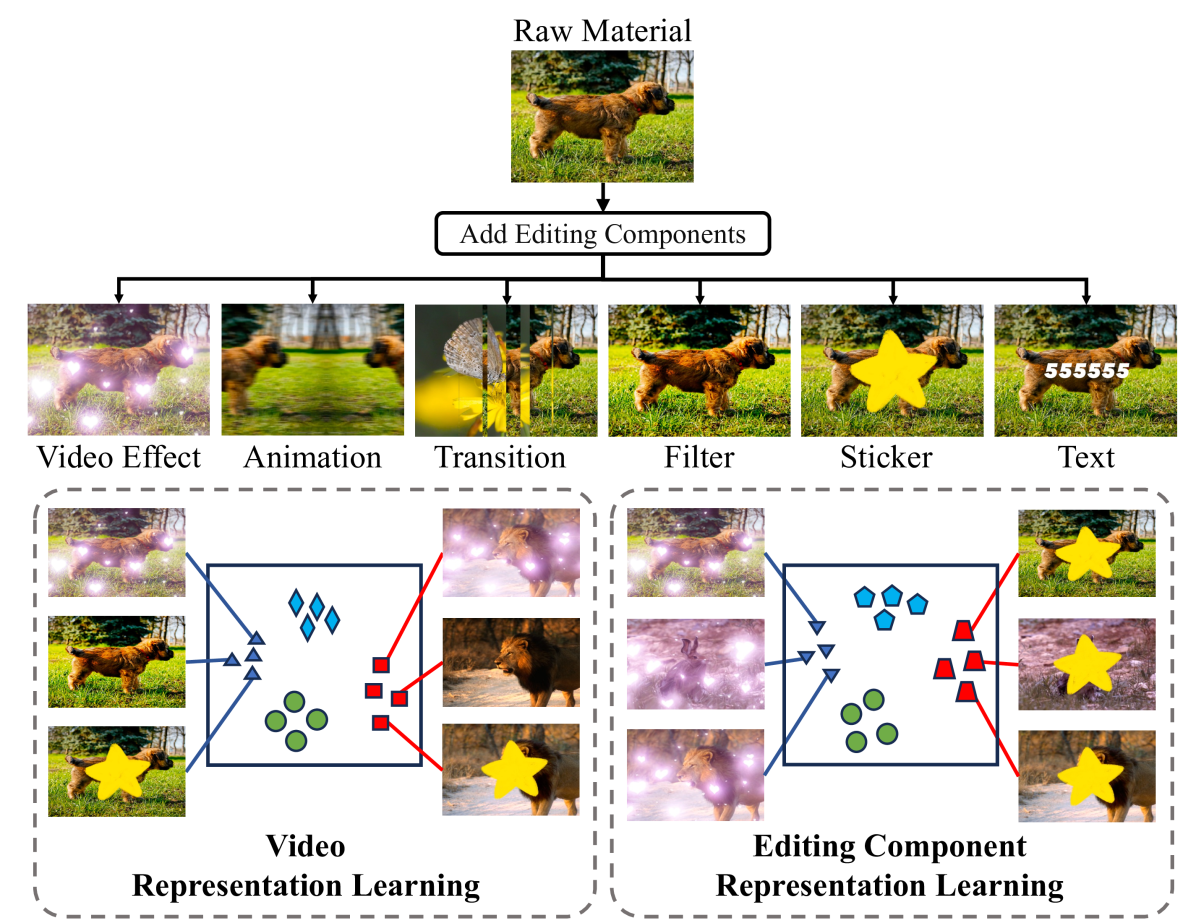
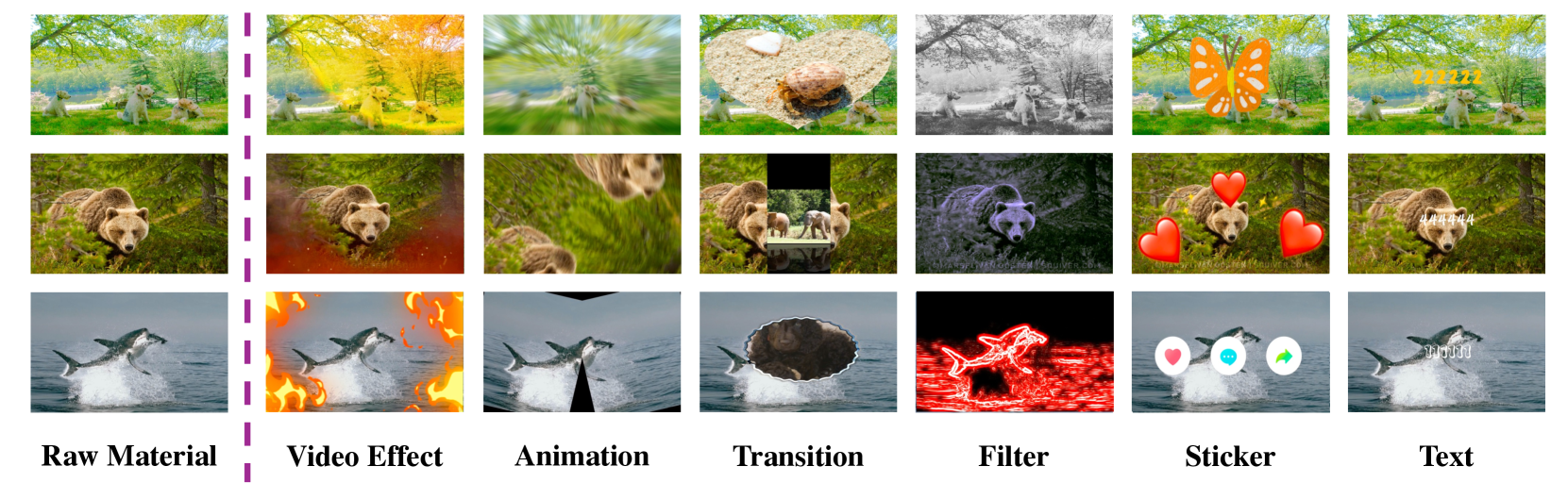
本文聚焦于视频创作流程中的视频编辑组件,涵盖六种主要编辑类型,包括视频特效、动画、过渡、滤镜、贴纸和文本。与现有的视觉表示学习方法不同,本文旨在学习针对原材料应用的编辑动作/组件的视觉表示。我们提出了首个大规模视频编辑组件数据集,包含约3094个编辑组件和618800个视频,支持对不同编辑组件的原子视觉理解。通过基准测试和用户研究,本文提出的方法在编辑组件检索和识别上表现优异,并在过渡推荐任务中取得了最先进的结果。
🔬 方法详解
问题定义:本文旨在解决视频编辑组件的视觉表示学习问题,现有方法难以有效分离编辑组件的视觉特征与原材料,导致性能不足。
核心思路:本文提出的方法通过关注编辑组件的外观特征,独立于原材料进行学习,从而实现对编辑组件的有效表示。
技术框架:整体架构包括数据集构建、特征提取、模型训练和评估等主要模块。数据集包含多样化的视频材料和单一编辑组件,支持原子视觉理解。
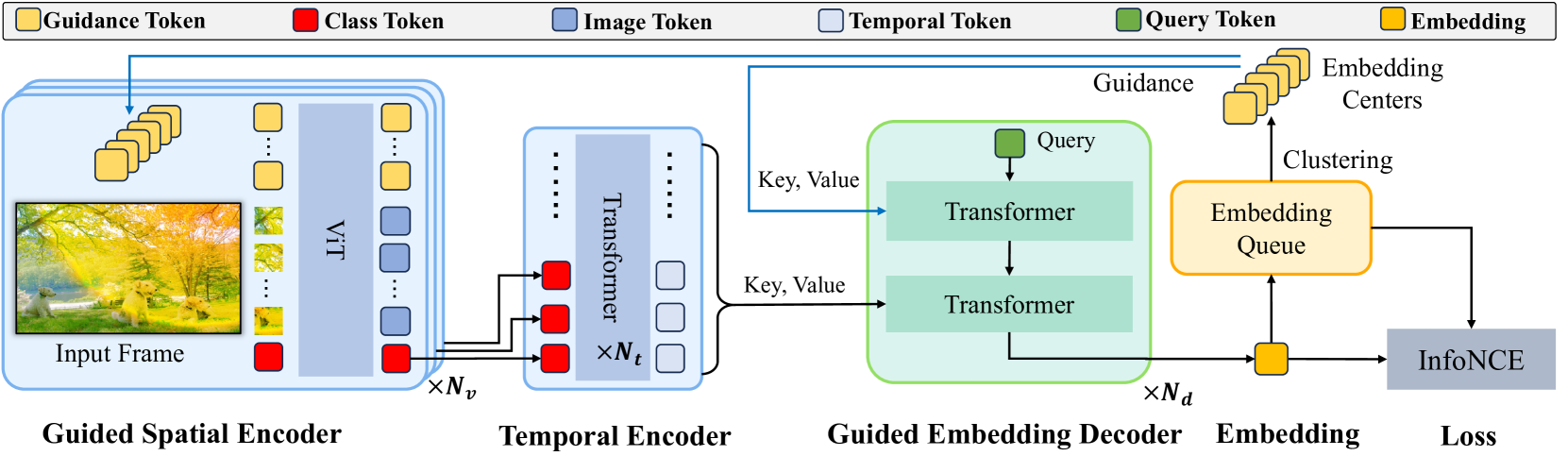
关键创新:最重要的技术创新在于提出了一种新的学习机制,使得模型能够专注于编辑组件的外观,而不受原材料的影响,这与现有方法的设计思路有本质区别。
关键设计:在模型设计中,采用了特定的损失函数和网络结构,以优化编辑组件的特征学习,并通过用户研究验证了模型在视觉聚类上的优势。
🖼️ 关键图片
📊 实验亮点
实验结果显示,本文方法在编辑组件检索和识别任务中相较于其他方法有显著提升,具体表现为在AutoTransition数据集上达到了最先进的结果,验证了其有效性和优越性。
🎯 应用场景
该研究在视频编辑、内容创作和社交媒体等领域具有广泛的应用潜力。通过提供高效的编辑组件推荐和识别工具,可以显著提升视频创作的效率和质量,推动相关行业的发展。未来,该方法还可扩展至其他多媒体内容的处理与分析。
📄 摘要(原文)
This paper focuses on understanding the predominant video creation pipeline, i.e., compositional video editing with six main types of editing components, including video effects, animation, transition, filter, sticker, and text. In contrast to existing visual representation learning of visual materials (i.e., images/videos), we aim to learn visual representations of editing actions/components that are generally applied on raw materials. We start by proposing the first large-scale dataset for editing components of video creation, which covers about $3,094$ editing components with $618,800$ videos. Each video in our dataset is rendered by various image/video materials with a single editing component, which supports atomic visual understanding of different editing components. It can also benefit several downstream tasks, e.g., editing component recommendation, editing component recognition/retrieval, etc. Existing visual representation methods perform poorly because it is difficult to disentangle the visual appearance of editing components from raw materials. To that end, we benchmark popular alternative solutions and propose a novel method that learns to attend to the appearance of editing components regardless of raw materials. Our method achieves favorable results on editing component retrieval/recognition compared to the alternative solutions. A user study is also conducted to show that our representations cluster visually similar editing components better than other alternatives. Furthermore, our learned representations used to transition recommendation tasks achieve state-of-the-art results on the AutoTransition dataset. The code and dataset are available at https://github.com/GX77/Edit3K .