PuzzleVQA: Diagnosing Multimodal Reasoning Challenges of Language Models with Abstract Visual Patterns
作者: Yew Ken Chia, Vernon Toh Yan Han, Deepanway Ghosal, Lidong Bing, Soujanya Poria
分类: cs.CV
发布日期: 2024-03-20 (更新: 2024-08-17)
备注: ACL 2024 Camera Ready
💡 一句话要点
提出PuzzleVQA以诊断多模态模型的推理挑战
🎯 匹配领域: 支柱九:具身大模型 (Embodied Foundation Models)
关键词: 多模态模型 推理能力 抽象模式 视觉感知 归纳推理 演绎推理 数据集构建
📋 核心要点
- 现有大型多模态模型在简单抽象模式的泛化能力不足,无法有效模拟人类的推理能力。
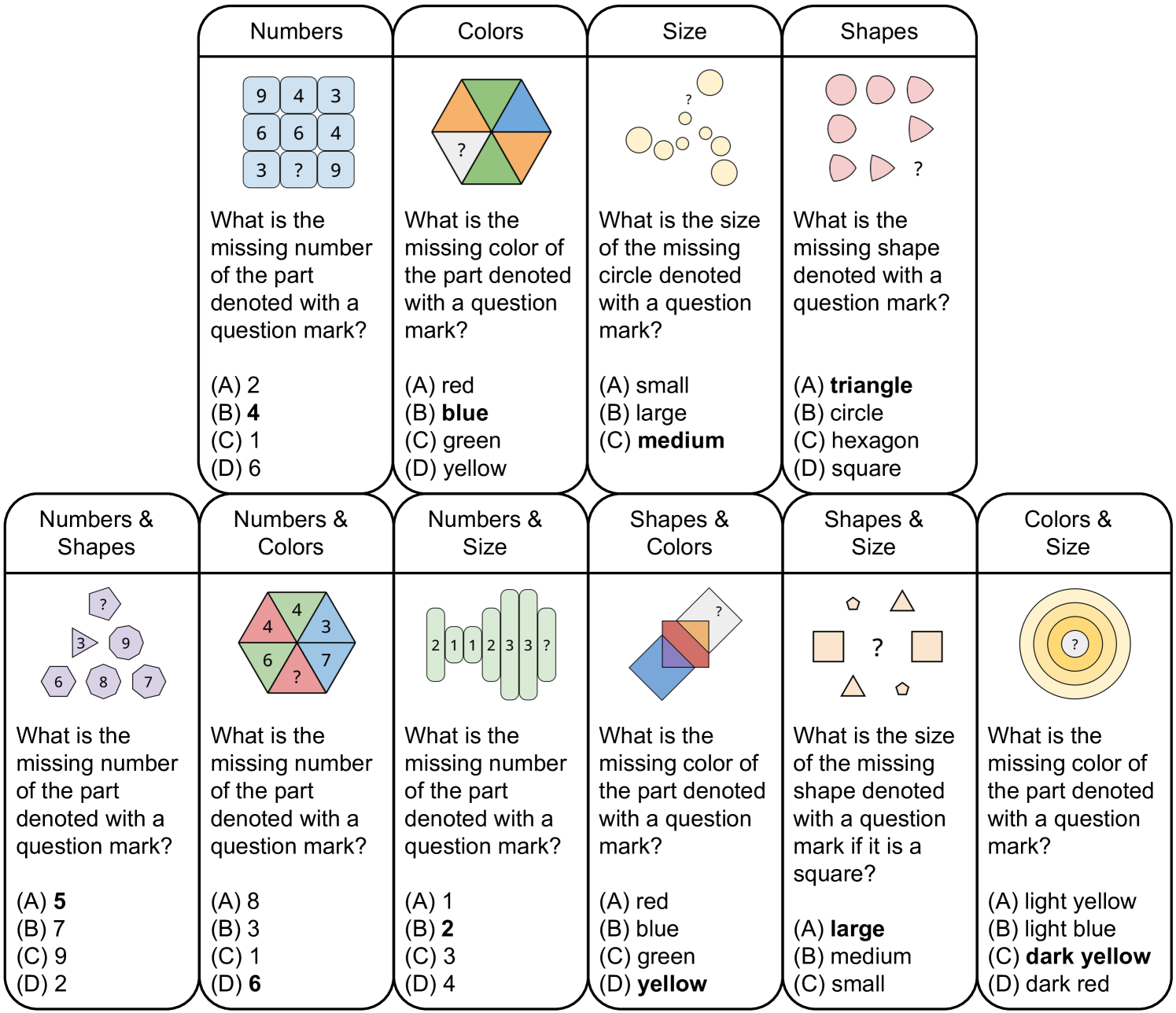
- 提出PuzzleVQA数据集,通过2000个基于抽象模式的难题实例评估多模态模型的推理能力。
- 实验结果显示,GPT-4V在单概念难题上的得分仅为46.4%,揭示了其在视觉感知和归纳推理方面的不足。
📝 摘要(中文)
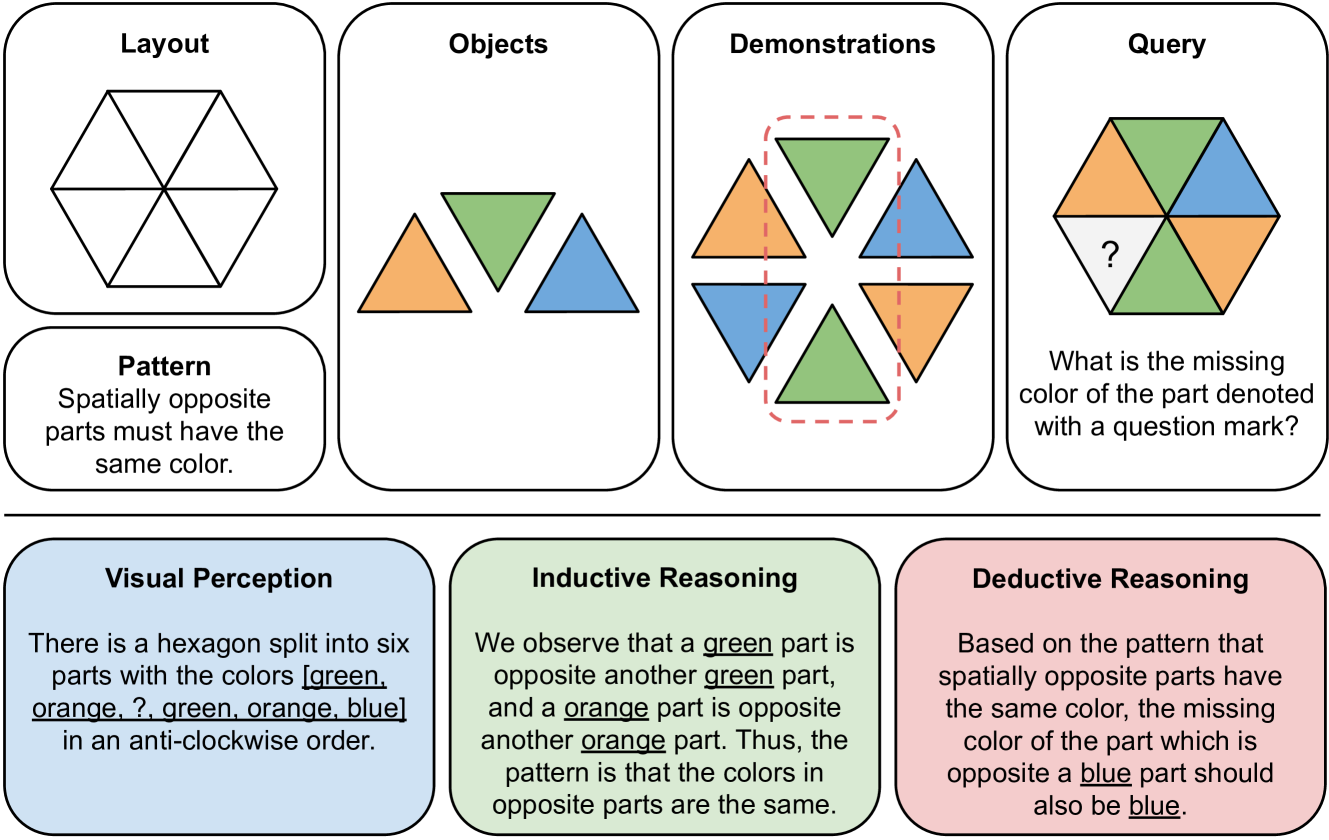
大型多模态模型通过整合多模态理解能力扩展了大型语言模型的能力。然而,它们如何模拟人类的通用智能和推理能力尚不明确。为此,本文提出了PuzzleVQA,一个基于抽象模式的2000个难题实例的数据集。通过对最先进的多模态模型进行评估,发现它们在简单抽象模式上的泛化能力较差。特别是,GPT-4V在单概念难题上的得分仅为46.4%,显示出当前模型在该数据集上的挑战。通过逐步引导模型进行视觉感知、归纳推理和演绎推理的真实推理解释,发现GPT-4V的主要瓶颈在于视觉感知和归纳推理能力较弱。希望通过这项工作揭示大型多模态模型的局限性,并为未来更好地模拟人类认知过程提供指导。
🔬 方法详解
问题定义:本文旨在解决大型多模态模型在抽象模式推理中的不足,现有方法在简单抽象模式上泛化能力较差,无法有效模拟人类的推理过程。
核心思路:通过引入PuzzleVQA数据集,评估多模态模型在视觉感知、归纳推理和演绎推理方面的能力,逐步引导模型理解推理过程。
技术框架:整体架构包括数据集构建、模型评估和推理能力分析三个主要模块。数据集提供多样化的抽象模式,模型评估则通过对比不同模型的表现来分析其推理能力。
关键创新:PuzzleVQA数据集的构建是本研究的核心创新,提供了一个系统化的方式来评估多模态模型在抽象推理方面的能力,与现有方法相比,强调了对简单抽象模式的理解。
关键设计:在实验中,采用了标准的评估指标,并设计了针对不同推理类型的引导策略,以帮助模型更好地理解和处理抽象模式。
🖼️ 关键图片

📊 实验亮点
实验结果显示,GPT-4V在单概念难题上的得分仅为46.4%,表明当前最先进的多模态模型在处理简单抽象模式时存在显著挑战。这一发现为未来模型的改进提供了重要的方向。
🎯 应用场景
该研究的潜在应用领域包括教育、游戏设计和人机交互等。通过提升多模态模型的推理能力,可以更好地支持智能教育系统的开发,增强游戏中的智能角色表现,以及改善人机交互的自然性和智能化水平。
📄 摘要(原文)
Large multimodal models extend the impressive capabilities of large language models by integrating multimodal understanding abilities. However, it is not clear how they can emulate the general intelligence and reasoning ability of humans. As recognizing patterns and abstracting concepts are key to general intelligence, we introduce PuzzleVQA, a collection of 2000 puzzle instances based on abstract patterns. With this dataset, we evaluate large multimodal models with abstract patterns based on fundamental concepts, including colors, numbers, sizes, and shapes. Through our experiments on state-of-the-art large multimodal models, we find that they are not able to generalize well to simple abstract patterns. Notably, GPT-4V achieves a score of 46.4% on single-concept puzzles, which shows that state-of-the-art models struggle on our dataset. To diagnose the reasoning challenges in large multimodal models, we progressively guide the models with our ground truth reasoning explanations for visual perception, inductive reasoning, and deductive reasoning. Our systematic analysis finds that the main bottlenecks of GPT-4V are weaker visual perception and inductive reasoning abilities. Through this work, we hope to shed light on the limitations of large multimodal models and how they can better emulate human cognitive processes in the future. Our data and code are available at https://puzzlevqa.github.io