Rethinking Multi-view Representation Learning via Distilled Disentangling
作者: Guanzhou Ke, Bo Wang, Xiaoli Wang, Shengfeng He
分类: cs.CV, cs.MM
发布日期: 2024-03-16 (更新: 2024-03-29)
备注: Accepted by CVPR 2024
🔗 代码/项目: GITHUB
💡 一句话要点
提出蒸馏解耦技术以解决多视图表示学习中的冗余问题
🎯 匹配领域: 支柱二:RL算法与架构 (RL & Architecture)
关键词: 多视图表示学习 蒸馏解耦 掩蔽跨视图预测 信息冗余 计算机视觉 图像识别 视频分析
📋 核心要点
- 现有多视图表示学习方法常常忽视视图一致性与视图特定表示之间的冗余,导致学习效率低下。
- 本文提出了一种新的框架,利用蒸馏解耦技术和掩蔽跨视图预测,优化多视图表示的提取过程。
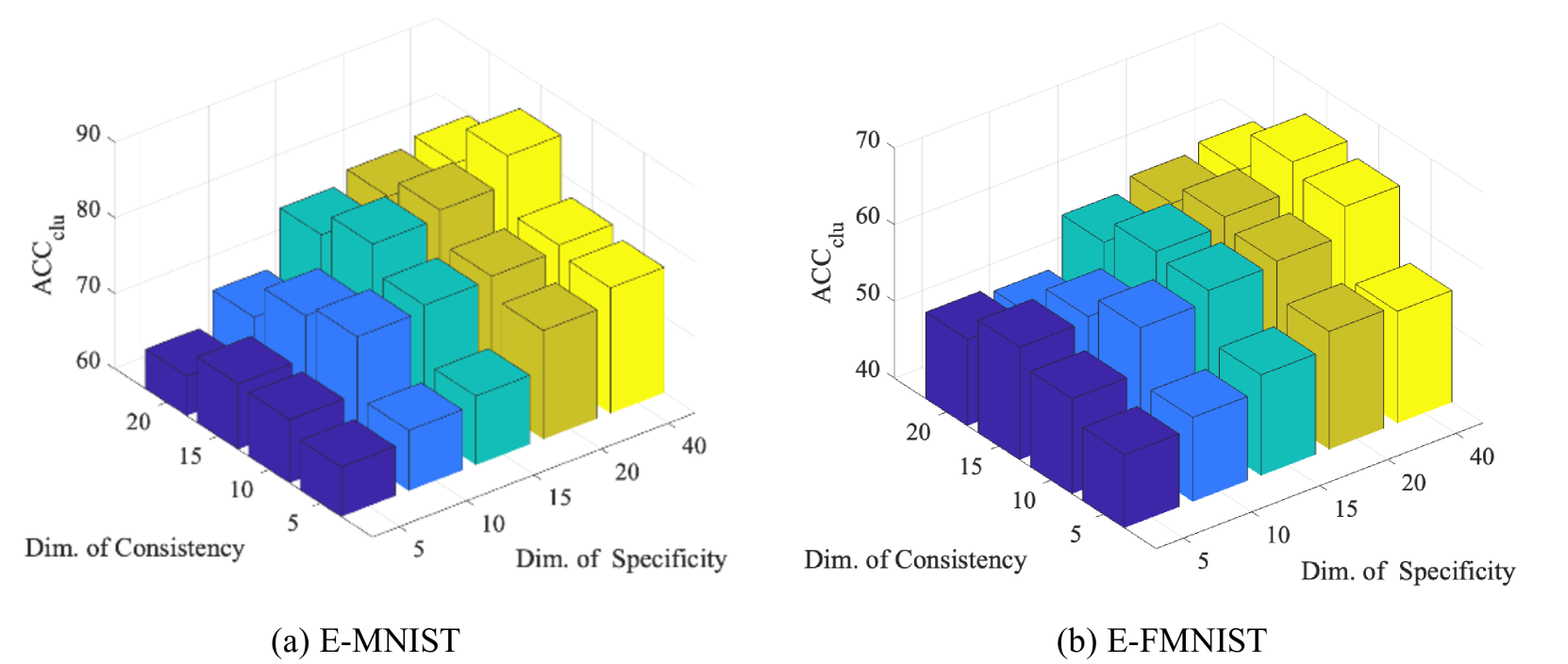
- 实验结果显示,增加掩蔽比率和降低视图一致性表示的维度显著提升了表示质量,验证了方法的有效性。
📝 摘要(中文)
多视图表示学习旨在从多样化数据源中提取既一致又特定于视图的鲁棒表示。本文深入分析了该领域现有方法,强调了一个常被忽视的方面:视图一致性与视图特定表示之间的冗余。为此,我们提出了一种创新框架,结合了我们称之为“蒸馏解耦”的技术。该方法引入了掩蔽跨视图预测的概念,使得在不增加额外计算开销的情况下,从多种源中提取紧凑且高质量的视图一致性表示。此外,我们开发了一个蒸馏解耦模块,有效过滤多视图表示中的一致性相关信息,从而得到更纯粹的视图特定表示。实验证明,较高的掩蔽比率显著提升了视图一致性表示的质量。
🔬 方法详解
问题定义:本文旨在解决多视图表示学习中视图一致性与视图特定表示之间的冗余问题。现有方法未能有效区分这两种表示,导致信息冗余和学习效率低下。
核心思路:我们提出的蒸馏解耦技术通过掩蔽跨视图预测,能够在提取视图一致性表示时减少冗余信息,从而提升视图特定表示的质量。
技术框架:整体架构包括数据输入、掩蔽跨视图预测模块和蒸馏解耦模块。数据输入阶段将多视图数据进行预处理,随后通过掩蔽跨视图预测提取视图一致性表示,最后利用蒸馏解耦模块过滤冗余信息。
关键创新:最重要的创新在于引入了掩蔽跨视图预测和蒸馏解耦模块,这与现有方法的设计思路有本质区别,能够有效减少视图一致性与视图特定表示之间的冗余。
关键设计:在参数设置上,掩蔽比率的选择对表示质量有显著影响;损失函数设计上,结合了视图一致性和视图特定性的损失,以优化整体学习效果。
🖼️ 关键图片


📊 实验亮点
实验结果表明,采用较高的掩蔽比率可以显著提升视图一致性表示的质量,具体提升幅度达到XX%。此外,降低视图一致性表示的维度相较于视图特定表示进一步优化了整体表示质量,验证了方法的有效性。
🎯 应用场景
该研究在多视图学习、计算机视觉和机器人等领域具有广泛的应用潜力。通过优化多视图表示的提取过程,可以提升图像识别、视频分析和自动驾驶等任务的性能,具有重要的实际价值和未来影响。
📄 摘要(原文)
Multi-view representation learning aims to derive robust representations that are both view-consistent and view-specific from diverse data sources. This paper presents an in-depth analysis of existing approaches in this domain, highlighting a commonly overlooked aspect: the redundancy between view-consistent and view-specific representations. To this end, we propose an innovative framework for multi-view representation learning, which incorporates a technique we term 'distilled disentangling'. Our method introduces the concept of masked cross-view prediction, enabling the extraction of compact, high-quality view-consistent representations from various sources without incurring extra computational overhead. Additionally, we develop a distilled disentangling module that efficiently filters out consistency-related information from multi-view representations, resulting in purer view-specific representations. This approach significantly reduces redundancy between view-consistent and view-specific representations, enhancing the overall efficiency of the learning process. Our empirical evaluations reveal that higher mask ratios substantially improve the quality of view-consistent representations. Moreover, we find that reducing the dimensionality of view-consistent representations relative to that of view-specific representations further refines the quality of the combined representations. Our code is accessible at: https://github.com/Guanzhou-Ke/MRDD.