Consistent and Optimal Solution to Camera Motion Estimation
作者: Guangyang Zeng, Qingcheng Zeng, Xinghan Li, Biqiang Mu, Jiming Chen, Ling Shi, Junfeng Wu
分类: cs.CV
发布日期: 2024-03-02 (更新: 2025-08-20)
备注: 18 pages, 13 figures
💡 一句话要点
提出一致且最优的相机运动估计解决方案
🎯 匹配领域: 支柱七:动作重定向 (Motion Retargeting) 支柱八:物理动画 (Physics-based Animation)
关键词: 相机运动估计 最大似然估计 高斯-牛顿迭代 一致性估计 计算机视觉 测量噪声 三维重建
📋 核心要点
- 现有相机运动估计方法通常依赖于极线约束,导致估计结果在最大似然意义上不够优越。
- 本文提出了一种两步算法,首先消除测量噪声偏差,然后在流形上进行高斯-牛顿迭代以优化估计。
- 实验结果显示,当点数达到数百时,本文方法在估计精度和计算时间上均优于现有最先进方法。
📝 摘要(中文)
在给定图像对的2D点对应关系的情况下,推断相机运动是计算机视觉领域的基本问题。现有方法通常从极线约束出发,估计本质矩阵,但在最大似然(ML)意义上并不最优。本文深入探讨了与旋转矩阵和归一化平移向量相关的原始测量模型,并形成了ML问题。我们提出了一种两步算法来解决该问题:第一步,估计测量噪声的方差,并基于消除偏差设计一致性估计器;第二步,在流形上执行一步高斯-牛顿迭代以细化一致性估计。我们证明了所提估计具有与ML估计相同的渐近统计性质,且算法具有线性时间复杂度。实验表明,当点数达到数百时,估计精度和CPU时间均优于现有方法。
🔬 方法详解
问题定义:本文旨在解决相机运动估计中的一致性和最优性问题。现有方法多依赖于极线约束,导致估计结果在最大似然框架下不够理想。
核心思路:我们从原始测量模型出发,针对旋转矩阵和归一化平移向量,提出了一种两步算法,旨在提高估计的一致性和效率。
技术框架:算法分为两步:第一步是估计测量噪声的方差并设计一致性估计器;第二步是在流形上进行高斯-牛顿迭代以细化估计。
关键创新:本文的主要创新在于提出了一种基于消除偏差的一致性估计方法,证明了其与最大似然估计具有相同的渐近统计性质。
关键设计:算法设计中,测量噪声的方差估计和高斯-牛顿迭代是关键步骤,确保了估计的准确性和高效性。
🖼️ 关键图片
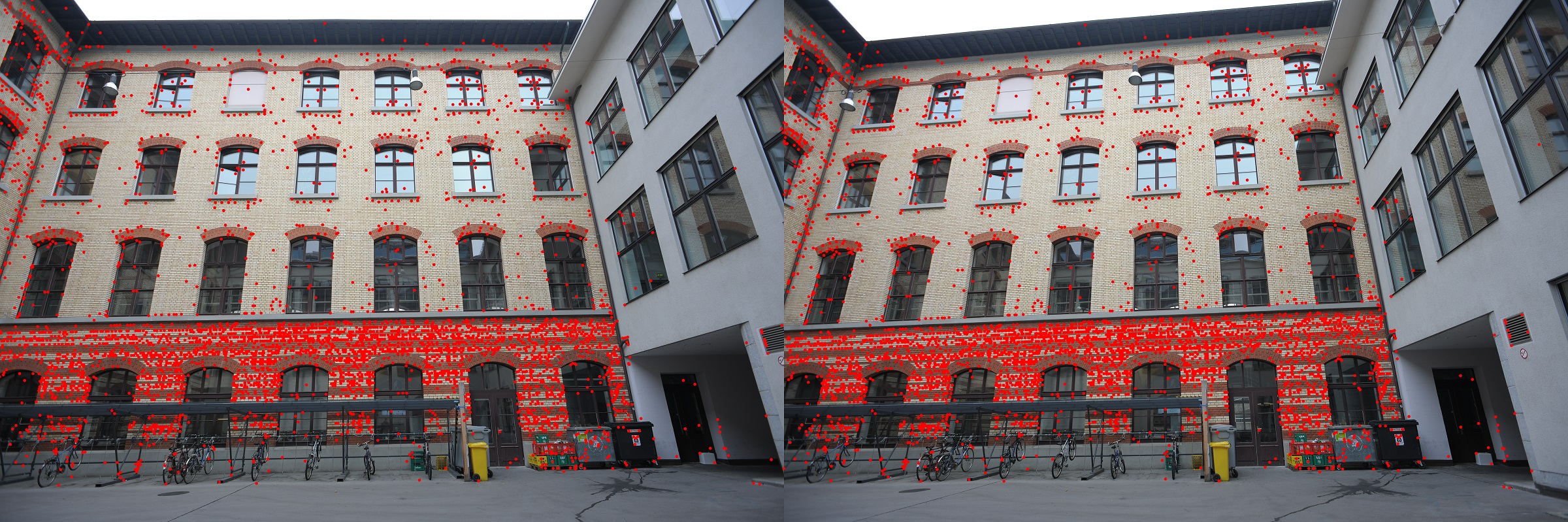


📊 实验亮点
实验结果表明,当点数达到数百时,本文提出的估计方法在估计精度上优于现有最先进方法,且在CPU时间上也表现出显著优势,展示了线性时间复杂度的优越性。
🎯 应用场景
该研究在计算机视觉领域具有广泛的应用潜力,尤其是在机器人导航、增强现实和三维重建等场景中。通过提高相机运动估计的准确性和效率,能够显著提升相关应用的性能和用户体验。
📄 摘要(原文)
Given 2D point correspondences between an image pair, inferring the camera motion is a fundamental issue in the computer vision community. The existing works generally set out from the epipolar constraint and estimate the essential matrix, which is not optimal in the maximum likelihood (ML) sense. In this paper, we dive into the original measurement model with respect to the rotation matrix and normalized translation vector and formulate the ML problem. We then propose a two-step algorithm to solve it: In the first step, we estimate the variance of measurement noises and devise a consistent estimator based on bias elimination; In the second step, we execute a one-step Gauss-Newton iteration on manifold to refine the consistent estimate. We prove that the proposed estimate owns the same asymptotic statistical properties as the ML estimate: The first is consistency, i.e., the estimate converges to the ground truth as the point number increases; The second is asymptotic efficiency, i.e., the mean squared error of the estimate converges to the theoretical lower bound -- Cramer-Rao bound. In addition, we show that our algorithm has linear time complexity. These appealing characteristics endow our estimator with a great advantage in the case of dense point correspondences. Experiments on both synthetic data and real images demonstrate that when the point number reaches the order of hundreds, our estimator outperforms the state-of-the-art ones in terms of estimation accuracy and CPU time.