PIN: Positional Insert Unlocks Object Localisation Abilities in VLMs
作者: Michael Dorkenwald, Nimrod Barazani, Cees G. M. Snoek, Yuki M. Asano
分类: cs.CV
发布日期: 2024-02-13
💡 一句话要点
提出PIN模块以简化视觉语言模型的物体定位问题
🎯 匹配领域: 支柱九:具身大模型 (Embodied Foundation Models)
关键词: 视觉语言模型 物体定位 多模态学习 可学习提示 零-shot学习
📋 核心要点
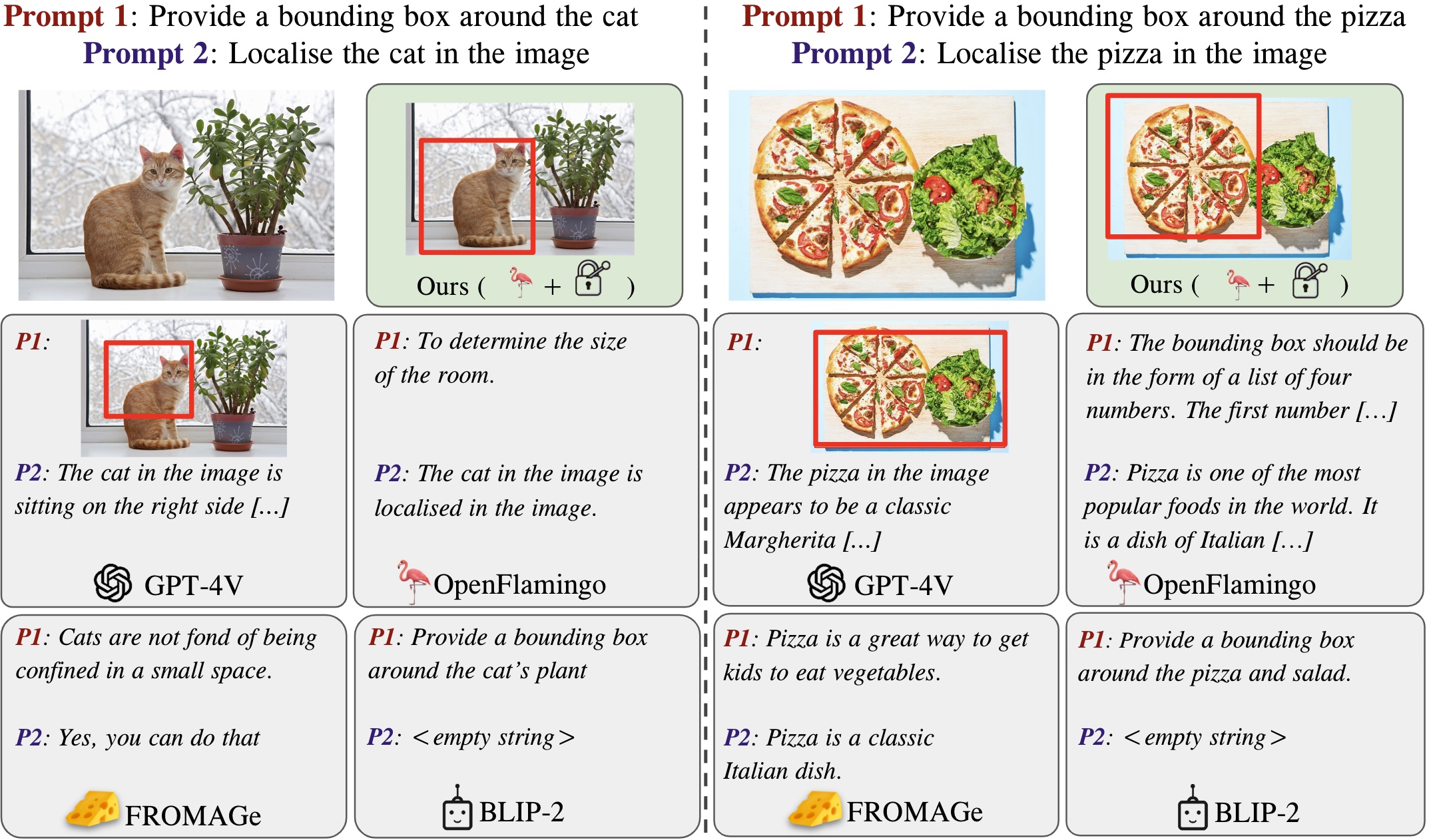
- 现有的视觉语言模型在物体定位任务上表现不佳,主要由于训练数据缺乏明确的空间信息。
- 本文提出了位置插入(PIN)模块,通过冻结VLM权重并不依赖监督数据,简化了物体定位的实现方式。
- 实验结果显示,PIN模块在Pascal VOC、COCO、LVIS等多种数据集上实现了显著的零-shot定位性能提升。
📝 摘要(中文)
视觉语言模型(VLMs),如Flamingo和GPT-4V,通过将大型语言模型与视觉系统结合,展现了巨大的潜力。然而,由于这些模型主要在包含文本描述的多模态数据上进行训练,缺乏明确的空间定位,导致在物体定位这一基本计算机视觉任务上面临挑战。本文提出了一种简单的方法,通过冻结基于文本描述的VLM权重,并不使用任何监督检测数据,来解决这一问题。我们引入了一种输入无关的可学习空间提示——位置插入(PIN),该模块通过在冻结的VLM中滑入一组最小参数,解锁了物体定位能力。实验结果表明,该模块在多种图像上实现了强大的零-shot定位性能。
🔬 方法详解
问题定义:本文旨在解决视觉语言模型在物体定位任务中的不足,现有方法依赖于监督数据和复杂的训练流程,难以扩展。
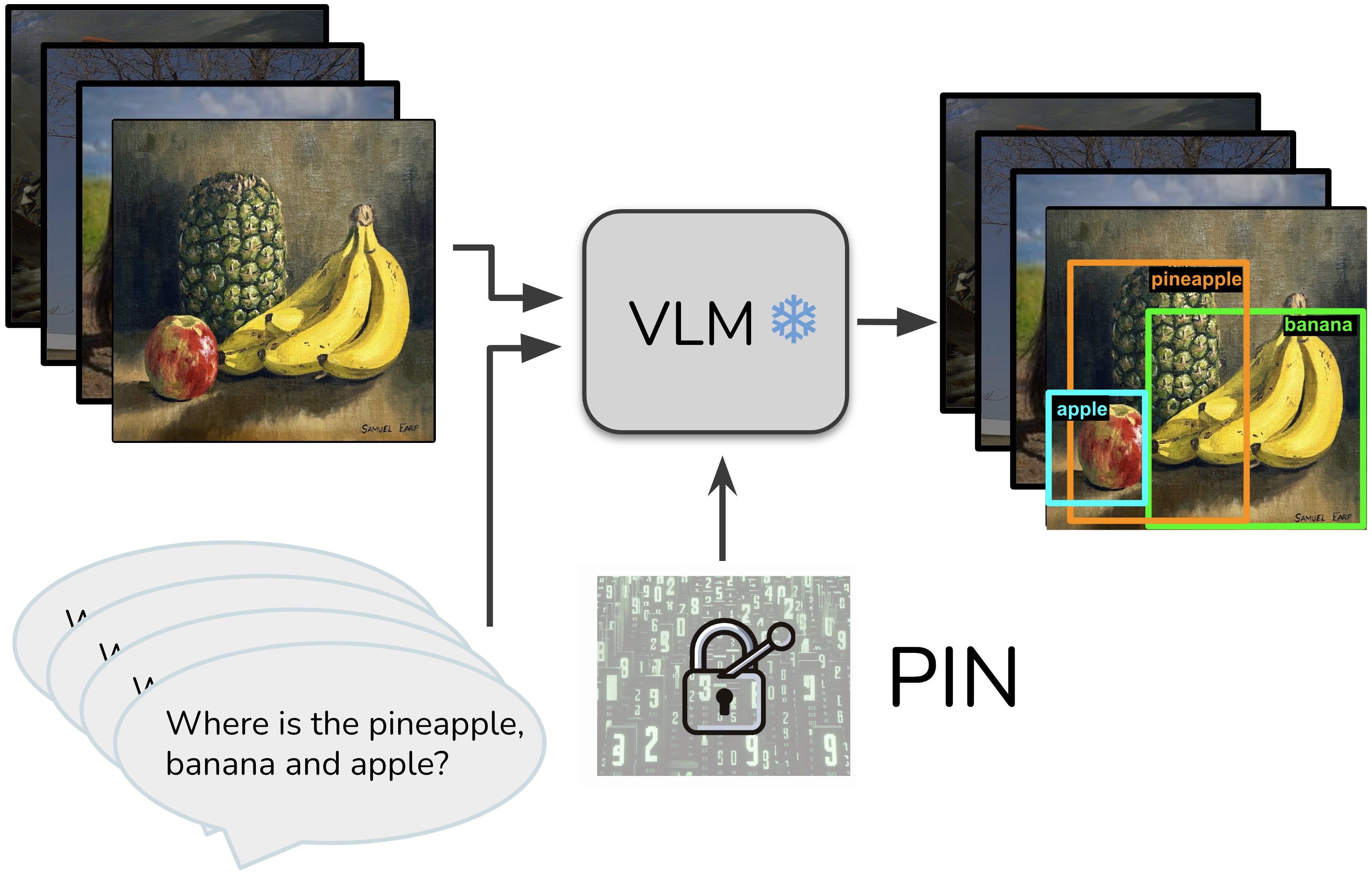
核心思路:提出位置插入(PIN)模块,通过冻结VLM的权重并不使用监督检测数据,简化物体定位的实现。该模块作为可学习的空间提示,能够在不改变模型结构的情况下解锁定位能力。
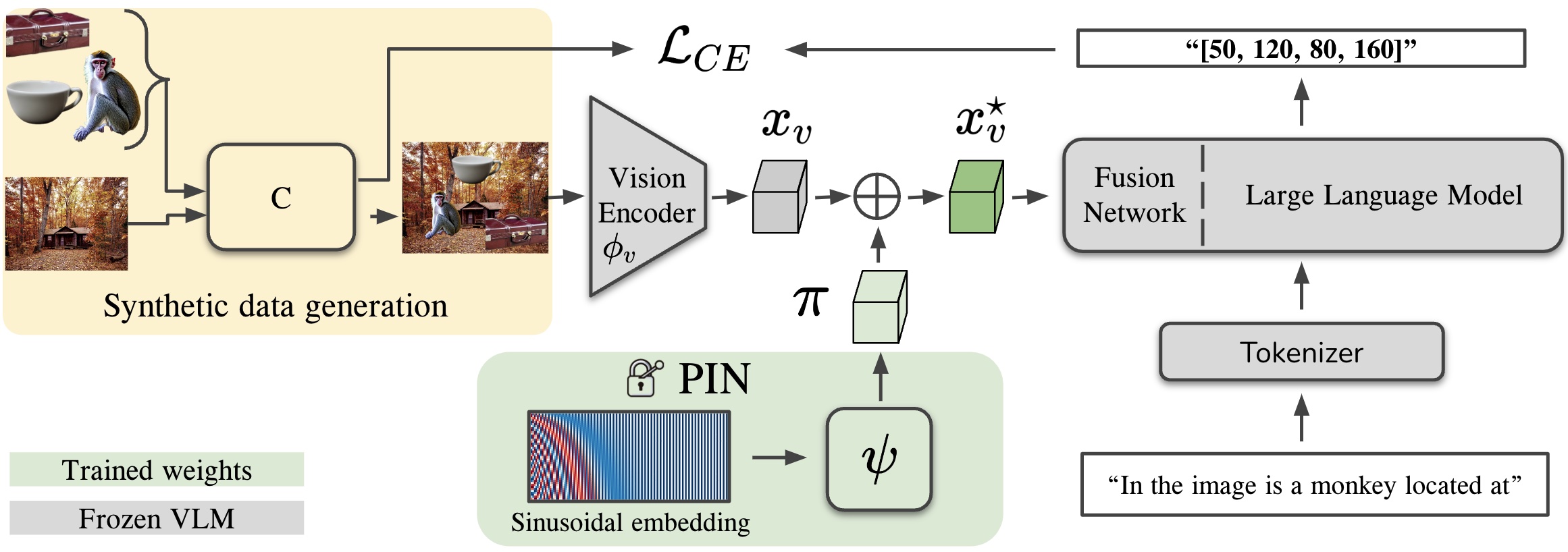
技术框架:整体架构包括一个冻结的VLM和一个可学习的PIN模块。PIN模块通过简单的下一个token预测任务进行训练,利用合成数据进行优化。
关键创新:最重要的创新在于引入了输入无关的PIN模块,使得VLM能够在没有额外输出头的情况下实现物体定位,与传统方法相比,显著降低了复杂性。
关键设计:PIN模块包含一组最小参数,设计为可滑入冻结的VLM中,训练过程中使用简单的下一个token预测损失函数,避免了复杂的网络结构调整。
🖼️ 关键图片
📊 实验亮点
实验结果表明,PIN模块在多种数据集上实现了强大的零-shot定位性能,尤其在Pascal VOC和COCO数据集上,定位准确率显著高于基线模型,展示了该方法的有效性和创新性。
🎯 应用场景
该研究的潜在应用领域包括智能监控、自动驾驶、增强现实等场景,能够提升视觉语言模型在物体识别和定位方面的能力,具有重要的实际价值和广泛的应用前景。未来,PIN模块可能会推动更多基于视觉和语言的交互系统的发展。
📄 摘要(原文)
Vision-Language Models (VLMs), such as Flamingo and GPT-4V, have shown immense potential by integrating large language models with vision systems. Nevertheless, these models face challenges in the fundamental computer vision task of object localisation, due to their training on multimodal data containing mostly captions without explicit spatial grounding. While it is possible to construct custom, supervised training pipelines with bounding box annotations that integrate with VLMs, these result in specialized and hard-to-scale models. In this paper, we aim to explore the limits of caption-based VLMs and instead propose to tackle the challenge in a simpler manner by i) keeping the weights of a caption-based VLM frozen and ii) not using any supervised detection data. To this end, we introduce an input-agnostic Positional Insert (PIN), a learnable spatial prompt, containing a minimal set of parameters that are slid inside the frozen VLM, unlocking object localisation capabilities. Our PIN module is trained with a simple next-token prediction task on synthetic data without requiring the introduction of new output heads. Our experiments demonstrate strong zero-shot localisation performances on a variety of images, including Pascal VOC, COCO, LVIS, and diverse images like paintings or cartoons.