Leveraging Self-Supervised Instance Contrastive Learning for Radar Object Detection
作者: Colin Decourt, Rufin VanRullen, Didier Salle, Thomas Oberlin
分类: cs.CV
发布日期: 2024-02-13
备注: 8 pages, 3 figures, 1 table
💡 一句话要点
提出RiCL框架以解决雷达目标检测数据不足问题
🎯 匹配领域: 支柱二:RL算法与架构 (RL & Architecture)
关键词: 雷达目标检测 自监督学习 对比学习 数据稀缺 自动驾驶 智能交通 深度学习
📋 核心要点
- 现有雷达目标检测方法受限于小规模数据集和复杂的标注过程,导致性能不足。
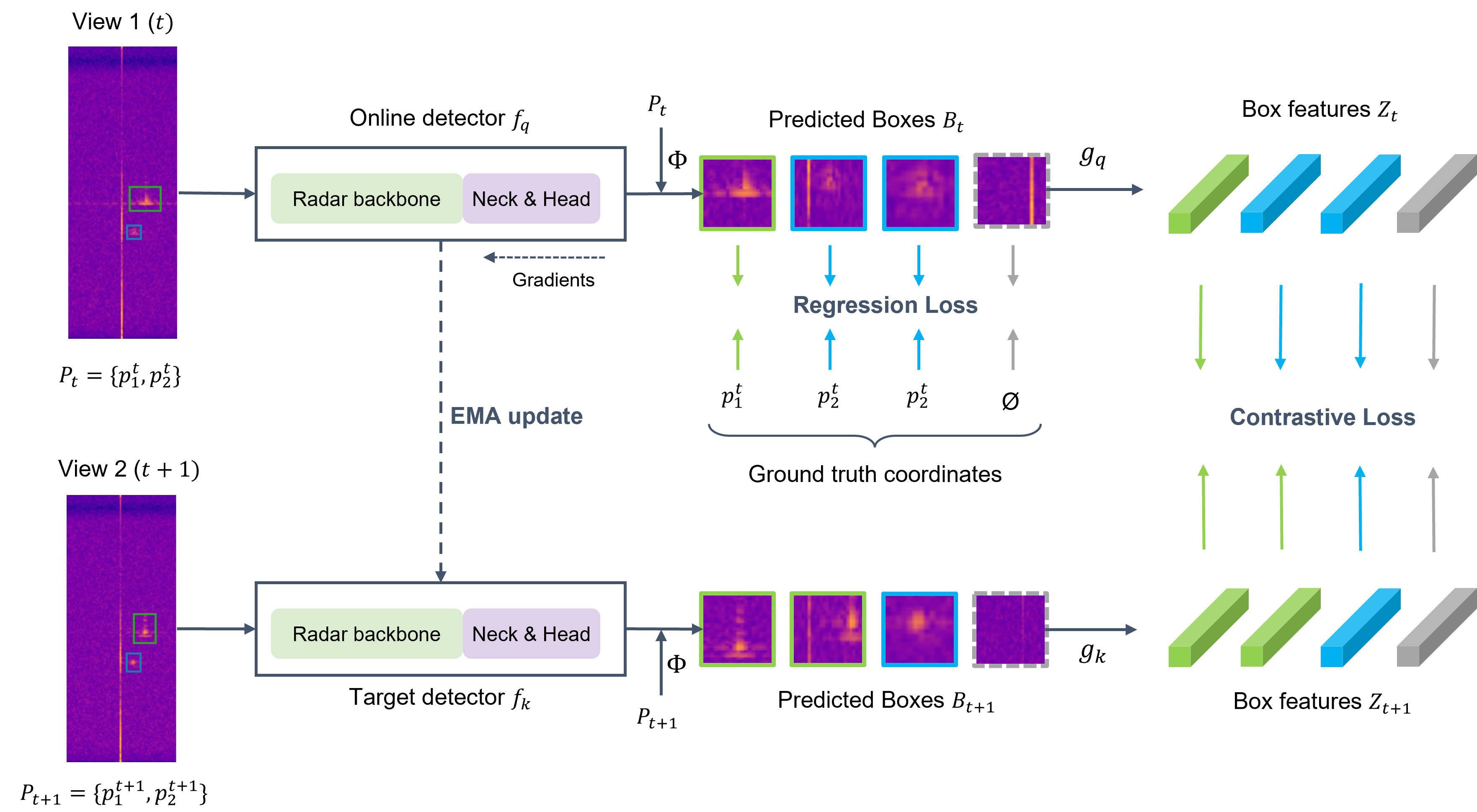
- 本文提出RiCL框架,通过自监督对比学习,利用雷达检测和时间信息进行预训练,旨在减少对标注数据的依赖。
- 实验结果显示,使用20%的标注数据,RiCL在CARRADA和RADDet数据集上达到了与全量监督方法相似的性能。
📝 摘要(中文)
近年来,汽车行业为了实现更安全和更自主的交通系统,逐渐整合了越来越多的高级驾驶辅助系统(ADAS)。雷达传感器因其在恶劣天气和低光环境下的出色表现而成为目标识别任务中的重要传感器。然而,雷达数据集的规模小以及数据标注的复杂性限制了雷达目标检测器的性能。为此,本文提出了RiCL,一个实例对比学习框架,用于自监督预训练雷达目标检测器。我们利用雷达检测和时间信息,通过对比学习以自监督方式预训练雷达目标检测模型。实验结果表明,我们的方法在CARRADA和RADDet数据集上有效学习了范围-多普勒图中的对象通用表示,且仅使用20%的标注数据即可达到与全量监督方法相似的mAP@0.5。
🔬 方法详解
问题定义:本文旨在解决雷达目标检测中由于数据集规模小和标注复杂性导致的性能瓶颈。现有方法在数据稀缺情况下难以有效学习目标表示。
核心思路:提出RiCL框架,通过自监督对比学习,利用雷达传感器的检测结果和时间信息进行预训练,从而减少对标注数据的需求。
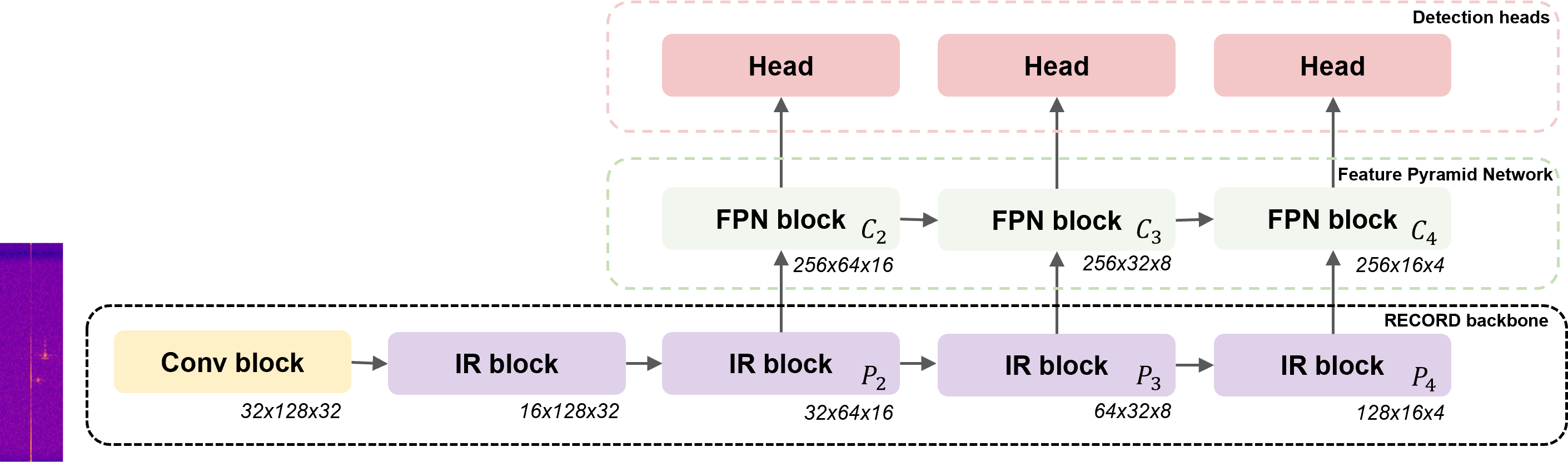
技术框架:RiCL框架包括三个主要模块:目标检测的主干网络、头部和颈部,采用对比学习策略进行自监督预训练。整体流程为:首先提取雷达数据特征,然后通过对比学习优化模型参数。
关键创新:最重要的创新在于通过自监督学习有效利用雷达数据,显著降低对标注数据的依赖,与传统监督学习方法相比,能够在数据稀缺的情况下仍保持良好的检测性能。
关键设计:在模型设计中,采用了特定的损失函数以增强对比学习效果,并对网络结构进行了优化,以适应雷达数据的特性。
🖼️ 关键图片
📊 实验亮点
实验结果表明,RiCL框架在CARRADA和RADDet数据集上仅使用20%的标注数据,便能达到与全量监督方法相似的mAP@0.5,显示出其在数据稀缺情况下的优越性和有效性。
🎯 应用场景
该研究的潜在应用领域包括自动驾驶、智能交通系统和无人驾驶飞行器等。通过提高雷达目标检测的性能,能够在复杂环境中实现更安全的自动驾驶,推动智能交通技术的发展。未来,RiCL框架可能会与其他传感器数据融合,进一步提升目标检测的准确性和鲁棒性。
📄 摘要(原文)
In recent years, driven by the need for safer and more autonomous transport systems, the automotive industry has shifted toward integrating a growing number of Advanced Driver Assistance Systems (ADAS). Among the array of sensors employed for object recognition tasks, radar sensors have emerged as a formidable contender due to their abilities in adverse weather conditions or low-light scenarios and their robustness in maintaining consistent performance across diverse environments. However, the small size of radar datasets and the complexity of the labelling of those data limit the performance of radar object detectors. Driven by the promising results of self-supervised learning in computer vision, this paper presents RiCL, an instance contrastive learning framework to pre-train radar object detectors. We propose to exploit the detection from the radar and the temporal information to pre-train the radar object detection model in a self-supervised way using contrastive learning. We aim to pre-train an object detector's backbone, head and neck to learn with fewer data. Experiments on the CARRADA and the RADDet datasets show the effectiveness of our approach in learning generic representations of objects in range-Doppler maps. Notably, our pre-training strategy allows us to use only 20% of the labelled data to reach a similar mAP@0.5 than a supervised approach using the whole training set.