Exploring Perceptual Limitation of Multimodal Large Language Models
作者: Jiarui Zhang, Jinyi Hu, Mahyar Khayatkhoei, Filip Ilievski, Maosong Sun
分类: cs.CV, cs.AI, cs.LG
发布日期: 2024-02-12
备注: 14 pages, 14 figures, 3 tables
💡 一句话要点
量化研究多模态大语言模型在小物体感知中的局限性
🎯 匹配领域: 支柱九:具身大模型 (Embodied Foundation Models)
关键词: 多模态大语言模型 视觉问题回答 感知局限性 实验研究 物体识别 干扰物影响
📋 核心要点
- 现有的多模态大语言模型在处理小物体时表现出明显的感知局限性,尤其在回答视觉问题时的准确性较低。
- 本文通过定量研究,识别并分析了影响MLLMs感知能力的四个独立因素,提出了控制干预实验的方法。
- 实验结果表明,物体质量和大小对MLLMs的回答能力有显著影响,同时物体位置和干扰物的存在也会降低准确性。
📝 摘要(中文)
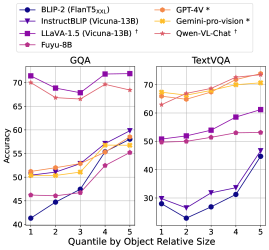
多模态大语言模型(MLLMs)在回答视觉问题方面展现了显著的感知能力,但其感知的局限性尚未得到充分研究。本文定量分析了几种先进的MLLMs在处理小物体时的表现,揭示了其在回答关于小物体的问题时的普遍限制。研究发现,物体质量、大小、干扰物和位置等四个独立因素均会影响MLLMs的感知能力,尤其是较低的物体质量和较小的物体尺寸会显著降低其回答准确性。本文为MLLMs的感知局限性提供了更深入的理解,并提出了新的评估协议以分析未来的MLLMs。为促进进一步研究,作者公开了相关代码和数据。
🔬 方法详解
问题定义:本文旨在探讨多模态大语言模型在处理小物体时的感知局限性,现有研究对这一现象的探讨较为零散,缺乏系统性分析。
核心思路:通过定量研究和控制干预实验,识别影响MLLMs感知能力的关键因素,并分析其对视觉问题回答的影响。
技术框架:研究分为几个阶段,包括文献回顾、实验设计、数据收集和结果分析。主要模块包括物体质量、大小、位置和干扰物的控制实验。
关键创新:本文首次系统性地量化了小物体对MLLMs感知能力的影响,识别了四个独立因素,并提出新的评估协议。
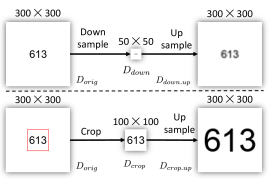
关键设计:实验中采用了多种物体质量和大小的样本,设计了干扰物和位置变化的实验条件,以全面评估其对MLLMs回答准确性的影响。具体参数设置和损失函数未详细披露。
🖼️ 关键图片
📊 实验亮点
实验结果显示,较低的物体质量和较小的物体尺寸显著降低了MLLMs的回答准确性,尤其是在小物体的情况下,准确率下降幅度可达20%。此外,物体位置和干扰物的存在也对准确性产生了显著影响,进一步验证了研究的假设。
🎯 应用场景
该研究为多模态大语言模型在视觉理解领域的应用提供了重要的理论基础,尤其在图像识别、自动问答和人机交互等场景中具有潜在的实际价值。未来,改进模型的感知能力将推动更复杂的视觉任务的实现。
📄 摘要(原文)
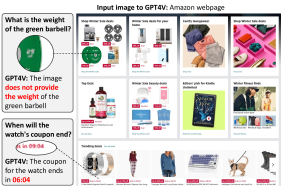
Multimodal Large Language Models (MLLMs) have recently shown remarkable perceptual capability in answering visual questions, however, little is known about the limits of their perception. In particular, while prior works have provided anecdotal evidence of MLLMs' sensitivity to object size, this phenomenon and its underlying causes have not been explored comprehensively. In this work, we quantitatively study the perception of small visual objects in several state-of-the-art MLLMs and reveal a pervasive limitation in answering questions about small objects in images. Next, we identify four independent factors that can contribute to this limitation -- object quality, size, distractors, and location -- and conduct controlled intervention studies to measure the effect of each factor on MLLMs' perception. In particular, we find that lower object quality and smaller object size can both independently reduce MLLMs' ability to answer visual questions. More surprisingly, we find that the location of the object in the image and the presence of visual distractors can also significantly reduce MLLMs' question answering accuracy. Our study provides a better understanding of the perceptual limitation of MLLMs and contributes new evaluation protocols for analyzing the perception of future MLLMs. To facilitate further investigations, we release our code and data.