GaussianShader: 3D Gaussian Splatting with Shading Functions for Reflective Surfaces
作者: Yingwenqi Jiang, Jiadong Tu, Yuan Liu, Xifeng Gao, Xiaoxiao Long, Wenping Wang, Yuexin Ma
分类: cs.CV
发布日期: 2023-11-29
备注: 13 pages, 11 figures, refrences added
💡 一句话要点
提出GaussianShader以解决反射表面渲染问题
🎯 匹配领域: 支柱三:空间感知与语义 (Perception & Semantics)
关键词: 神经渲染 3D高斯 反射表面 法线估计 视觉效果 计算机图形学 实时渲染
📋 核心要点
- 现有的神经渲染方法在处理反射表面时,显式和离散的3D高斯表示面临法线估计不准确的问题。
- GaussianShader通过在3D高斯上应用简化的阴影函数,提升反射表面场景的渲染效果,同时保持高效的训练和渲染速度。
- 实验结果显示,GaussianShader在镜面物体数据集上PSNR提升1.57dB,并且优化时间显著缩短,表现出良好的效率与质量平衡。
📝 摘要(中文)
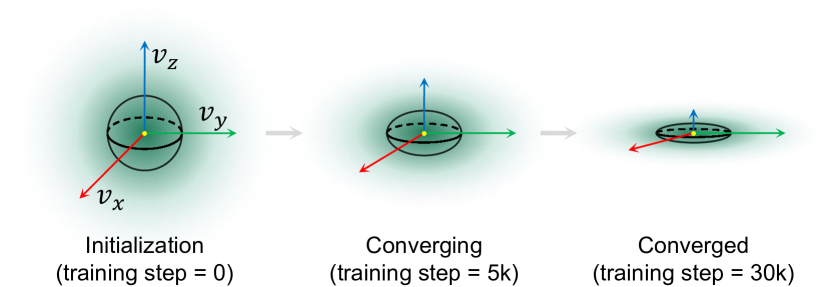
神经3D高斯的出现最近在神经渲染领域带来了革命,能够以实时速度生成高质量渲染。然而,显式和离散的表示在处理反射表面场景时面临挑战。本文提出GaussianShader,一种在3D高斯上应用简化阴影函数的新方法,以增强反射表面场景的神经渲染,同时保持训练和渲染效率。我们提出了一种基于3D高斯最短轴方向的新法线估计框架,并设计了损失函数以确保法线与高斯球几何形状的一致性。实验表明,GaussianShader在效率和视觉质量之间取得了良好的平衡。我们的算法在镜面物体数据集上在PSNR上超越了高斯点云,提升幅度为1.57dB。与处理反射表面的先前工作(如Ref-NeRF)相比,我们的优化时间显著加快(23小时对比0.58小时)。
🔬 方法详解
问题定义:本文旨在解决现有神经渲染方法在处理反射表面时,法线估计不准确导致的渲染质量下降的问题。现有的显式和离散3D高斯表示在此场景下表现不佳。
核心思路:GaussianShader通过在3D高斯上应用简化的阴影函数,增强反射表面场景的渲染效果。我们设计了一种新的法线估计框架,以确保法线与高斯球几何形状的一致性,从而提升渲染质量。
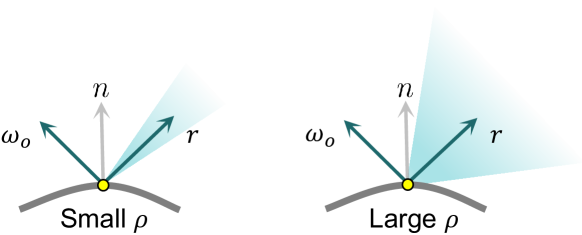
技术框架:该方法的整体架构包括法线估计模块和渲染模块。法线估计模块基于3D高斯的最短轴方向进行法线计算,而渲染模块则利用估计的法线进行阴影处理。
关键创新:最重要的技术创新在于提出了一种新的法线估计框架,能够有效地解决法线与几何形状不一致的问题。这一创新使得GaussianShader在处理反射表面时显著提升了渲染效果。
关键设计:在法线估计过程中,我们设计了一种精细的损失函数,以确保法线与高斯球的几何形状一致。此外,优化算法的时间复杂度也经过精心设计,以实现更快的训练和渲染速度。
🖼️ 关键图片

📊 实验亮点
实验结果表明,GaussianShader在镜面物体数据集上的PSNR提升了1.57dB,相较于传统的高斯点云方法表现更优。同时,与Ref-NeRF等处理反射表面的先前工作相比,优化时间从23小时缩短至0.58小时,显示出显著的效率提升。
🎯 应用场景
GaussianShader的研究成果在计算机图形学、虚拟现实和增强现实等领域具有广泛的应用潜力。通过提高反射表面渲染的质量和效率,该方法可以为游戏开发、影视特效以及工业设计等行业提供更为真实的视觉效果,推动相关技术的发展与应用。
📄 摘要(原文)
The advent of neural 3D Gaussians has recently brought about a revolution in the field of neural rendering, facilitating the generation of high-quality renderings at real-time speeds. However, the explicit and discrete representation encounters challenges when applied to scenes featuring reflective surfaces. In this paper, we present GaussianShader, a novel method that applies a simplified shading function on 3D Gaussians to enhance the neural rendering in scenes with reflective surfaces while preserving the training and rendering efficiency. The main challenge in applying the shading function lies in the accurate normal estimation on discrete 3D Gaussians. Specifically, we proposed a novel normal estimation framework based on the shortest axis directions of 3D Gaussians with a delicately designed loss to make the consistency between the normals and the geometries of Gaussian spheres. Experiments show that GaussianShader strikes a commendable balance between efficiency and visual quality. Our method surpasses Gaussian Splatting in PSNR on specular object datasets, exhibiting an improvement of 1.57dB. When compared to prior works handling reflective surfaces, such as Ref-NeRF, our optimization time is significantly accelerated (23h vs. 0.58h). Please click on our project website to see more results.