PViT-6D: Overclocking Vision Transformers for 6D Pose Estimation with Confidence-Level Prediction and Pose Tokens
作者: Sebastian Stapf, Tobias Bauernfeind, Marco Riboldi
分类: cs.CV
发布日期: 2023-11-29
💡 一句话要点
提出PViT-6D以简化6D姿态估计问题
🎯 匹配领域: 支柱三:空间感知与语义 (Perception & Semantics)
关键词: 6D姿态估计 视觉变换器 回归任务 姿态置信度 深度学习 机器人视觉 增强现实
📋 核心要点
- 现有的6D姿态估计方法依赖复杂的中间步骤和专门架构,导致实现困难和效率低下。
- 本研究提出了一种将6D姿态估计视为简单回归任务的方法,利用视觉变换器和分类标记来直接进行姿态估计。
- 实验结果表明,PViT-6D在多个数据集上超越了现有最先进的方法,提升幅度显著,且实现了更好的可解释性。
📝 摘要(中文)
在当前的6D姿态估计领域,顶尖技术依赖于复杂的中间对应关系、专门的架构和非端到端算法。相对而言,我们的研究将问题重新定义为一个简单的回归任务,探索了视觉变换器在直接6D姿态估计中的能力,特别是通过分类标记的定制使用。我们还引入了一种简单的姿态置信度预测方法,可以轻松集成到大多数6D姿态估计框架中。通过减少查询元素的数量,基于网络对场景复杂性的评估,我们的方法PViT-6D实现了简单的实现和端到端学习,同时在Linemod-Occlusion上提高了0.3% ADD(-S),在YCB-V数据集上提高了2.7% ADD(-S)。此外,我们的方法增强了模型的可解释性和推理过程中的性能可靠性。
🔬 方法详解
问题定义:本论文旨在解决6D姿态估计中的复杂性问题,现有方法通常依赖于复杂的中间对应关系和非端到端的架构,导致实现困难和效率低下。
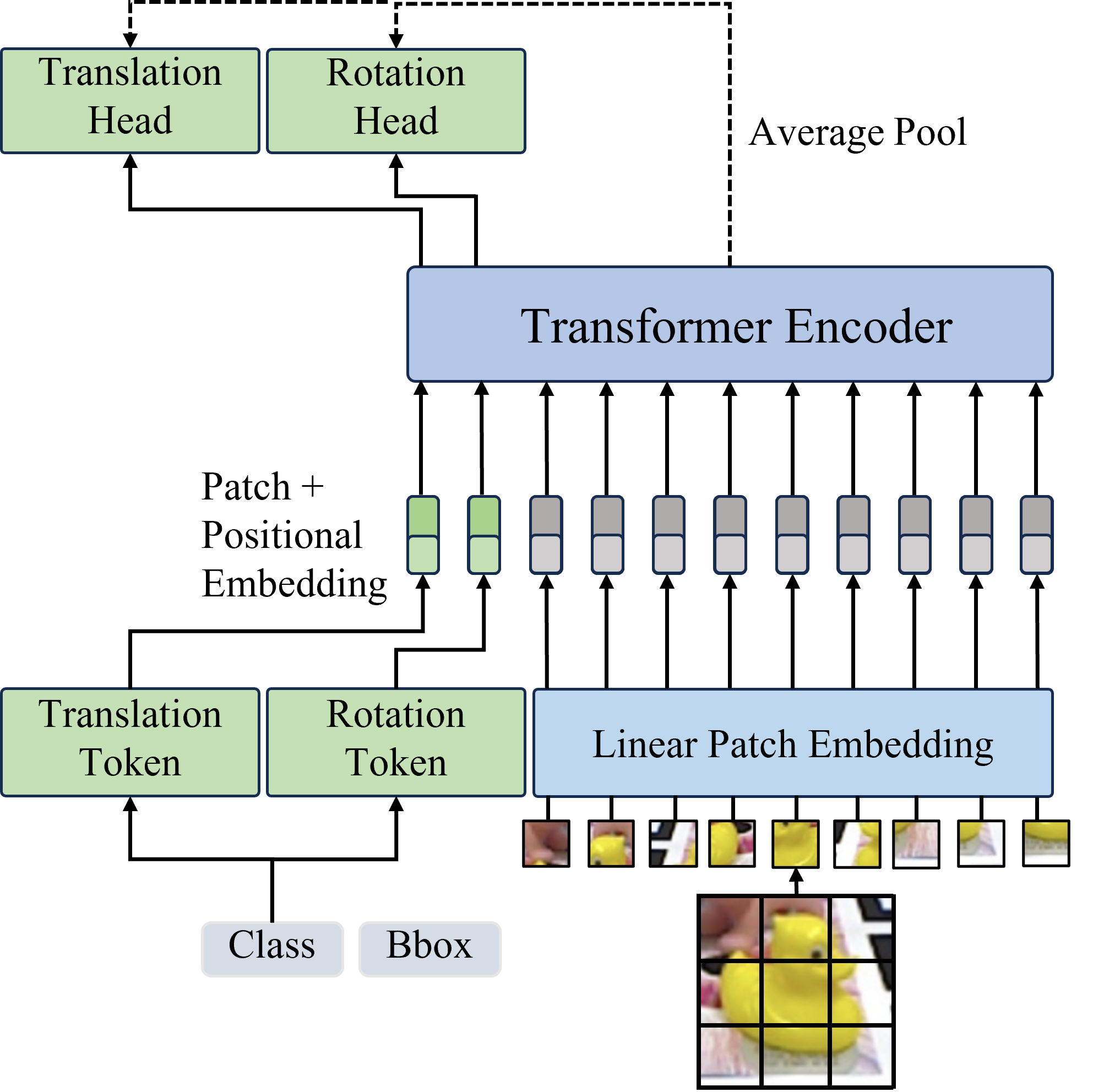
核心思路:我们将6D姿态估计重新定义为一个简单的回归任务,利用视觉变换器的能力,通过定制使用分类标记来实现直接的姿态估计。
技术框架:整体架构包括一个视觉变换器模型,采用分类标记来表示姿态信息,同时引入姿态置信度预测模块,动态调整查询元素的数量以适应场景复杂性。
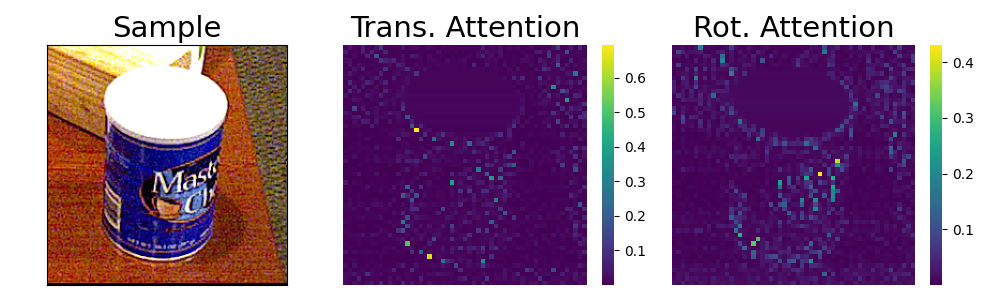
关键创新:最重要的创新在于将姿态估计问题简化为回归任务,并通过姿态置信度预测来提升模型的可解释性和推理性能,这与传统方法显著不同。
关键设计:在网络结构上,我们减少了查询元素的数量,依据网络对场景复杂性的评估进行动态调整,损失函数设计上则考虑了姿态预测的准确性和置信度的结合。
🖼️ 关键图片
📊 实验亮点
实验结果显示,PViT-6D在Linemod-Occlusion数据集上提升了0.3% ADD(-S),在YCB-V数据集上提升了2.7% ADD(-S),超越了当前最先进的方法,且模型的可解释性和推理可靠性得到了显著增强。
🎯 应用场景
该研究的潜在应用领域包括机器人视觉、增强现实和自动驾驶等场景,能够为这些领域提供更高效、可靠的姿态估计解决方案。未来,随着技术的进一步发展,PViT-6D有望在实时应用中发挥重要作用,提升系统的智能化水平。
📄 摘要(原文)
In the current state of 6D pose estimation, top-performing techniques depend on complex intermediate correspondences, specialized architectures, and non-end-to-end algorithms. In contrast, our research reframes the problem as a straightforward regression task by exploring the capabilities of Vision Transformers for direct 6D pose estimation through a tailored use of classification tokens. We also introduce a simple method for determining pose confidence, which can be readily integrated into most 6D pose estimation frameworks. This involves modifying the transformer architecture by decreasing the number of query elements based on the network's assessment of the scene complexity. Our method that we call Pose Vision Transformer or PViT-6D provides the benefits of simple implementation and being end-to-end learnable while outperforming current state-of-the-art methods by +0.3% ADD(-S) on Linemod-Occlusion and +2.7% ADD(-S) on the YCB-V dataset. Moreover, our method enhances both the model's interpretability and the reliability of its performance during inference.