Multi Sentence Description of Complex Manipulation Action Videos
作者: Fatemeh Ziaeetabar, Reza Safabakhsh, Saeedeh Momtazi, Minija Tamosiunaite, Florentin Wörgötter
分类: cs.CV
发布日期: 2023-11-13
💡 一句话要点
提出多句描述框架以解决复杂操作视频自动描述问题
🎯 匹配领域: 支柱一:机器人控制 (Robot Control)
关键词: 自动视频描述 多层次描述 操作动作理解 LSTM 混合统计方法 端到端框架 机器人学习
📋 核心要点
- 现有自动视频描述方法主要集中在单句生成,缺乏对复杂操作动作的多层次描述能力。
- 本研究提出混合统计方法和端到端框架,能够根据操作动作的层次结构生成多句描述。
- 实验结果显示,所提方法在描述的真实性上优于现有竞争方法,具有更好的效果。
📝 摘要(中文)
自动视频描述需要生成关于视频中动作、事件和物体的自然语言陈述。现有方法主要集中在固定细节层次的单句生成上,而本研究关注于操作动作的视频描述,要求不同的细节层次以传达这些动作的层次结构。我们提出了一种混合统计方法和一种端到端框架来解决这一问题。混合方法需要较少的数据进行训练,通过统计建模视频片段中的不确定性,而端到端方法则直接将视觉编码器与语言解码器连接。两种框架均使用LSTM堆栈,允许不同层次的描述粒度,实验结果表明这些方法生成的描述比其他竞争方法更为真实。
🔬 方法详解
问题定义:本论文旨在解决自动视频描述中对复杂操作动作进行多层次描述的问题。现有方法往往只能生成固定细节层次的单句描述,无法满足对复杂动作的描述需求。
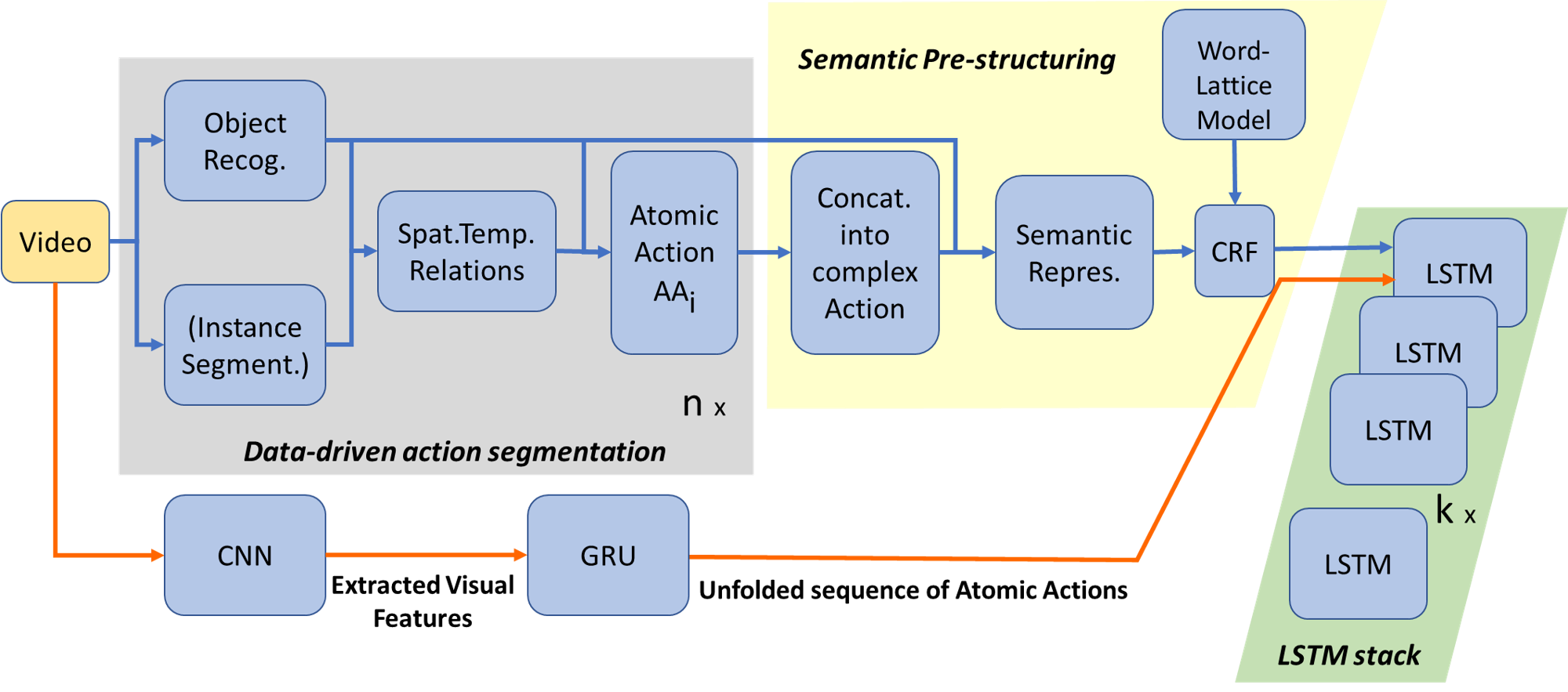
核心思路:论文提出的混合统计方法和端到端框架能够根据操作动作的层次结构生成多句描述,允许不同层次的细节展现。混合方法通过统计建模不确定性,减少了对数据的需求,而端到端方法则直接连接视觉编码器和语言解码器。
技术框架:整体架构包括视觉编码器、语言解码器和LSTM堆栈。视觉编码器负责提取视频特征,LSTM堆栈用于生成描述,语言解码器将特征转换为自然语言描述。混合方法和端到端方法在数据处理上有所不同,但都能生成多层次的描述。
关键创新:最重要的技术创新在于提出了能够处理不同层次描述的框架,尤其是混合方法在数据需求上显著降低,与现有方法相比,能够更有效地处理复杂操作动作的视频描述。
关键设计:在模型设计中,使用LSTM堆栈来实现描述的多样性,损失函数的设计考虑了描述的真实性和多样性,确保生成的描述既准确又自然。
🖼️ 关键图片
📊 实验亮点
实验结果表明,所提出的混合统计方法和端到端框架在描述的真实性上优于其他竞争方法,具体性能数据未给出,但整体提升幅度显著,展示了对复杂操作动作的有效描述能力。
🎯 应用场景
该研究的潜在应用领域包括机器人学习、视频监控、教育和娱乐等。通过生成更为真实和多样化的视频描述,可以提升人机交互的自然性和智能化水平,促进自动化系统在复杂环境中的应用。
📄 摘要(原文)
Automatic video description requires the generation of natural language statements about the actions, events, and objects in the video. An important human trait, when we describe a video, is that we are able to do this with variable levels of detail. Different from this, existing approaches for automatic video descriptions are mostly focused on single sentence generation at a fixed level of detail. Instead, here we address video description of manipulation actions where different levels of detail are required for being able to convey information about the hierarchical structure of these actions relevant also for modern approaches of robot learning. We propose one hybrid statistical and one end-to-end framework to address this problem. The hybrid method needs much less data for training, because it models statistically uncertainties within the video clips, while in the end-to-end method, which is more data-heavy, we are directly connecting the visual encoder to the language decoder without any intermediate (statistical) processing step. Both frameworks use LSTM stacks to allow for different levels of description granularity and videos can be described by simple single-sentences or complex multiple-sentence descriptions. In addition, quantitative results demonstrate that these methods produce more realistic descriptions than other competing approaches.